


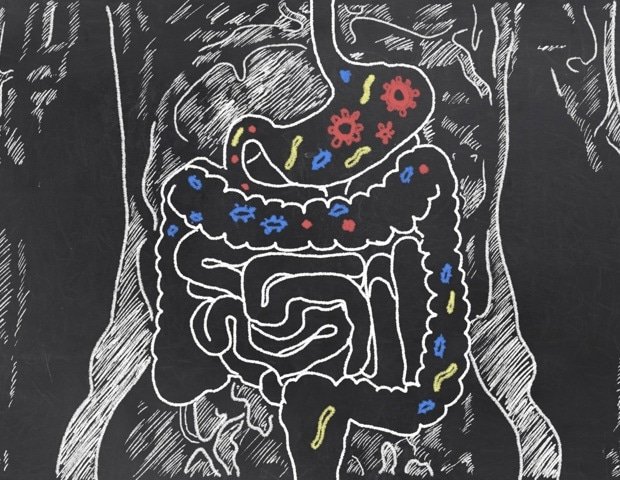
The human gut is home to a complex ecosystem of trillions of microorganisms (microbiome) that influence digestion, immune system, and metabolism. Using a ‘reverse ecology’ analytical approach, a research team led by the University of Vienna demonstrated that many known species of gut bacteria are composed of several evolutionarily distinct groups that have adapted to different conditions in the gut. Some of these populations are associated with older age, chronic inflammatory bowel disease, colorectal cancer, and type 2 diabetes. The results of this research are currently nature In the future, the search for biomarkers will improve and may allow more accurate treatments in the long term.
Microbiome studies typically classify bacteria into whole species or genetically similar groups. Although these categories are practical, they do not necessarily reflect populations adapted to different conditions within the human body. As a result, it often remains unclear which bacteria are associated with disease, are merely incidental, and which bacteria protect against disease. This raises an important question. Can we better identify the biological units that emerge through adaptation and occupy different ecological niches within the gut?
About research
The research team analyzed thousands of bacteria isolated from the human gut and extensive metagenomic data, or the complete genetic information of the microbial communities in the samples, from people from different countries and different age and health groups. Using newly developed bioinformatics methods within the framework of “reverse ecology” (an approach to infer ecological adaptation from genomic data), the researchers searched for the genetic signature of successful adaptations.
multiple species
Of particular interest were signs of so-called “genome-wide selective sweep,” a process in which individuals acquire beneficial mutations and thereby displace other closely related individuals. On the one hand, this leads to a loss of diversity. On the other hand, it produces a population of individuals that is very homogeneous both in terms of kinship and function, and therefore clearly stands out from each other in the dataset. Analysis has shown that many known enterobacterial species diverge into several such lineages. These populations appear to differ, particularly in the conditions in which they breed well. “Taking evolutionary adaptations into account, rather than simply counting species, allows us to more precisely identify biologically relevant units within the microbiome,” says lead author Xiaoqian Annie Yu from the Center for Microbial and Environmental Systems Sciences (CeMESS) at the University of Vienna. “Even within the same bacterial species, some populations occur more frequently than others in certain diseases. When all considered together, this often remains hidden.”
spread around the world within a few decades
The researchers also found evidence that competitive populations can spread rapidly across continents, sometimes within decades. Until now, such patterns have mainly been observed in pathogens.
Our findings show that gut bacteria are also more dynamic than previously thought. Well-adapted strains can spread internationally and occupy new ecological niches. ”
Martin F. Polz, University of Vienna
This suggests that it is not just diet, medications, or lifestyle that shapes the microbiome, but infectious processes between people may also play an important role.
A new perspective on medicine and diagnosis
This study opens up new possibilities for microbiome research. In the future, it may be possible to specifically target populations that actually matter, rather than linking entire bacterial species to disease. This will improve the search for biomarkers and, in the long term, may enable more precise treatments, for example by specifically promoting beneficial bacterial strains or suppressing problematic bacterial strains. As a next step, the research team plans to investigate which genes distinguish the identified populations from each other and what biological functions are associated with them.
summary
- Many species of enteric bacteria are composed of several evolutionarily distinct populations.
- Some of these populations are associated with aging, colorectal cancer, inflammatory bowel disease, and type 2 diabetes.
- Successful strains can spread around the world within decades.
- This approach may allow for more accurate diagnosis and more targeted microbiome treatments.
sauce:
Reference magazines:
DOI: 10.1038/s41586-026-10476-w
