


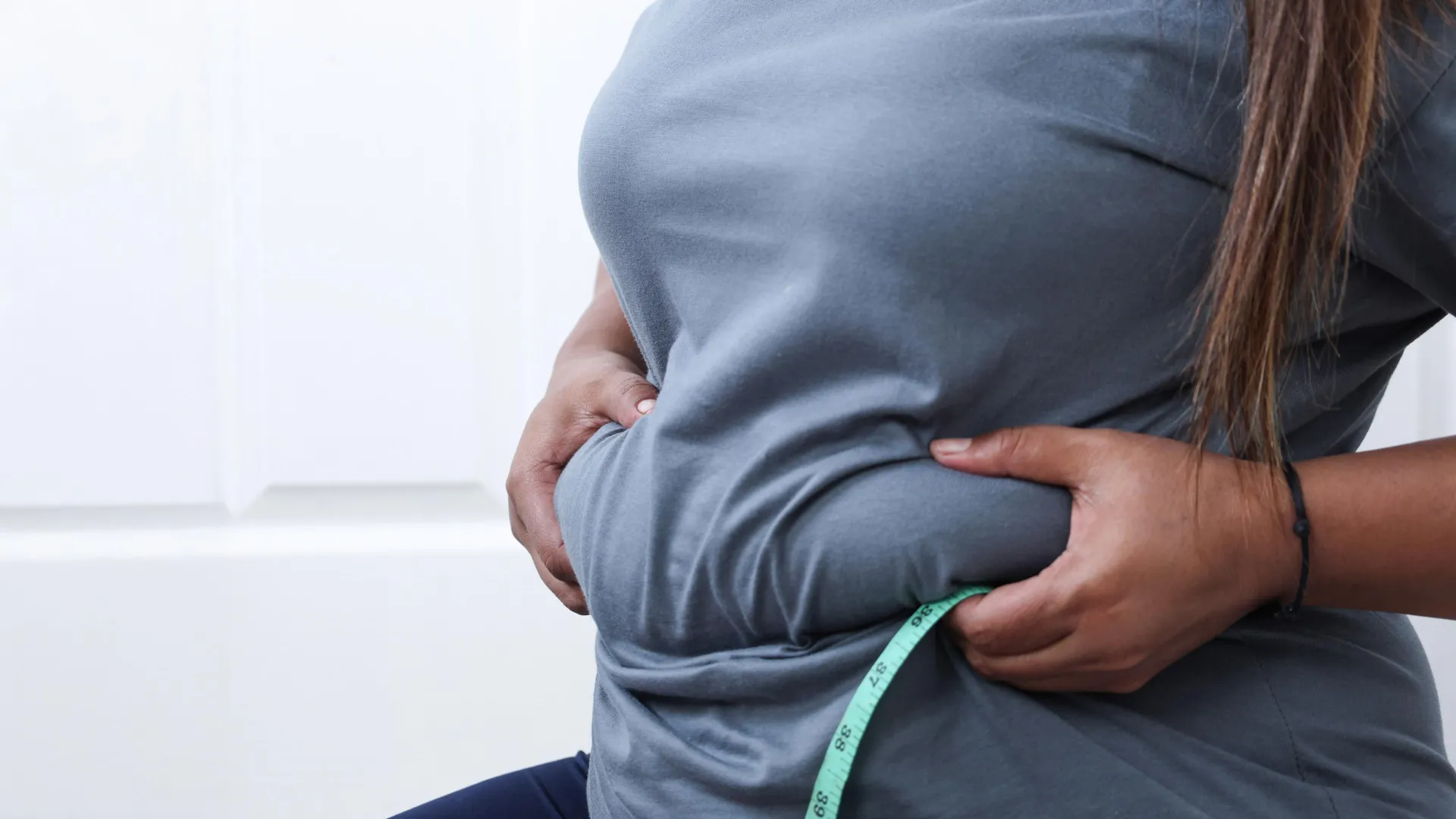
As a person ages, both the amount of fat in the body and where it is stored begin to change.
Most of your body fat is subcutaneous, located just beneath your skin. This type of fat is generally harmless and is actually necessary for overall health. Visceral fat is different. It accumulates deep in the abdomen and surrounds internal organs, and is strongly associated with serious conditions such as diabetes and heart disease.
The role of hormones in dangerous fat gain
Scientists have found that hormones, especially testosterone, play a key role in how fat is redistributed over time.
“As men and women age, there is an unhealthy redistribution of fat from more innocuous areas to visceral compartments,” says Jacob Earp, assistant professor of kinesiology in the College of Agriculture, Health, and Natural Resources (CAHNR). “There is a direct relationship between sex hormones and fat distribution throughout the body.”
Traditional weight loss approaches are not designed to specifically target visceral fat. Rather, it may cause new concerns for older adults due to overall weight loss.
“Implementing these comprehensive weight loss strategies isn’t necessarily the healthiest approach, especially since as we age we also lose muscle mass along with fat, and preserving muscle is so important,” Earp says.
Investigating Testosterone Gel and Exercise
Dr. Earp led a new study examining whether topical testosterone gel, when combined with exercise, can help older women recover from femoral neck fractures.
The survey results are pillar of obesity.
Fractures of the proximal femur are a major health problem for older women. These occur almost three times more frequently in women than men and are a major cause of loss of independence. Reduced mobility after such an injury can also increase the risk of further health problems and further injury.
Inside a clinical trial
The study followed 66 women aged 65 and older who were recovering from a femoral neck fracture. Before starting the study, each participant underwent a DXA scan to assess body composition.
All participants completed a structured exercise program. However, only one group received testosterone gel as part of their treatment.
Results show targeted reduction in visceral fat
A follow-up scan after 6 months showed that overall body fat levels remained similar in both groups. However, important differences emerged in fat distribution.
Women who used testosterone gel had lower visceral fat levels. In contrast, the group that received no hormones had an increase in visceral fat, which is typically seen during recovery from a hip fracture.
“You would expect visceral fat to increase with injury and with age in general,” Earp says. “This truly bucked that trend and selectively reduced fat in the visceral compartment.”
A promising path to recovery and healthy aging
The findings suggest new approaches to improve recovery and long-term health outcomes for seriously injured older women.
“These are devastating injuries that most women never recover from,” Earp says. “In this case, any type of intervention that can have a beneficial effect on health has the potential to significantly improve an individual’s quality of life.”
