

Close Menu

    Subscribe to Updates

    Get the latest creative news from FooBar about art, design and business.

    What's Hot

    Scientists have finally solved a 40-year-old physics puzzle about how objects grow

    May 7, 2026

    This town discovered clean energy deep inside an old coal mine.

    May 7, 2026

    Scientists reverse diabetes in mice using lab-grown insulin cells

    May 7, 2026
    Facebook X (Twitter) Instagram
    Facebook X (Twitter) Instagram
    Health Magazine
    • Home
    • Environmental Health
    • Health Technology
    • Medical Research
    • Mental Health
    • Nutrition Science
    • Pharma
    • Public Health
    • Discover
      • Daily Health Tips
      • Financial Health & Stability
      • Holistic Health & Wellness
      • Mental Health
      • Nutrition & Dietary Trends
      • Professional & Personal Growth
    • Our Mission
    Health Magazine
    Home » News » Scientists have finally solved a 40-year-old physics puzzle about how objects grow
    Nutrition Science

    Scientists have finally solved a 40-year-old physics puzzle about how objects grow

    healthadminBy healthadminMay 7, 2026No Comments4 Mins Read
    Scientists have finally solved a 40-year-old physics puzzle about how objects grow
    Share
    Facebook Twitter Reddit Telegram Pinterest Email


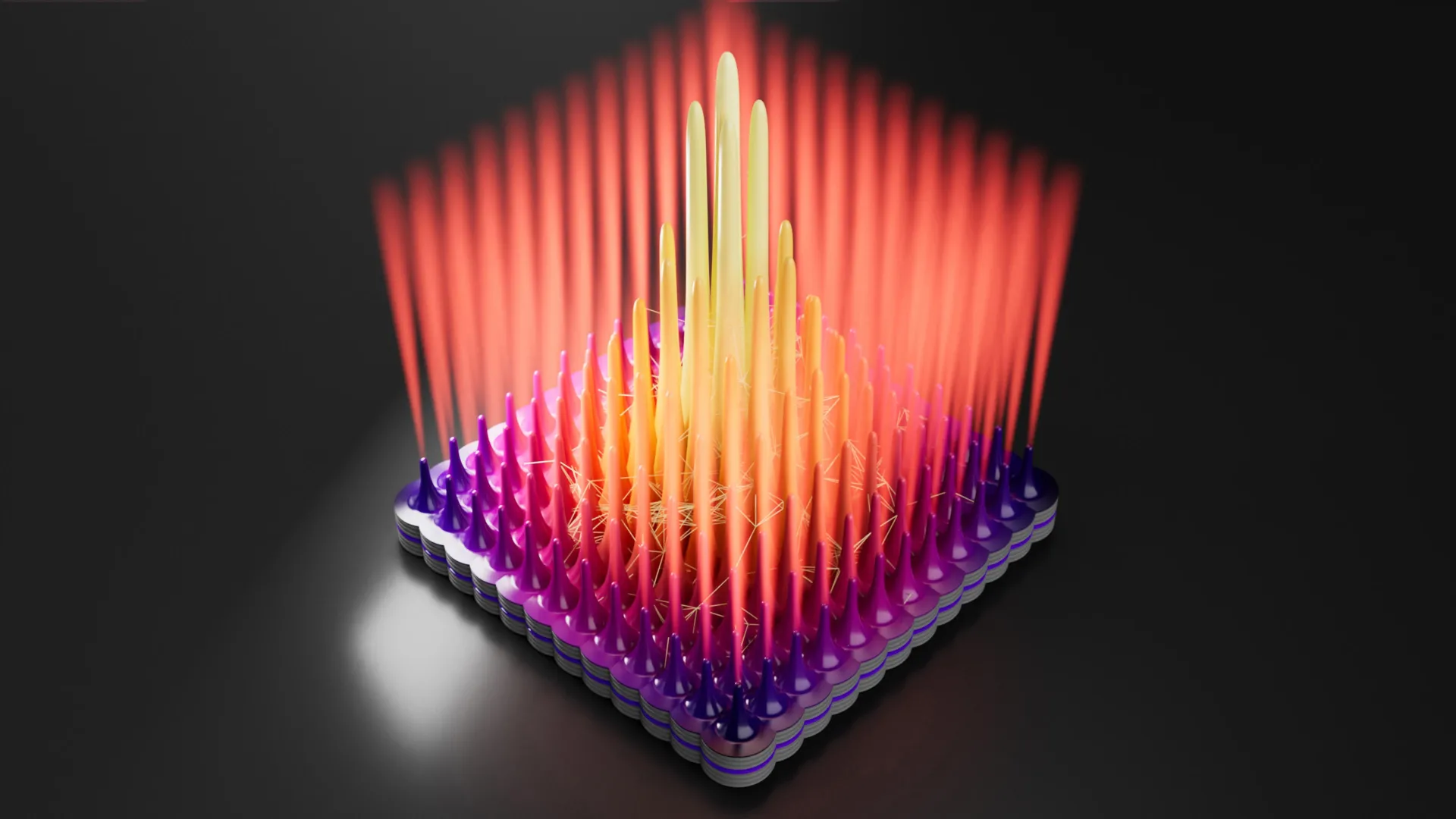
    Understanding how surfaces grow has long been one of the most important challenges in physics. In 1986, researchers introduced the Kardar-Parisi-Zhang (KPZ) equation, a theory designed to explain growth across a wide range of systems. Over time, this framework has been applied to everything from crystal formation and population dynamics to flame surfaces and even machine learning. This idea is simple but powerful. Quite different systems may grow to follow the same underlying rules.

    Now, scientists at the University of Würzburg have taken a major step forward. After previously being confirmed in a one-dimensional system in 2022, the team achieved the first experimental proof that the KPZ theory also holds in two dimensions. This is an important milestone in demonstrating how universal this model really is.

    Why predicting growth is so difficult

    “When a surface grows, be it a crystal, bacteria, or a flame surface, the process is always nonlinear and random. In physics, such systems are described as being out of equilibrium,” explains Siddhartha Damm, postdoctoral researcher at the Würzburg Dresden Cluster of Excellence ctd.qmat at the Department of Technical Physics at the University of Würzburg. “Designing systems that can simultaneously measure how non-equilibrium processes evolve in space and time is extremely difficult, especially since these processes unfold over ultra-short timescales. That is why validating the KPZ model in two dimensions took so long. We have now succeeded in controlling non-equilibrium quantum systems in the laboratory, something that has only recently become technically feasible.”

    Construction of ultralow temperature quantum experiment

    To test the theory, the researchers designed a highly controlled quantum setup. They cooled a semiconductor made from gallium arsenide (GaAs) to -269.15°C and continuously stimulated it with a laser. Under these conditions, unusual particles called polaritons formed inside the material.

    Polaritons are light-matter hybrids that combine photons and excitons. They exist only temporarily and under non-equilibrium conditions. Created by lasers, they disappear again within a few picoseconds, making them ideal for studying rapid growth processes.

    “We can precisely track where the polaritons are in the material. When we pump light into the system, they are created and grow. Using advanced experimental techniques, we were able to quantify the spatial and temporal evolution of this growing quantum system, and we found that it follows the KPZ model,” Damm explains.

    From theory to experimental proof

    The concept of testing KPZ behavior in such a system was first proposed by Sebastian Diehl, a professor at the Institute for Theoretical Physics at the University of Cologne and a member of the research team. His group developed the theoretical foundation in 2015.

    In 2022, researchers in Paris were able to experimentally confirm KPZ’s predictions, but only in a one-dimensional system. Extending this to two dimensions proved much more difficult. The new results provide the missing piece.

    “The experimental demonstration of the universality of KPZ in two-dimensional material systems highlights how fundamental this equation is for real non-equilibrium systems,” Diehl comments on the Wurzburg team’s work.

    Precise material design enables

    A key part of this advancement was the ability to carefully design the materials themselves. The researchers created a complex structure that traps photons within a “quantum film” with a mirror layer in the middle. Within this layer, photons interact with excitons within the gallium arsenide, forming polaritons that can be observed as they evolve.

    “By precisely controlling the thickness of the individual material layers using molecular beam epitaxy, we were able to tune their optical properties and fabricate the highly reflective mirrors needed under ultra-high vacuum conditions,” explains Simon Widman, a postdoctoral fellow in the Department of Engineering Physics who conducted the experiments with Siddhartha Dam. “We can control how the material grows atom by atom and fine-tune all the experimental parameters, such as the laser that needs to excite the sample with micrometer precision. This level of control was essential to successfully demonstrate the universality of KPZ.”


    Source link

    Visited 2 times, 2 visit(s) today
    Share. Facebook Twitter Pinterest LinkedIn Telegram Reddit Email
    Previous ArticleThis town discovered clean energy deep inside an old coal mine.
    healthadmin

    Related Posts

    This town discovered clean energy deep inside an old coal mine.

    May 7, 2026

    Scientists reverse diabetes in mice using lab-grown insulin cells

    May 7, 2026

    Blue Origin’s new lunar lander just survived an extreme space experiment on Earth

    May 7, 2026

    NASA just tested a powerful new thruster that could send humans to Mars

    May 6, 2026

    NASA captures wild swirling clouds and rare arctic storm over Alaska

    May 6, 2026

    MIT scientists discover millions of ‘silent synapses’ in adult brains

    May 6, 2026
    Add A Comment
    Leave A Reply Cancel Reply

    Categories

    • Daily Health Tips
    • Discover
    • Environmental Health
    • Exercise & Fitness
    • Featured
    • Featured Videos
    • Financial Health & Stability
    • Fitness
    • Fitness Updates
    • Health
    • Health Technology
    • Healthy Aging
    • Healthy Living
    • Holistic Healing
    • Holistic Health & Wellness
    • Medical Research
    • Medical Research & Insights
    • Mental Health
    • Mental Wellness
    • Natural Remedies
    • New Workouts
    • Nutrition
    • Nutrition & Dietary Trends
    • Nutrition & Superfoods
    • Nutrition Science
    • Pharma
    • Preventive Healthcare
    • Professional & Personal Growth
    • Public Health
    • Public Health & Awareness
    • Selected
    • Sleep & Recovery
    • Top Programs
    • Weight Management
    • Workouts
    Popular Posts
    • 1773313737_bacteria_-_Sebastian_Kaulitzki_46826fb7971649bfaca04a9b4cef3309-620x480.jpgHow Sino Biological ProPure™ redefines ultra-low… March 12, 2026
    • the-pros-and-cons-of-paleo-dietsThe Pros and Cons of Paleo Diets: What Science Really Says April 16, 2025
    • pexels-david-bartus-442116The food industry needs to act now to cut greenhouse… January 2, 2022
    • Improve Mental Health10 Science-Backed Practices to Improve Mental Health… March 11, 2025
    • 1773729862_TagImage-3347-458389964760995353448-620x480.jpgDespite safety concerns, parents underestimate the… March 17, 2026
    • 1773209206_futuristic_techno_design_on_background_of_supercomputer_data_center_-_Image_-_Timofeev_Vladimir_M1_4.jpegMulti-agent AI systems outperform single models… March 11, 2026

    Demo
    Stay In Touch
    • Facebook
    • Twitter
    • Pinterest
    • Instagram
    • YouTube
    • Vimeo
    Don't Miss

    Scientists have finally solved a 40-year-old physics puzzle about how objects grow

    By healthadminMay 7, 2026

    Understanding how surfaces grow has long been one of the most important challenges in physics.…

    This town discovered clean energy deep inside an old coal mine.

    May 7, 2026

    Scientists reverse diabetes in mice using lab-grown insulin cells

    May 7, 2026

    Blue Origin’s new lunar lander just survived an extreme space experiment on Earth

    May 7, 2026

    Subscribe to Updates

    Get the latest creative news from SmartMag about art & design.

    HealthxMagazine
    HealthxMagazine

    At HealthX Magazine, we are dedicated to empowering entrepreneurs, doctors, chiropractors, healthcare professionals, personal trainers, executives, thought leaders, and anyone striving for optimal health.

    Our Picks

    Blue Origin’s new lunar lander just survived an extreme space experiment on Earth

    May 7, 2026

    The human brain appears to rely heavily on thighs to accurately judge a woman’s body size

    May 7, 2026

    NASA just tested a powerful new thruster that could send humans to Mars

    May 6, 2026
    New Comments
      Facebook X (Twitter) Instagram Pinterest
      • Home
      • Privacy Policy
      • Our Mission
      © 2026 ThemeSphere. Designed by ThemeSphere.

      Type above and press Enter to search. Press Esc to cancel.