


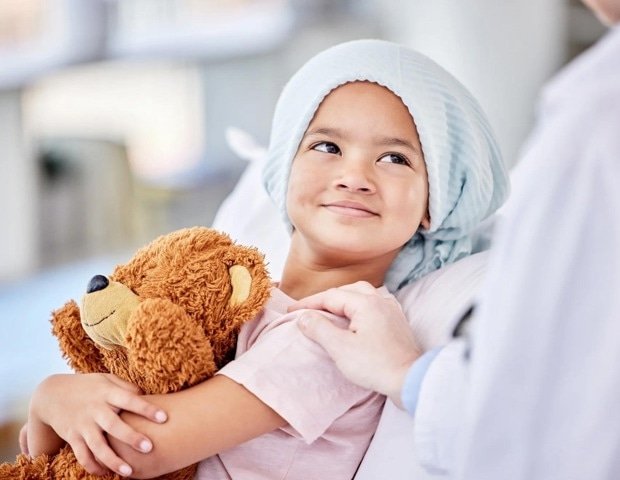
A new trial will test whether a tool powered by Apple Watch health data and artificial intelligence can help protect children undergoing cancer treatment from infectious diseases.
The Murdoch Children’s Research Institute (MCRI) aims to investigate the ability of a custom-designed research app to detect signs of impending infection over a four-week period. In the study, consenting participants will share data collected on their Apple Watch, including breathing rate, heart rate, blood oxygen levels, and physical activity, through a secure app.
MCRI’s Professor Rachel Conyers said the app had the potential to detect infections earlier, allowing clinicians to intervene sooner.
Apple Watch has a suite of features that provide access to insights about health and activity, and could be a non-invasive platform for detecting early signs of infection.
Children receiving chemotherapy have a weakened immune system and are more susceptible to infections. By combining wearable technology and artificial intelligence, we will develop an infection prediction model that will provide clues to alleviate further suffering. This early warning system could speed treatment, shorten hospital stays, and reduce worry for families. ”
Rachel Conyers, MCRI Professor
The WEARABLES study is recruiting 150 patients aged 5 to 18 who are receiving chemotherapy at the Royal Children’s Hospital.
Professor Conyers’ research team has also previously investigated the feasibility of using the Apple Watch ECG app to monitor children’s hearts during cancer treatment to better understand and prevent heart damage.
Treatments for childhood cancer have improved significantly, with five-year survival rates exceeding 80% in developed countries. However, these treatments are not without side effects.
Studies show that approximately 60 percent of survivors report at least one chronic health condition, and more than a quarter have a severe or life-threatening illness as a direct result of cancer treatment. Of the children who experience side effects, 90% are treated for the infection.
Six-year-old Oliver, who has a rare, aggressive blood cancer, is participating in the trial.
A few days after Christmas last year, my family decided to make a quick stop at a local emergency clinic on our way to the beach.
Oliver’s parents, Jackie and Terry, were concerned after a recent rash on his chest and wanted to get him tested as a precaution.
“The last few days have been warm and I didn’t notice the itching, so I thought it was just a sunburn,” Jackie said. “With another warm day in the forecast, we wanted the kids to enjoy the beach and let off some energy after the busy Christmas period.”
However, after examining the rash, doctors at the emergency clinic referred Oliver to Warrnambool Hospital for blood tests. A few hours later, tests revealed an abnormality and the family rushed Oliver, who was still bathing, to the Royal Children’s Hospital by ambulance.
This diagnosis was a big shock. The rash was a sign of phenotypic acute leukemia.
Oliver immediately started chemotherapy and his family moved to Melbourne during treatment.
Jackie said Oliver was passionate about supporting other children undergoing cancer treatment.
“The chemotherapy was so intense that Oliver became nauseous and lost his appetite,” she said. “However, participating in this trial has been very reassuring as we have been able to actively monitor for the possibility of serious side effects or infections.
“At first I was really worried that I might miss something, but this watch has helped everyone stay ahead of the curve. Oliver is also happy to wear it and is already using all its great features.”
sauce:
Murdoch Children’s Research Institute
