


When humans estimate another person’s body size, it is not necessary to observe the whole body to make an accurate estimate. New research has revealed that people rely heavily on a specific combination of features in their lower bodies, especially around their thighs. This research recently BMC biology.
Understanding how people perceive body dimensions has practical implications for health and psychology. Inaccurate judgments about one’s own and others’ body image play a central role in body image disturbances. Conditions like anorexia nervosa are often accompanied by a distorted visual perception of body proportions.
Researchers want to understand the exact visual mechanisms that cause these everyday misconceptions. To do this, they borrow techniques from visual science to assess how the visual system prioritizes certain physical features. Leah Marinko and colleagues at the University of Western Australia investigated which precise anatomical regions the human brain needs to look at to determine weight.
Scientists have debated whether the brain processes the human body as a single object or as a collection of separate parts. The single object approach is known as holistic processing. Part-based processing approaches suggest that specific local visual cues are used to form holistic judgments of the whole person.
Previous research on this topic has given conflicting answers. Several experiments have shown that a full silhouette is strictly necessary for the human brain to function correctly. Others point out that when estimating a person’s weight, people tend to focus entirely on the lower torso.
Marinko and her colleagues designed visual tasks to measure two common types of inherent perceptual errors. The first error is known as regression to the mean. This occurs when a person judges an extreme object and mentally approximates it to the average of all similar objects he has ever seen.
For example, people routinely underestimate the weight of very large bodies and overestimate the weight of very small bodies. The second error is called serial dependency. This is an optical illusion in which the appearance of an object is distorted towards the object you were looking at just before.
When a person looks at a series of bodies, their judgment of the current body changes depending on whether the previous body was large or small. By measuring these two types of innate visual biases, researchers can track how specific body parts influence the overall accuracy of size estimates.
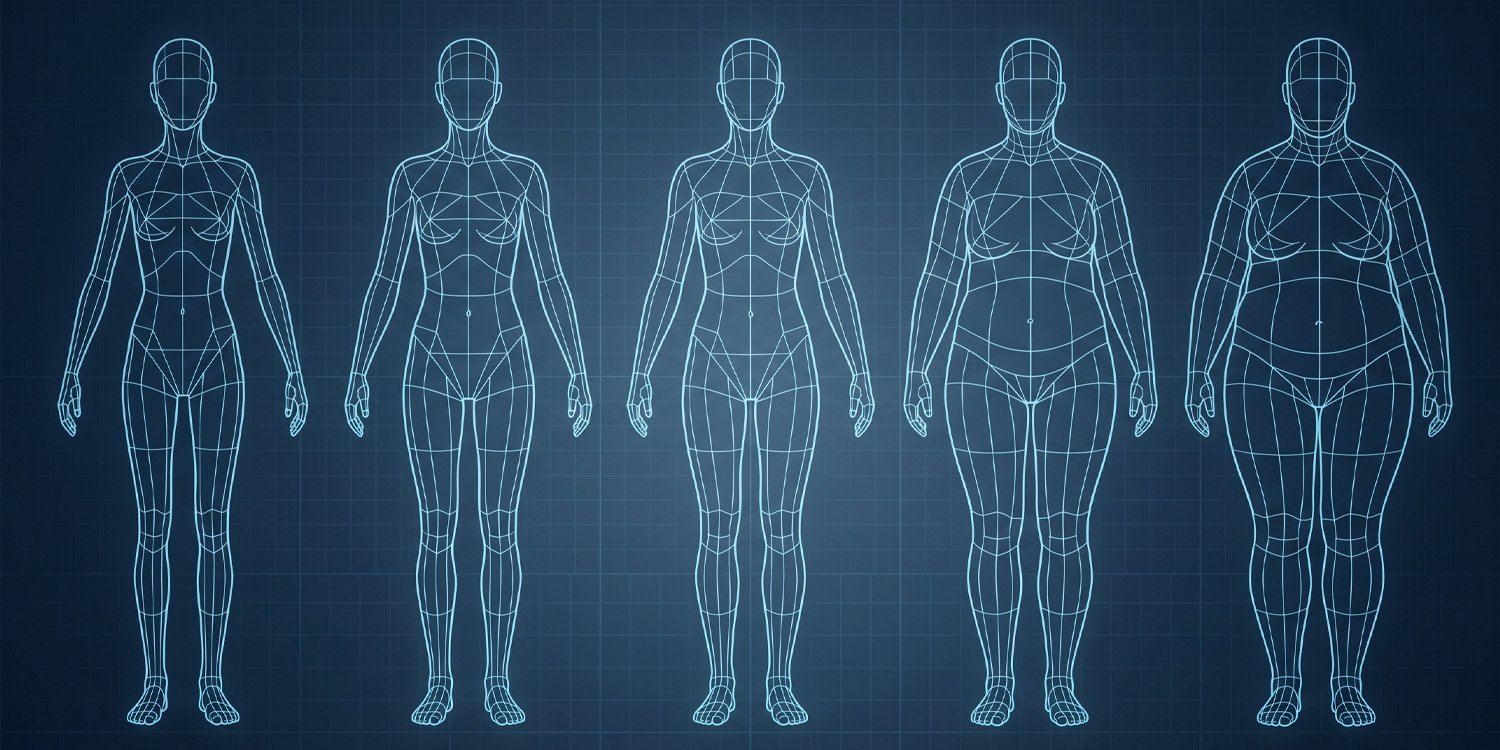
In the first phase of the study, the researchers recruited 99 female participants and had them view standard images of the female body on a computer screen. Most of the participants were healthy young adults. They observed 35 different body morphologies, ranging from extremely thin to extremely large.
Faces were removed from the images to avoid distractions. During a visual test called the bodyline task, participants saw a body image flash on a screen for a quarter of a second. They then rated the perceived size of the model by clicking on a flat visual scale from 1 to 7.
This task included extreme body anchors on either side of the visual scale to indicate reference points. The researchers divided the computer experiment into three different viewing conditions to manipulate the visual information participants received. Task order was counterbalanced across participants.
First, participants judged the whole body through a series of trials. Next, we judged images that only showed the upper body, from the navel to the neck. Finally, we judged images that only showed the lower body from the belly button to the feet.
The results revealed that estimating size based only on the upper body results in significant perceptual errors. Participants showed a significant regression on average incorrect judgments when their lower body was hidden. They were much less able to distinguish between small and large bodies using only torso and arm cues.
However, looking at the lower half of the body gave estimates that were just as accurate as looking at the whole body. The estimation error of the lower half image perfectly reflects the baseline error of the whole body image. This result suggests that the human visual system uses a region-based processing method for body size.
People thoroughly extract the information they need from their lower extremities. Checking the upper body, arms, and shoulders does little to improve the accuracy of size estimates based on regression calculations. The brain infers the shape of the rest of your body based on your hips and legs.
Knowing that the lower body was key to visual estimation, the researchers conducted a second experiment to isolate specific features of the legs. They recruited a new group of 116 female undergraduates to perform much the same task. This time, due to viewing conditions, the images were limited to a very specific part of the thigh.
Participants observed the whole body in one condition as a control baseline. In another condition, the researchers applied a digital rectangular mask to the images, exposing the outer thighs and hips and obscuring the inner legs. In the third condition, another digital mask exposed the inner thigh area without showing the outer hip.
The aim was to test whether single isolated cues drive the high accuracy found in the first experiment. The researchers wanted to know whether the brain relies solely on the curved contour of the outer hip, or the visible gap between the inner thighs. Visual tracking studies have previously suggested that both of these different anatomical regions attract the eye during size measurement tasks.
The results of this second test showed that observing either the medial side of the isolated thigh or the lateral side of the isolated thigh resulted in large estimation errors. Isolated sections resulted in surprisingly high error rates compared to whole-body images. A single aspect alone could not provide sufficient structural information.
Both regression to the mean bias and series-dependent bias were highly inflated under these restricted views. The error occurred regardless of whether the body depicted on the monitor was very small or very large in physical reality. The researchers found that error rates were slightly higher when participants looked only at the inner thighs compared to when they looked only at the outer thighs.
The results tell scientists that the brain requires multiple functions in the lower body at the same time to make good decisions. To make an accurate estimate, you need to check the outside width of your hips compared to the inside contour of your thighs. A single isolated trait is essentially useless without an adjacent anatomical context.
The researchers noted that one of the complications has to do with how the actual body anatomy changes depending on size in a real-world environment. If you are small, you tend to see a gap between the tops of your legs, but if you are large, your thighs are often in constant contact. Despite this physical difference, hiding either thigh impairs size estimation accuracy for all body sizes equally.
The researchers noted several caveats regarding specific digital methods. Applying rectangular masks to obscured body parts is a difficult scientific tactic because erasing parts of the image removes natural clues, from skin texture to shadows. Losing these subtle contextual visual cues can increase error rates.
In this study, we focused only on female participants observing women’s bodies in order to create a homogeneous dataset. Society has vastly different ideals regarding body shape based on gender expectations. Men often idealize a muscular shape characterized by a wide upper body and defined pectoral muscles, rather than a thigh shape.
Because of these different social standards, people may use completely different visual rules to view and judge men’s bodies. Replicating the study setting using male body images and male participants may reveal that upper body characteristics drive accuracy in that particular demographic. This finding cannot be directly mapped to different body types with absolute certainty.
Future research could potentially apply these specific visual tests to clinical psychology populations. Investigating how people formally diagnosed with anorexia or bulimia perform on visual examination of their thighs may provide useful psychiatric insights. A failure to mentally integrate multiple lower body features may explain the severe body distortions experienced by these particular patients.
The study, “The Thighs Have It: Evidence for the Importance of the Lower Body Region in Judging Women’s Body Size,” was authored by Leah Marinco, Brianna L. Kennedy, KayKay Ko, Laura Donzillo, and Jason Bell.
