


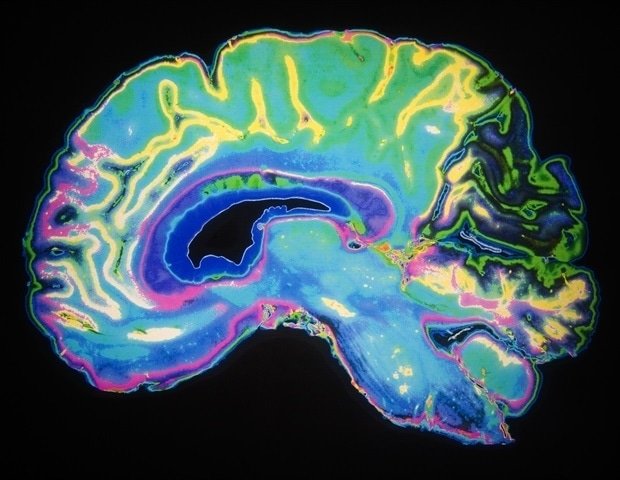
Soft electrodes designed to perfectly match the surface of the human brain could help advance neural interfaces for monitoring and treating neurodegenerative diseases, according to a new study led by researchers at Penn State University. The neural interface is powered by small sensors that can track biophysical signals, known as bioelectrodes. These sensors typically have a one-size-fits-all design and are made of rigid materials, making them difficult to adapt to the complex structure of the brain. Researchers have developed a new approach to 3D print bioelectrodes that can stretch and deform to accommodate the subtle differences that make every brain unique.
The researchers used software to simulate detailed brains based on MRI scans taken from 21 patients, and molded the electrode sets to the specific structures of the brain before 3D printing the electrodes and models of the brain. In a paper published in Advanced Materials, they reported that their electrodes conformed better to brain structures than traditional designs, maintaining efficacy and biological compatibility in tests conducted on rats.
Folds in the human brain are created through a process known as gyri, in which sheets of cortex on the outer wall of the brain bundle into ridges known as gyri and grooves known as sulci. This allows cells throughout the brain to communicate at high speeds and allows relatively large organs to fit compactly into the skull. When expanded, the adult brain is about 2,000 square centimeters, or about the size of two large pizzas.
Although the major cortical folds are consistent across individuals, the exact placement of the brain’s glies and sulci varies widely from person to person, according to Tao Zhou, Wormley Family Early Career Professor, Assistant Professor of Engineering Science and Mechanics, and corresponding author of the paper, but traditional bioelectrode designs do not take this into account.
“Everyone has a different brain structure, depending on their height, weight, age, gender, etc.,” said Zhou, who is also affiliated with Penn State’s Center for Biomedical Engineering and Neuroengineering. “Nevertheless, we are trying to adapt the neural interface to the brain as if it were an identical structure. This motivated us to create electrodes that are tailored to each individual based on the structure of the brain.”
The electrodes are primarily made from water-rich materials known as hydrogels to better conform to the soft tissue of the brain and the patient’s unique shape. In addition, the team used a new honeycomb-inspired structure that provides flexibility and strength while remaining cost-effective and quick to print, Zhou said.
“The honeycomb structure allows us to significantly reduce the stiffness of the electrode without sacrificing its mechanical strength,” Zhou said. “Additionally, this construction reduces the overall material used during manufacturing, reducing manufacturing time, cost, and environmental impact.”
Production begins with an MRI scan of a patient’s brain, which is used to perform finite element analysis. This is the process of creating a detailed simulation of the human neural structure. The analysis is rendered as a 3D model of the patient’s brain, and the team uses computer software to adjust bioelectrodes that are specially shaped to fit the ridges and grooves of the cerebral cortex.
After molding, the team 3D prints the hydrogel electrodes using direct ink printing. This technology can create electrodes that can monitor and transmit brain signals on relatively small surfaces. For this study, the team 3D printed models of the brains of 21 different participants, applied electrodes, and physically measured how precisely the electrodes fit onto the brain surface. Zhou explained that traditional manufacturing approaches require specialized equipment such as clean rooms, making customization very expensive. 3D printing allows the team to customize and manufacture electrodes much more quickly and at a fraction of the price.
Compared to traditional approaches, hydrogel-based electrodes track brain structures more precisely. Zhou said their approach produces electrodes that show a near-perfect connection to the electrical signals present in the brain. Furthermore, because the stretchable gel is highly malleable, it can be applied to soft brain tissue without causing damage, compared to stiffer materials containing other designs that can potentially damage the tissue.
According to Zhou, the softness of the electrodes allows for closer and more stable contact with the brain, which in turn facilitates higher quality and more reliable monitoring. Furthermore, bioelectrodes made with this approach do not affect fluid transport around the brain, an important aspect of brain function that many conventional electrodes impede.
“Customizing the electrodes to specific structures in the brain greatly improves their reliability,” Zhou said. “The signal quality itself is significantly improved due to the improved fit to the brain.”
To further study the electrodes, the research team placed them in the brains of rat models over a 28-day period. Zhou said the rats showed no immune response to the printed electrodes, which is an important consideration in biodevice development. Moreover, the electrodes showed no performance loss and were able to read electrical and physiological signals in the brain with high sensitivity and accuracy.
Zhou said he believes this printing method could serve as a framework for printing bioelectrodes customized for specific patients on a commercial scale. Although these systems have traditionally been used to monitor neural activity, the research team plans to investigate how personalized electrodes can contribute to neurological treatments.
“We aim to further improve this technology and optimize the electrodes to monitor specific diseases,” Zhou said. “In the future, we look forward to collaborating with patients on how this approach can support brain monitoring and disease treatment in clinical settings.”
Other Penn State co-authors include biomedical engineering professors Nan-Ying Chan and Dorothy Fair Hack and brain imaging professor J. Lloyd Hack. Sulin Zhang, professor of engineering science and mechanics and biomedical engineering; PhD candidates in Engineering Sciences and Mechanics, Marzia Momin, Lui Feng, Salahuddin Ahmed, and Jash Ren. biomedical engineering doctoral candidates Xiaoai Chen, Hyunjin Li, and postdoctoral researcher Samuel R. Kramer. Shinyi Wang, mechanical engineering doctoral candidate. Basma Almahood was an undergraduate studying physics at the time of the research and is currently a doctoral candidate in physics at Michigan State University. Research assistant Li-Pang Huang.
This research was supported by the National Science Foundation and the National Institutes of Health.
sauce:
Reference magazines:
DOI: 10.1002/adma.202516291
