


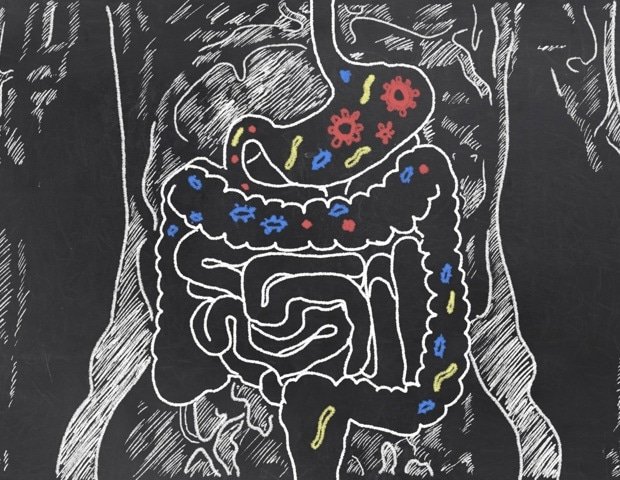
More than a decade after adenomas (precancerous masses) are removed from the colon, changes in the gut microbiome and metabolites persist and may increase the risk of colorectal cancer (CRC), according to a new study led by researchers at Harvard’s T.H. Chan School of Public Health. The study also found that diet and physical activity were more closely related to the abundance of colon cancer-associated gut microbes in people with a history of adenomas than in people without adenomas, suggesting that lifestyle may play a particularly important role in shaping these microbes in this high-risk group.
CRC is the second most common cause of cancer-related death worldwide, and adenoma removal is one of the most effective preventive measures. However, people who undergo this procedure still face an increased risk of colorectal cancer. The biological reason for this remains unknown, but the gut microbiome (a collection of trillions of bacteria living in the digestive tract) may be suspected.
Our study is the first to address whether changes in gut microbiome and metabolism are still detectable years after adenoma removal. The answer is yes, and removing the adenoma does not return the intestine to a lower-risk state, thus suggesting that the gut microbiome may make a significant biological contribution to persistent colorectal cancer risk. ”
Minyan Song, corresponding author, Associate Professor of Clinical Epidemiology and Nutrition
The study is scheduled to be published on May 27th. Cell hosts and microorganisms.
Previous studies linking the gut microbiome and colorectal cancer risk only looked at patients’ gut microbiomes around the time of adenoma removal. In this study, researchers took a longitudinal approach using health data and stool samples from women enrolled in the Nurses’ Health Study II. They studied the microbiomes of 354 participants who had adenomas removed from their colons and compared them with the microbiomes of 354 age- and background-matched participants without adenomas. Stool samples were collected on average 12 years after adenoma removal.
The study found that significant differences existed between the gut microbiota and metabolites of participants without adenomas and those who had adenomas, even more than 10 years after resection. The latter group had a microbiome that was partially similar to that of colorectal cancer patients. Among participants with a history of adenoma, those who ate a less healthy diet and were less physically active harbored more microorganisms that are typically increased in both adenoma and colorectal cancer patients. These associations between lifestyle and microbes were stronger in participants with a history of adenoma than in those without adenoma.
“The fact that gut microbial and metabolic signatures associated with colorectal cancer are still detectable 10 years later suggests that the gut microbiome may be part of persistent colorectal cancer risk,” said first author Ana Nogal, a postdoctoral researcher in the Department of Epidemiology. “Diet and lifestyle are closely linked to these microorganisms, raising the possibility that these habits influence the gut environment of people at high risk.”
The researchers noted that this study shows an association, not causation, and that future studies are needed to directly test whether altering the gut microbiome through dietary and exercise habits successfully alters colorectal cancer risk.
sauce:
Harvard University TH Chan School of Public Health
Reference magazines:
Nogal, A. others. (2026). Relationship between long-term changes in the gut microbiota and fecal metabolome and colorectal cancer after colorectal adenoma removal. Cell hosts and microorganisms. DOI: 10.1016/j.chom.2026.05.001. https://www.sciencedirect.com/science/article/pii/S1931312826001770?via%3Dihub
