


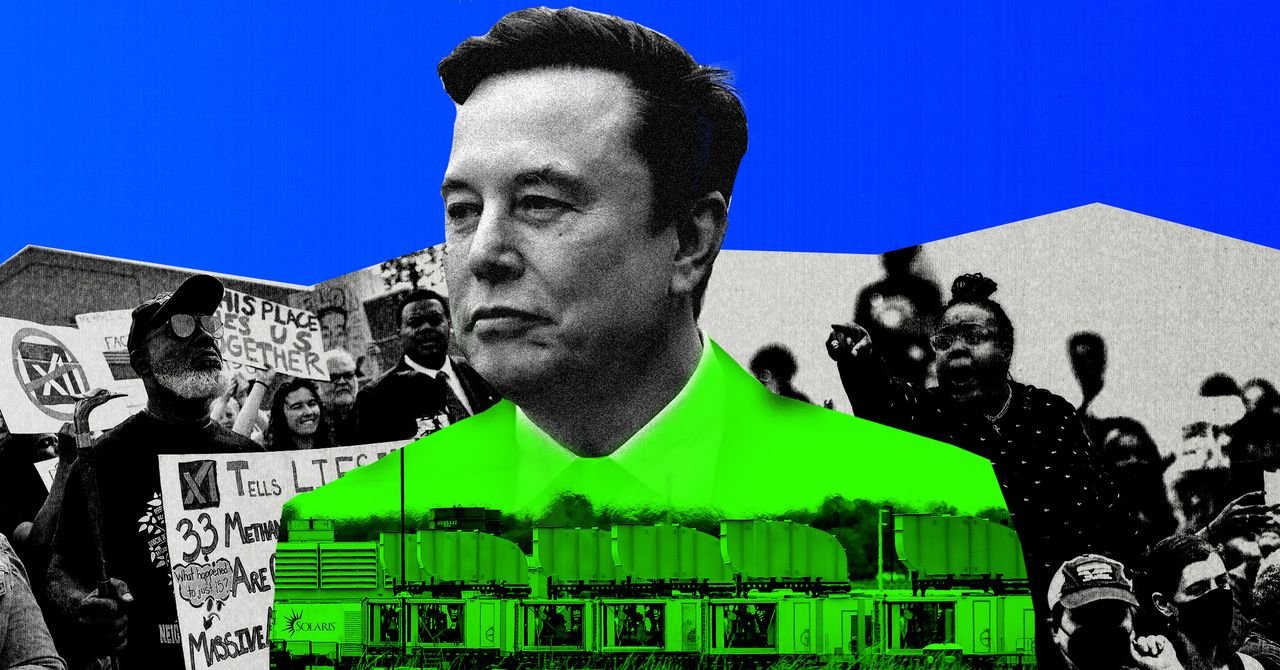
SpaceX, Elon Musk The rocket launcher and data center operator plans to go public on Friday with a target valuation of more than $1.75 trillion. The move will make Musk, already the world’s richest man, significantly richer.
An initial public offering would allow SpaceX to raise even more money and quickly fund its AI ambitions, including building more data centers.
But even as Musk and other SpaceX investors expect huge profits, the community that hosts the already operational xAI data center is demanding accountability for the company’s use of polluting gas turbines and water treatment facilities that were shut down earlier this year.
“We are a colony exploited and exploited by what would be one of the most valuable institutions in the world,” says Justin Pearson, who represents part of Memphis in the Tennessee House of Representatives. “People will die because of this pollution.”
xAI is selling computing at its Memphis campus to Anthropic for $15 billion a year. Anthropic is another company planning a major IPO in the coming months. “For SpaceX and Anthropic and other companies that are building these data centers, people are not important,” Pearson says.
President Donald Trump has hinted that the US government may invest in cutting-edge AI companies to begin “giving back” to the American people. But it’s unclear what form that will take or whether such a move will occur.
SpaceX did not respond to requests for comment and Anthropic declined to comment, but the company’s public policy director and Memphis’ mayor have touted the company’s involvement with the city.
xAI’s Colossus 1 campus in Memphis gained national notoriety in 2024 when community members began sounding the alarm that the company was operating natural gas turbines without permission. Regulators said a loophole in the Clean Air Act allowed xAI to operate what appears to be up to 35 turbines without a permit for a year. (Last year, local regulators granted xAI permission to operate 15 turbines on the site until 2027.)
Natural gas turbines emit fine particulate matter called PM2.5, which has been linked to a variety of health problems, including heart attacks, high blood pressure, and premature death in people with pre-existing conditions. Experts have warned that PM2.5 pollution can be harmful even below levels set by regulators.
xAI’s first data center was built in Boxtown, a historically black neighborhood in Memphis. Box Town already has some of the highest asthma rates in the country due to legacy industrial pollution.
“All of us with families in South Memphis know someone who died from a bronchial disease or random cancer that wasn’t in the family tree,” says Memphis community organizer Richard Massey.
In January, the Environmental Protection Agency issued guidance that appears to close loopholes in the Clean Air Act that xAI used to operate its turbines without permission. However, the company had already begun installing unauthorized turbines in South Haven, Mississippi, to power Colossus 2. As of mid-May, the company had brought at least 46 unlicensed gas turbines to work on site, according to an email xAI sent to regulators.
Earlier this year, environmental justice groups led by the NAACP filed a lawsuit against xAI, alleging that the company installed the gas turbines “without air clearance or without consideration for the health and safety of those living nearby.” Earlier this week, Southaven residents filed a separate class action lawsuit against xAI and SpaceX, alleging that the construction of the data center is a nuisance to the community.
