


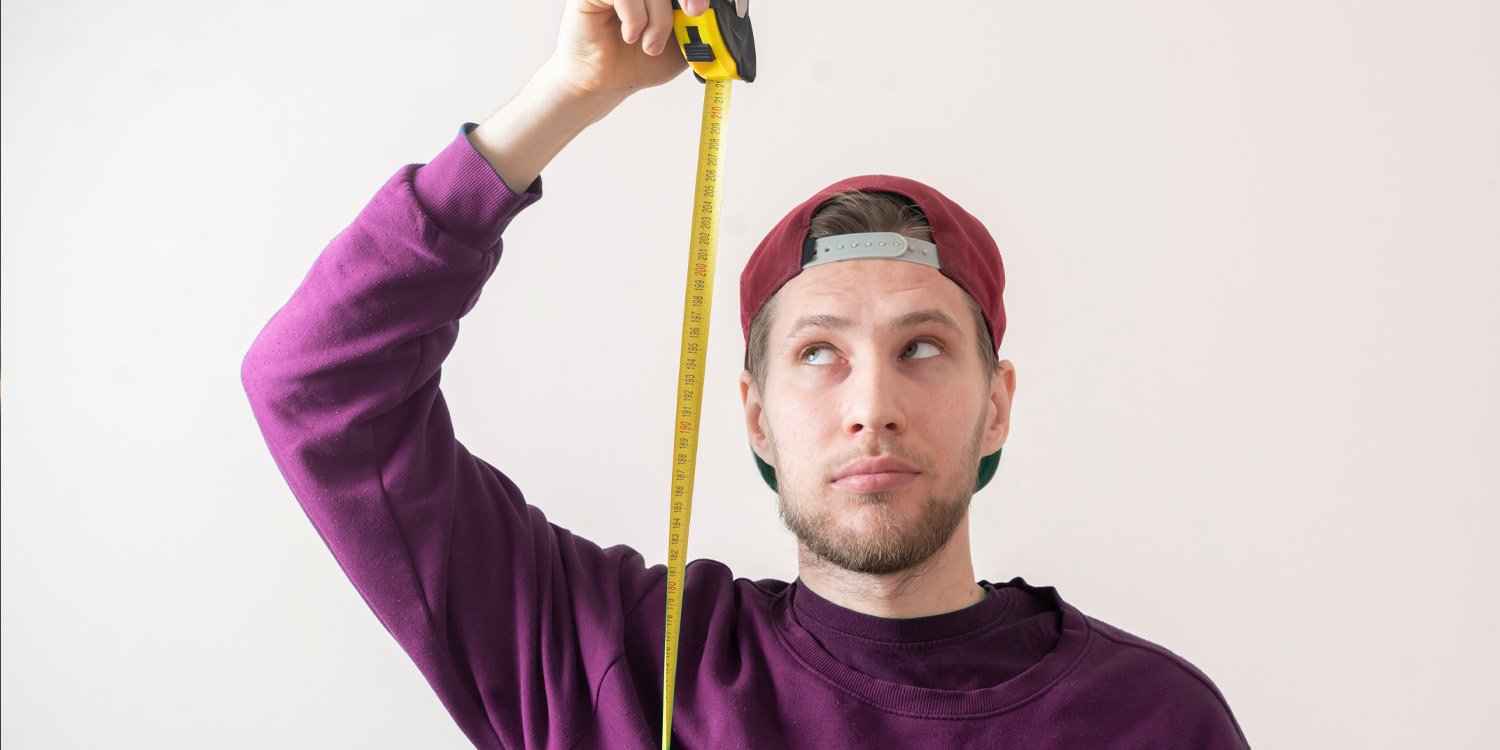
People who are not happy with their height often compensate for it by changing other aspects of their appearance, such as losing weight, building muscle, or wearing certain shoes. Recent research published in Journal of Social Psychology We provide evidence that body dissatisfaction extends far beyond traditional concerns about weight and shape. The results of this study suggest that people actively engage in a variety of behaviors to compensate for their unchanging physical characteristics.
Body dissatisfaction is a well-known psychological problem that usually focuses on a person’s weight and overall body shape. People who are dissatisfied with their weight often take actions to change it, such as strict diets or excessive exercise. These behaviors are known as compensatory behaviors and are physical or social strategies that people use to compensate for perceived physical deficiencies. While science has thoroughly studied how people try to manage their weight, less is known about how people cope with traits that can’t be easily changed, like height.
Daniel Talbot, a clinical psychologist and lecturer in psychology at Australian Catholic University’s School of Behavioral Health Sciences, co-authored the study with Peter K. Jonathon.
“Most body image research focuses on characteristics that people can change, such as weight or muscularity,” says Talbot. “While height is largely fixed and therefore varies from person to person, it is still socially important and associated with attractiveness, status and self-perception.” Talbot noted that the researchers wanted to understand how people react when they are dissatisfied with traits that cannot be easily changed.
In society, being tall is often considered a positive trait, especially for men. Research shows that taller people are often seen as more attractive, more capable, and more likely to hold leadership positions. Because of these societal standards, people who feel they are below their ideal height can experience significant body image distress and feelings of inadequacy. “Height concerns are often discussed as if they only affect men, but our findings suggest that women can also experience height dissatisfaction, although the nature of the concerns is different,” Talbot said.
Height also confers social benefits for women, but these benefits tend to be limited by certain gender norms. Society’s expectations often encourage the norm that men are taller, an unspoken cultural rule that women should ideally be shorter than their male romantic partners. This narrows the range of socially acceptable heights for women. Being perceived as too tall can conflict with traditional notions of femininity and lead to body dissatisfaction typical of tall women.
To investigate this topic, researchers recruited a sample of 328 Australian adults and conducted a comprehensive online survey. The average age of the participants was 24 years, and approximately 73 percent of the group was female. Participants entered their age, gender, ethnicity, and self-reported their exact height in centimeters. The average height of the participants was slightly taller than the average Australian adult.
To assess how participants felt about their height, the scientists used a psychological questionnaire called the Negative Physical Self Scale – Short Subscale. The tool asked participants to rate how often they agreed with statements such as feeling it was too short. Higher scores on this survey indicate greater psychological dissatisfaction with height. The researchers also created six specific questions to measure the different ways people try to compensate for their height.
These six compensatory behaviors include wearing shoes that increase your height and leaning forward to appear shorter. The survey also asked whether participants actively avoided situations where their height might attract attention, such as standing in group photos. The researchers also asked participants whether they had ever considered artificially altering their height or had undergone any medical procedures. Finally, the study measured whether individuals specifically tried to lose body fat or gain muscle mass to compensate for their height.
Researchers found that short people and people who were highly dissatisfied with their height tended to engage in more of these compensatory behaviors overall. “The main takeaway is that height dissatisfaction appears to be more important than height itself,” Talbot said. “People who are dissatisfied with their height are more likely to report a variety of compensatory behaviors, such as changing their appearance, avoiding certain situations, and using strategies to increase their height.” Talbot explained that this suggests how people feel about their height may be more important than their actual height.
This pattern of behavior was particularly strong among the study’s male participants. For men, short height was strongly associated with considering medical procedures to change height. Short men frequently report trying to lose fat all over their bodies to visually compensate for their short stature. Unhappy men were also more likely to try to gain muscle mass in response to their height concerns.
The researchers noted that these typical male behaviors likely reflect the immense pressure men face to appear taller to meet society’s expectations of masculinity. Building a muscular physique can serve as a way to project physical superiority and compensate for a lack of vertical presence.
“One interesting finding is that some people seem to compensate for height concerns by focusing on other aspects of their appearance, such as reducing body fat or increasing muscle mass,” Talbot told SciPost. “This suggests that when people feel unable to change one aspect of their appearance, they may try to improve other features that they perceive to be more controllable.”
This study provided evidence that women cope with height anxiety in very different ways than men. Shorter women were more likely to wear high heels or platform shoes to appear taller, but this behavior was less commonly reported among the men in the study. Researchers note that height-increasing shoes are widely available and socially acceptable for women. This gives women a relatively easy and subtle way to temporarily increase their height without resorting to drastic measures.
Tall women, on the other hand, were much more likely to slouch and avoid standing up straight. The authors suggest that this behavior is a direct response to pressure on women to appear smaller or more feminine in social situations. Tall women may be trying to live up to the expectation that they should be shorter than the men around them by consciously adopting a posture that makes them shorter. This highlights how traditional dating norms have a huge impact on everyday physical habits.
Scientists used statistical models to better understand the exact psychological stages that cause these appearance-altering behaviors. They discovered a psychological process known as mediation. This means that the intermediate variable describes the relationship between the other two factors. In this study, feelings of dissatisfaction served as an important intermediate step between actual height and compensatory behavior. For example, simply being physically short does not directly cause a person to try to lose body fat.
Rather, because of their short stature, the person felt deeply dissatisfied with their height, and that emotional unhappiness actually prompted efforts to lose fat. The researchers found that the use of tall shoes had a similar mediating effect. Being short led to dissatisfaction with height, which motivated individuals to wear shoes that made them look taller. This particular finding highlights that psychological distress over body image is the real driver of these everyday behaviors.
The data also revealed a complex statistical pattern known as the suppression effect. Typically, the results showed that short people feel worse about their height and compensate the most. But when the researchers mathematically removed feelings of dissatisfaction from the data equation, they found that taller people actually had higher rates of compensatory behavior. This suggests that people change their appearance for two very different reasons.
For short people, changing their appearance is usually a means of coping with the emotional pain of feeling physically inadequate. For tall people, changing their appearance may not be a solution to negative emotions at all. Instead, tall people may strategically alter their appearance to improve their social status, optimize their attractiveness, or manage their perceptions from others. This suggests that body modification is used more strategically among people who already possess socially valued traits.
Although these patterns provide useful insights into human behavior, the statistical associations were not large-scale. “Effects are generally small to moderate, which is typical in studies of individual differences,” Talbot said. “Height is just one of many factors that influence body image and behavior,” he said, adding that even modest effects can have broader social and psychological relevance, as height is a salient characteristic that affects most people in some way.
The authors noted that the current study has several limitations. For example, the researchers measured all variables at a single time point. “Because this was a cross-sectional study, we cannot determine cause and effect,” Talbot said. “We also don’t want readers to conclude that all short people are unhappy with their height or do things to compensate for it.”
Talbot noted that most of the study participants had relatively low levels of dissatisfaction with their height, and that there was considerable individual variation. The sample was predominantly female and comprised mostly people from Australian or European backgrounds. This lack of demographic diversity means that the findings may not apply to other cultures, where physical ideals are quite different. The relatively small number of men who participated in this study means that findings regarding men’s behavior should be interpreted with caution.
In the future, the scientists hope to expand their research into how people deal with height-related anxiety. “Our broader goal is to better understand height dissatisfaction as an often overlooked aspect of body image,” Talbot said. “We are currently investigating how height dissatisfaction is associated with social media use, self-esteem, dating confidence, quality of life, and other psychological outcomes.” The researchers also hope to identify factors that may help protect against height concerns in the future.
Ultimately, this study provides evidence that people employ different behavioral strategies to cope with height dissatisfaction. Treating these often overlooked anxieties can help psychologists develop better treatments for people worried about their appearance. “More broadly, this study highlights that body image concerns extend beyond weight and shape and can include characteristics outside of a person’s control,” Talbot said.
The study, “Compensating for Shortcomings?: Height and Its Behavioral Compensation Strategies,” was authored by Daniel Talbot and Peter K. Jonasson.
