


Age-related macular degeneration (AMD) affects a huge number of older adults. Approximately one-third of people over the age of 80 have AMD, and approximately 20 million Americans over the age of 40 live with AMD.
Most cases are dry AMD. It usually develops gradually, but over time central vision may become damaged, making it difficult to see faces, read, drive, or focus on objects in front of you. Despite how common dry AMD is, doctors still have limited options to stop it early.
The Aalto University study suggests a different strategy. Rather than replacing damaged cells after vision loss has progressed, researchers are exploring whether they can help vulnerable eye cells protect and repair themselves before the disease causes severe damage.
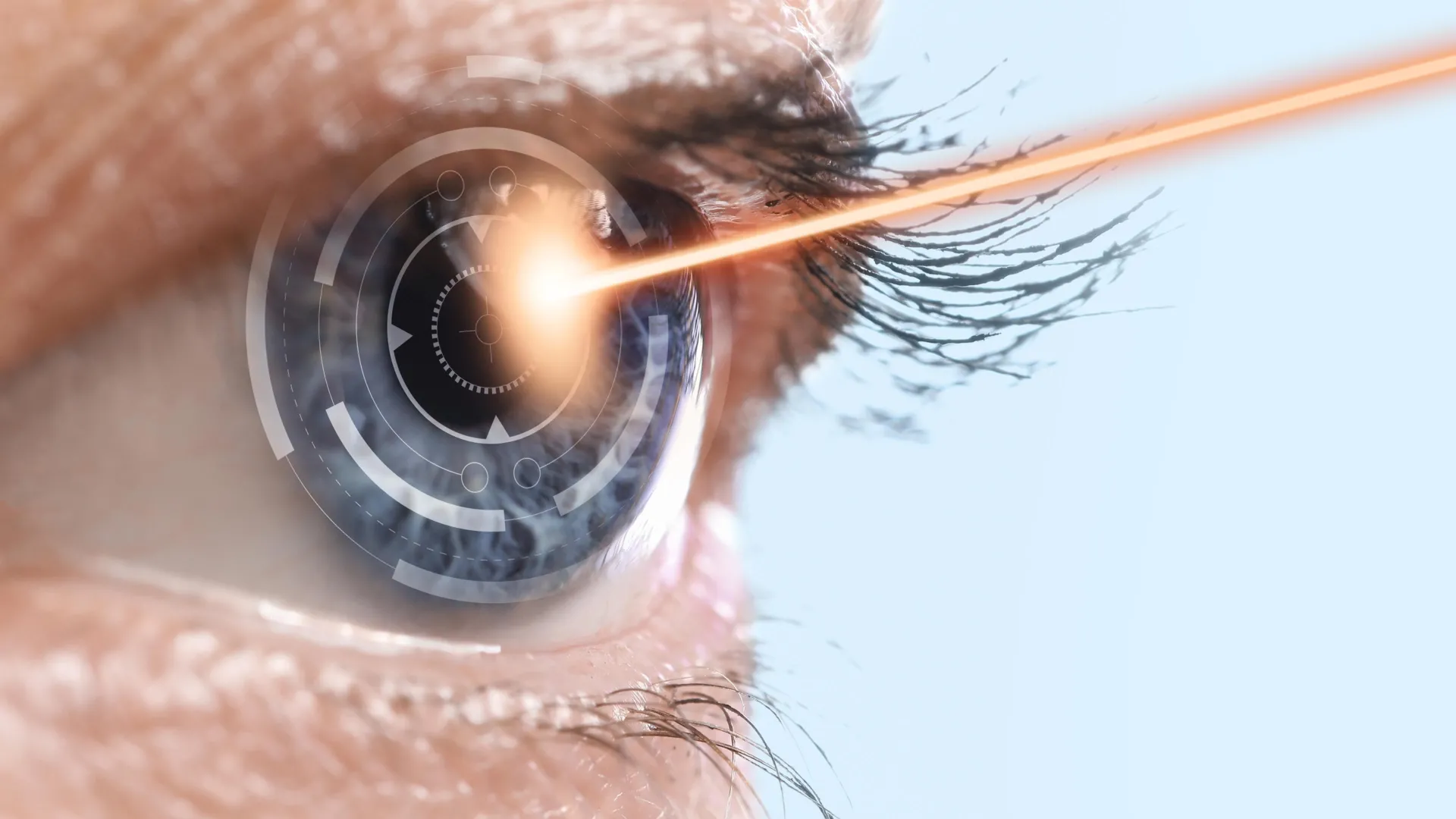
This approach uses carefully controlled heat delivered in near-infrared radiation. The goal is to gently warm the tissues behind the eye just enough to activate the natural repair system without causing any harm.
Helps aging eye cells fight back
Professor Ari Koskelainen said the idea is to strengthen protective mechanisms within the affected cells.
“Cellular function and protective mechanisms weaken with age, leaving the fundus (the inner surface of the back of the eye) exposed to severe oxidative stress,” he explains. “Free oxygen radicals damage proteins, causing them to fold and aggregate, and fatty protein deposits called drusen begin to accumulate. This is the main diagnostic criterion for dry age-related macular degeneration.”
These fatty protein deposits, known as drusen, are a major warning sign of dry AMD. When they accumulate, they can interfere with the health of the retina, especially the macula, the part of the eye responsible for sharp central vision.
The Aalto team’s method is designed for early diagnostic stages, when there is still the possibility of slowing or stopping the progression of the disease. That is a big reason why this work has attracted so much attention. Target before the damage becomes catastrophic.
Why is heat helpful?
Harnessing the heat of the retina is not easy. The tissue only needs to be warmed a few degrees, and it is difficult to directly measure the back of the eye. Temperatures above 45 degrees Celsius can cause tissue damage.
To solve this problem, researchers developed a system that can monitor temperature and simultaneously heat tissue with near-infrared light. This real-time control is central to this approach, as treatment depends on staying within a safe and useful range.
The heat is not intended to burn or destroy tissue. Rather, it acts like a controlled stress signal. The researchers hope that by subjecting cells to a mild heat shock, they will trigger a protective response that weakens with age.
One of those reactions involves heat shock proteins. These proteins are produced when cells are under stress and help damaged proteins fold into the correct shape. If repair is not possible, the defective protein is usually broken down into amino acids that can be recycled or removed by the cell.
Turn on cell cleanup system
If the damaged protein is already aggregated, a different process becomes important. This is called autophagy, and Yoshinori Ohsumi won the Nobel Prize in Medicine in 2016 for discoveries related to this.
Autophagy acts like a cellular purification system. A membrane forms around unwanted substances, and recognition proteins help induce enzymes that break down old or damaged components. In dry AMD, this type of cleanup can be important because protein deposition and cellular stress are central features of the disease.
“We were able to show that in addition to the production of heat shock proteins, we can also activate autophagy using heat shock. This process is similar to waste disposal,” Koskelainen says.
That’s what makes this treatment particularly interesting. It does not target just one symptom. It attempts to revive two basic survival systems that cells use to repair damage and eliminate harmful substances.
Promising results before human testing
This method has been tested on mice and pigs. In these animal studies, the researchers showed that controlled heating can activate a desirable protective response in retinal tissue.
The next major step is human testing. Patient trials are scheduled to begin in Finland in spring 2026. The first phase focuses on safety, rather than proving that the treatment improves vision or halts AMD progression. If this step goes well, the researchers would like to know how often this step needs to be repeated.
“The response may already start to decline a few days after treatment, so the treatment needs to be repeated,” Koskelainen says.
The details are important. Treatment may not be a one-time treatment. If this works in humans, it could become a kind of maintenance therapy that is repeated at regular intervals to keep the eye’s protective system active.
The rapidly changing field of dry AMD
Aalto’s approach is part of a broader shift in dry AMD research. For many years, dry AMD has often been described as a condition with few meaningful treatment options, especially in its early stages. That is starting to change.
In the United States, the FDA has cleared another light-based device, the Valeda Light Delivery System, for selected patients with dry AMD. Unlike Aalto’s treatment, Valeda uses photobiomodulation rather than controlled retinal heating. FDA documents describe it as a prescription device intended to improve vision in patients with certain forms of dry AMD without central atrophy and neovascular maculopathy.
It does not mean that Aalto treatment has already been proven in patients. It remains experimental until human test data shows whether it is safe and effective. However, this study places it in an area where light-based treatments are receiving serious attention.
From laboratory discovery to eye clinic
Aalto’s research is nature communications Researchers are also working to commercialize the technology through a start-up study called Maculaser.
“With an optimistic timeline, this method could already be used in hospital eye clinics within three years,” says Koskelainen. “The ultimate goal is to have it readily available at local eye doctors.”
For now, the promise remains to be proven. The treatment is effective in animal models, and initial human trials are aimed at establishing safety. But if future studies confirm the initial results, carefully controlled bursts of laser heat could become a new way to help protect aging eyes before vision loss takes hold.
