


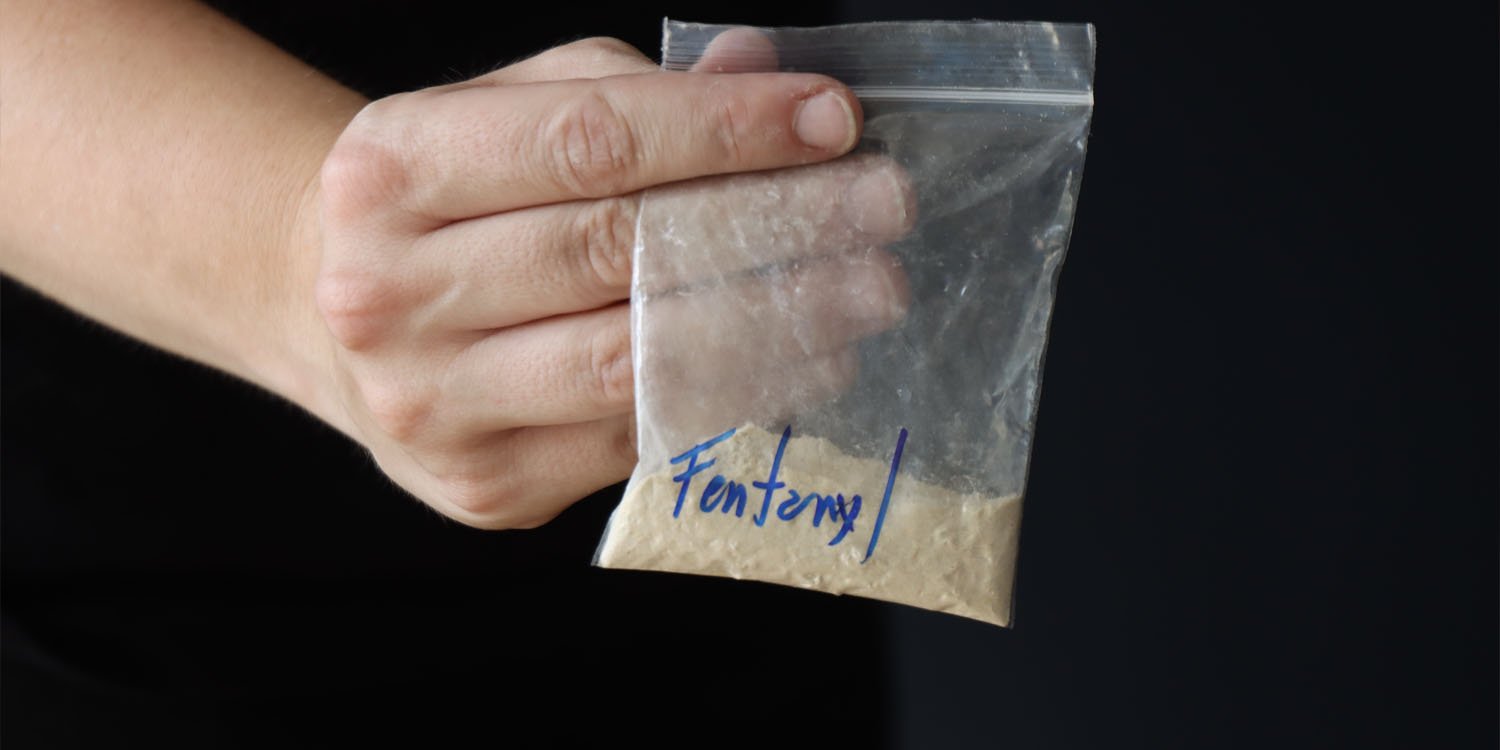
Recent research published in journals drug and alcohol addiction provides evidence that people who regularly use illicit fentanyl ingest doses equivalent to nearly 9,000 milligrams of oral morphine each day. These findings suggest that standard treatments for opioid dependence may require significant adjustments given the extremely high levels of tolerance seen in today’s illicit drug market. Scientists hope that by accurately quantifying the amount of drugs people are using, they will improve recovery outcomes.
Fentanyl is a synthetic opioid that has been the leading cause of the overdose crisis in North America over the past decade. Cheap to produce and extremely potent, it has largely replaced heroin and other opium poppy-derived drugs in the illicit market. This high potency makes it easier for people to ingest more than intended, increasing the risk of fatal overdose.
When doctors prescribe opioid painkillers, they measure the dose using a standard metric called milligrams of morphine equivalent. This unit allows medical professionals to compare the strength and risk of different opioid medications against a standard baseline of oral morphine. Clinical guidelines for chronic pain generally recommend that prescription doses be less than 90 milligrams of morphine equivalent per day.
In the illicit market, people often do not know exactly how much active drug they are actually ingesting due to a lack of quality control. This poses a major challenge for medical professionals working to treat opioid use disorder. Opioid use disorder is a medical condition characterized by problematic patterns of opioid use that cause significant impairment and distress in a person’s daily life.
The research team consisted of scientists from the University of California, Los Angeles, Dr. Joseph Friedman from the University of California, San Diego, and researchers from the University of Toronto. The study’s lead author, Morgan Godbin, drew inspiration for the project from her own lived experience with opioid use disorder. She recognized that there was a significant gap between the clinical knowledge of pharmaceutical opioids and the clinical understanding of street drugs.
“We have treated the illegal administration of opioids as a black box, an unknown, a curiosity,” Godvin said. “Public health has ways to accurately quantify other exposures, such as tobacco and alcohol. If fentanyl is fentanyl at the molecular level, we should be able to quantify exposure. So we decided to use data from the Los Angeles Drug Inspection Service to estimate exposure. The results surprised all of us.”
Without knowing how much fentanyl a person is accustomed to taking, it is very difficult for doctors to safely manage withdrawal symptoms. It also makes it difficult to prescribe effective alternative medications, such as methadone and buprenorphine, which are used to stabilize patients and suppress cravings. Although medications for opioid use disorder are highly effective in reducing overdose death rates, many patients report significant difficulty initiating and maintaining treatment due to the intensity of fentanyl withdrawal.
To collect the data, the researchers used Drug Checking Los Angeles, a research and public health program founded by Chelsea Shober, an associate professor at the University of California, Los Angeles, and the study’s senior author. They analyzed 509 drug samples collected between September 2023 and January 2026. These samples were obtained at multiple harm reduction sites within Los Angeles County, where participants voluntarily and anonymously provided small amounts of street drugs for chemical testing.
Scientists analyzed these samples using liquid chromatography mass spectrometry at a national laboratory. This is an advanced laboratory technique that separates, identifies, and measures specific chemical components hidden within complex mixtures. This allowed the team to determine the exact percentage of active fentanyl hidden inside powders and tablets sold on the street.
In addition to testing for drugs, researchers asked individuals who provided samples to complete a confidential survey about their current drug use habits. The survey collected responses from 47 people who reported using fentanyl regularly in the past 30 days. These participants provided information about how many grams of the drug they took each day and how they administered it.
Nearly all respondents reported smoking or vaporizing fentanyl. A minority of the group reported injecting the drug, and a minority reported snorting it. Because the amount of a drug absorbed by the body depends on how it is taken, the researchers collected data from previous scientific literature to estimate the rate of absorption for each specific method.
The researchers used this information to calculate the milligram equivalent of morphine that the participants would ingest each day. Because there is some uncertainty in variables such as the purity of the drug, the total amount of powder consumed, and its absorption in the body, the research team used a complex statistical technique called bootstrapping. This involved running simulated scenarios on one million computers, taking into account all possible variations and combinations of these factors.
The data showed that participants ingested an average of 1.07 grams of raw illicit fentanyl powder per day. When researchers tested actual street samples, they found that the average purity of fentanyl was 12.5 percent. One gram of this average street product, which sells for about $100 in Los Angeles, contains about 125 milligrams of active fentanyl.
“We now know that people are exposed to doses of opioids on a regular basis, something that would have seemed impossible before we started this study,” Shober said. “In hospital settings, fentanyl is often administered in 100-microgram vials. The average purity of 1 gram of fentanyl we tested was the equivalent of more than 1,200 of these vials. That means people are ingesting a daily dose equivalent to injecting hundreds of hospital vials or taking 440 Percocet tablets.”
The Centers for Disease Control and Prevention notes that as little as 2 milligrams of fentanyl can be fatal for people without opioid tolerance. The average fentanyl consumer in Los Angeles ingests about 60 times that amount each day, according to the study. Professor Schober pointed out that tolerance arises not only from the intoxicating effects of drugs, but also from the respiratory depression that can lead to overdose.
The scientists estimated the total daily dose by combining the amount of powder consumed, its varying purity, and how the drug is processed in the body. The average daily intake of people in this sample was estimated to be approximately 8,888 milligrams of morphine equivalent. Even with their most restrictive statistical model, the estimated mean value was still over 5,000 milligrams of morphine equivalent per day.
This means that the typical consumer of illicit fentanyl is taking doses orders of magnitude higher than the maximum daily limit typically recommended for prescription painkillers. These findings help explain why people who use illicit fentanyl develop such extreme physical tolerance to opioids. Because the street supply is incredibly strong, standard doses of therapeutic drugs often fail to meet a patient’s physical needs.
“Obviously, starting MOUD is going to be harder for fentanyl than it is for heroin,” Shober said, using the common acronym for drugs used to treat opioid use disorder. “This study is a great example of how our science is directly influenced by lived experience. It calls for us to take withdrawal management seriously, using supportive therapies and compassionate approaches.”
While this data provides important insights into the modern drug crisis, the authors say there are some limitations to keep in mind. The study was based on a relatively small group of 47 survey respondents living in a specific geographic region where the arrival of illicit fentanyl was slower than in other parts of the country. Individuals who voluntarily utilize drug testing services may also constitute a convenience sample. This means they may consume larger amounts of drugs than the average person and may not reflect the full extent of the local drug supply.
Additionally, there are very few data sources on street drug purity at the consumer level, with fewer than 10 North American cities currently tracking this information. Researchers also had to rely on existing scientific literature to estimate how much drug actually enters the bloodstream when smoked or injected. The research team only measured two specific types of fentanyl, excluding some trace analogs that may have slightly altered the final calculations.
The purity of commercially available fentanyl varies widely, so some people may ingest doses much closer to the standard medical maximum while others may ingest much higher amounts. But Shober pointed out that even if the region’s drug supply were only half as pure as Los Angeles, the resulting doses would still be dramatic. We should not assume that everyone who uses fentanyl has exactly the same extreme level of tolerance.
Future studies should involve more people from different regions to confirm these consumption patterns. A more detailed understanding of how people take their medications throughout the day can help medical professionals tailor addiction treatment to individual needs. Translating street drug use into clinical measurements appears to be a necessary step to improve patient care, in parallel with the implementation of adjunctive therapy, which is supportive care given to manage severe withdrawal symptoms.
“It’s no longer ‘how do we treat someone who smokes one gram of fentanyl a day,’ but ‘how do we treat someone who uses thousands of MMEs of oral morphine in fentanyl a day,'” Shober said. “For clinicians, the questions and their answers are easier to understand and less abstract.”
The study, “Estimating the daily milligrams of morphine equivalent to illicit fentanyl use in Los Angeles: Clinical and epidemiological implications,” was authored by Morgan Godbin, Joseph R. Friedman, Caitlin A. Molina, Adam J. Consol, Ruby Romero, David N. Juerinck, and Chelsea L. Shober.
