


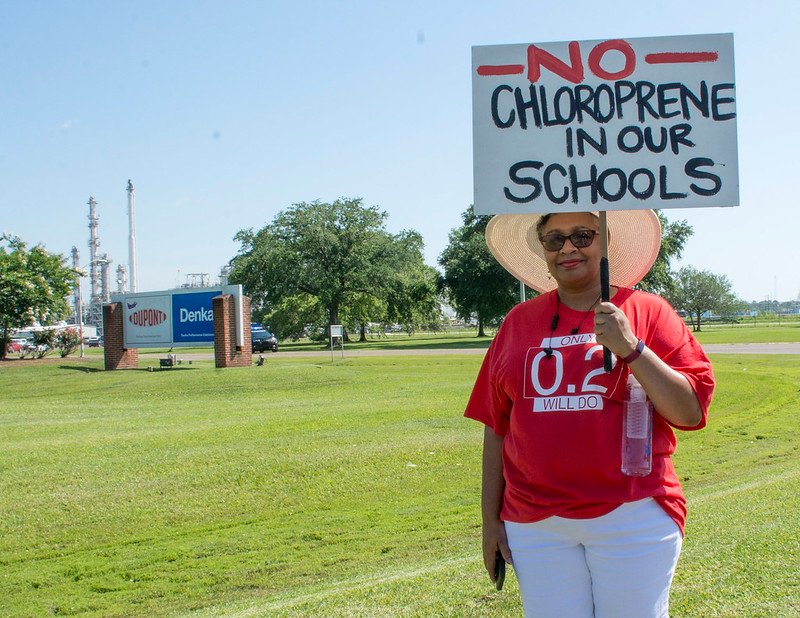
Last month, Louisiana lawmakers rejected a bill that would have given communities exposed to toxic emissions from oil and petrochemical refineries access to fence-line air monitoring data, a public health measure that was successfully implemented in states like California nearly a decade ago.
Louisiana and California consistently rank among the worst air quality states in the country, with refineries being the biggest polluters in both states. As the public becomes more aware of the health risks posed by emissions from both routine operations and accidental releases, communities living near these facilities are demanding greater transparency.
Nearly a decade ago, California lawmakers listened to these communities and responded to their concerns. Meanwhile, the Louisiana Legislature continues to ignore them.
California lawmakers passed it in 2017. Assembly Bill 1647This marks a shift in the way states regulate refinery pollution at the local level.
The law sets out four main requirements. Refineries are required to install and maintain fenceline air monitoring systems around the perimeter of their facilities. Air districts are required to install and maintain community air monitors in surrounding areas. Data from both systems must be collected in real time and made publicly accessible. And the refinery, not the taxpayer, is responsible for that cost.
The system is now fully operational. Through our Refinery Real-Time Community and Fenceline Monitoring programs, residents of the Bay Area, San Joaquin Valley, Central Coast, and Southern California can see in real time what specific pollutants are in the air they breathe near major refineries. This program established an important precedent. Communities living near refineries have a right to know what’s in the air they breathe.
Louisiana lawmakers had an opportunity to follow California’s lead.
Senate Bill 356The bill, sponsored by Sen. Lois Duplessis (D-New Orleans), would have required Louisiana refineries and chemical manufacturing facilities to install fenceline air monitoring systems, publish hourly pollution data online and send real-time alerts to local governments and residents whenever pollutant levels exceed safe standards. As with California’s law, the cost would fall on the refinery, not the public.
The need for such legislation is clear. Cancer Alley, a 135-mile stretch of the Mississippi River between Baton Rouge and New Orleans, is home to more than 200 refineries and petrochemical plants. This region has one of the highest cancer rates in the country, with Black and low-income communities being particularly affected. Essentially, this is ground zero for the kind of toxic industrial air pollution that SB 356 was specifically designed to address in the state.
Currently, the Louisiana Department of Environmental Quality monitors air quality at fewer than 20 locations across the state and tracks only six pollutants. Kimberly Terrell, a Conservation Project scientist who has extensively studied the health effects of industrial pollution in Cancer Alley, told lawmakers that existing equipment in Louisiana was not designed to detect many of the most toxic chemicals in emissions, such as ethylene oxide and vinyl chloride.
The Senate Committee on Environmental Quality took no action on the Duplessis bill, making it certain to fail with just a few days left in the session. The bill targeted 117 facilities deemed “highest risk” based on the pollutants they emit, and would have benefited many communities in Cancer Alley.
Tish Taylor, who heads Concerned Citizens of Saint John, a grassroots organization that fights for environmental and health protections in Cancer Alley, said SB 356 is important. She said the lack of support was expected but still disappointing.
“States like California are doing that,” she says. “We can do it too.”
To be sure, some concerns about SB 356 are worth noting. One committee member raised the possibility of false readings, concerned that industrial plants could be held responsible for pollution they did not cause. Lobbyists for the Louisiana Chemical Industry Alliance argued that the companies were already exceeding legal oversight requirements and that the hourly data would cause unnecessary panic.
But these concerns also deserve scrutiny. While false readings are a legitimate concern, California’s fenceline monitoring program, now nearly 10 years old, has shown that real-time regional air monitoring is reliable and feasible. And when weighing the risks, missing a genuine toxic release because of too limited monitoring is far more dangerous than a false alarm.
As for industry claims that current monitoring is sufficient, Cancer Alley residents, who continue to face some of the highest cancer rates in the country, are not seeing the benefits of these efforts. If frequent surveillance risks causing panic, the solution is better public communication, not less transparency. Louisiana is not the only state grappling with industrial air pollution, but its lawmakers are increasingly reluctant to do anything about it on their own. SB 356 was far from a radical proposal. This was a logical step towards transparency and was modeled after successful programs already in place elsewhere.
The people of St. John the Baptist Parish and many other communities in Cancer Alley cannot afford to continue being ignored by Louisiana’s leaders. At some point, our elected officials must decide that the health of their communities, families, and children is more important than the interests of the oil and petrochemical industries that surround them.
