

Close Menu

    Subscribe to Updates

    Get the latest creative news from FooBar about art, design and business.

    What's Hot

    This prehistoric fish may explain how animals first walked on Earth

    May 25, 2026

    Women who self-harm have different brain responses to negative comments on social media

    May 25, 2026

    Insects from 100 million years ago had crab-like claws, unlike any known insects

    May 25, 2026
    Facebook X (Twitter) Instagram
    Facebook X (Twitter) Instagram
    Health Magazine
    • Home
    • Environmental Health
    • Health Technology
    • Medical Research
    • Mental Health
    • Nutrition Science
    • Pharma
    • Public Health
    • Discover
      • Daily Health Tips
      • Financial Health & Stability
      • Holistic Health & Wellness
      • Mental Health
      • Nutrition & Dietary Trends
      • Professional & Personal Growth
    • Our Mission
    Health Magazine
    Home » News » Insects from 100 million years ago had crab-like claws, unlike any known insects
    Nutrition Science

    Insects from 100 million years ago had crab-like claws, unlike any known insects

    healthadminBy healthadminMay 25, 2026No Comments3 Mins Read
    Insects from 100 million years ago had crab-like claws, unlike any known insects
    Share
    Facebook Twitter Reddit Telegram Pinterest Email


    Amber from Myanmar’s Kachin region continues to reveal surprising glimpses of life from the age of dinosaurs. Preserved in 100 million-year-old resin are the fossils of an ancient forest ecosystem that once supported an incredible diversity of life, including species never seen before.

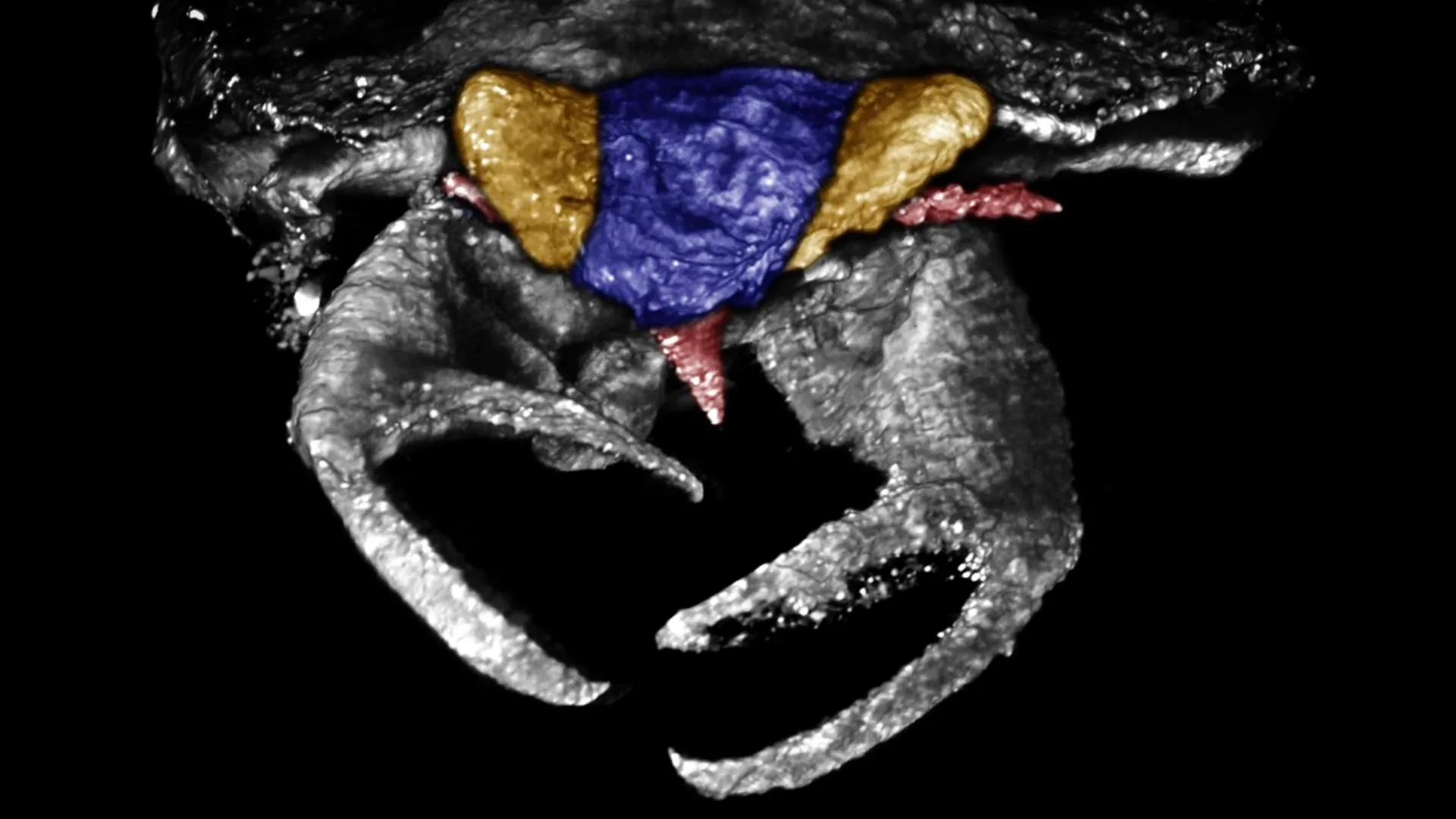
    Now, researchers at Munich’s Ludwig-Maximilians-University (LMU) have identified a newly discovered true bug (of the order Heteroptera) with one particularly unusual feature. Its front legs ended in large claw-like structures similar to crab claws. These appendages, known as serrations, function like forceps and are extremely rare among insects.

    Ancient insect with unusual crab-like claws

    “Previously, such sawtooths were known from only three insect groups, so this fossil represents the fourth known example of these structures evolving independently within insects,” explains Privatdozent Carolyn Haug, a zoologist at LMU’s Department of Biology.

    Haug and his colleagues worked with researchers from the University of Rostock and the University of Oulu in Finland to study the fossil in detail. The research team used microcomputed tomography to create highly detailed 3D images that allowed them to examine the insect’s anatomy. Their findings were published in the magazine insect.

    The scientists also conducted extensive morphological comparisons involving more than 2,000 serratids and similar grasping appendages from both extant and extinct species. Their analysis revealed that the fossil insect’s claws were markedly different from those found in other insects. Instead, its structure closely resembled that seen in more distant arthropods, such as the Decapoda (crabs, lobsters, shrimp, etc.) and the Tanaidae.

    New species named after Stray Kids

    Due to its very unusual anatomy, this insect was assigned to an entirely new genus. carcinonepa. The name comes from the Latinized Greek word “crab” (carcino-). neparefers to the true group Nepomorpha.

    “The species name is release “This is the Latinization of the hugely successful K-pop group Stray Kids,” explains Carolyn Haug. “We thought the name was fitting because Fossil’s sawtooth posture closely resembles the group’s trademark pose.” We might add that Stray Kids is one of the paper’s authors, Fenja Haug,’s favorite band. ”

    Based on conserved physical characteristics, researchers Carcinepa Liberantes As part of the true caterpillars (Nepomorpha) within the broader true insect group (Heteroptera). Aside from the dramatic claws, the insect’s body shares similarities with modern toads, also called toad beetles, which are land-dwelling predators.

    A small predator from the Cretaceous forest

    The form of C. release “This suggests that this species had a similar lifestyle, perhaps living in Cretaceous forests near the coast,” observes Carolyn Haug.

    Researchers believe that the oversized serrations on the front legs were probably used to capture and hold small insect prey while hunting in ancient coastal environments.


    Source link

    Visited 4 times, 4 visit(s) today
    Share. Facebook Twitter Pinterest LinkedIn Telegram Reddit Email
    Previous ArticleScientists discover why Ozempic and Wigobee’s weight loss eventually stalls
    Next Article Women who self-harm have different brain responses to negative comments on social media
    healthadmin

    Related Posts

    This prehistoric fish may explain how animals first walked on Earth

    May 25, 2026

    Scientists discover why Ozempic and Wigobee’s weight loss eventually stalls

    May 25, 2026

    A common heart drug taken by millions of people turns out to be useless and possibly dangerous

    May 25, 2026

    Scientists discover why some DNA-doubling cells don’t die

    May 25, 2026

    Beet juice lowers blood pressure in older adults in just two weeks

    May 25, 2026

    Adorable little blue octopus found 6,000 feet underground in the Galapagos

    May 25, 2026
    Add A Comment
    Leave A Reply Cancel Reply

    Categories

    • Daily Health Tips
    • Discover
    • Environmental Health
    • Exercise & Fitness
    • Featured
    • Featured Videos
    • Financial Health & Stability
    • Fitness
    • Fitness Updates
    • Health
    • Health Technology
    • Healthy Aging
    • Healthy Living
    • Holistic Healing
    • Holistic Health & Wellness
    • Medical Research
    • Medical Research & Insights
    • Mental Health
    • Mental Wellness
    • Natural Remedies
    • New Workouts
    • Nutrition
    • Nutrition & Dietary Trends
    • Nutrition & Superfoods
    • Nutrition Science
    • Pharma
    • Preventive Healthcare
    • Professional & Personal Growth
    • Public Health
    • Public Health & Awareness
    • Selected
    • Sleep & Recovery
    • Top Programs
    • Weight Management
    • Workouts
    Popular Posts
    • 1773313737_bacteria_-_Sebastian_Kaulitzki_46826fb7971649bfaca04a9b4cef3309-620x480.jpgHow Sino Biological ProPure™ redefines ultra-low… March 12, 2026
    • pexels-david-bartus-442116The food industry needs to act now to cut greenhouse… January 2, 2022
    • the-pros-and-cons-of-paleo-dietsThe Pros and Cons of Paleo Diets: What Science Really Says April 16, 2025
    • 1773729862_TagImage-3347-458389964760995353448-620x480.jpgDespite safety concerns, parents underestimate the… March 17, 2026
    • 1773209206_futuristic_techno_design_on_background_of_supercomputer_data_center_-_Image_-_Timofeev_Vladimir_M1_4.jpegMulti-agent AI systems outperform single models… March 11, 2026
    • 1774403998_image_28620e4b6b0047f7ab9154b41d739db1-620x480.jpgGait pattern helps distinguish between Lewy body… March 24, 2026

    Demo
    Stay In Touch
    • Facebook
    • Twitter
    • Pinterest
    • Instagram
    • YouTube
    • Vimeo
    Don't Miss

    This prehistoric fish may explain how animals first walked on Earth

    By healthadminMay 25, 2026

    Flinders University researchers have revealed new details about one of the ancient fish species closely…

    Women who self-harm have different brain responses to negative comments on social media

    May 25, 2026

    Insects from 100 million years ago had crab-like claws, unlike any known insects

    May 25, 2026

    Scientists discover why Ozempic and Wigobee’s weight loss eventually stalls

    May 25, 2026

    Subscribe to Updates

    Get the latest creative news from SmartMag about art & design.

    HealthxMagazine
    HealthxMagazine

    At HealthX Magazine, we are dedicated to empowering entrepreneurs, doctors, chiropractors, healthcare professionals, personal trainers, executives, thought leaders, and anyone striving for optimal health.

    Our Picks

    Scientists discover why Ozempic and Wigobee’s weight loss eventually stalls

    May 25, 2026

    Conspiracy thinking shows up subtly in the words people choose.

    May 25, 2026

    A novel RNA modification mechanism promotes the progression of metabolic fatty liver disease

    May 25, 2026
    New Comments
      Facebook X (Twitter) Instagram Pinterest
      • Home
      • Privacy Policy
      • Our Mission
      © 2026 ThemeSphere. Designed by ThemeSphere.

      Type above and press Enter to search. Press Esc to cancel.