


For most materials, the way heat is absorbed and the way it is released are inseparable. If a surface efficiently absorbs heat from a particular direction or wavelength, it will also emit heat in the same way. This long-established principle, known as reciprocity, has made it difficult for scientists to independently control how thermal energy enters and exits matter.
But being able to separate these two processes allows engineers to direct heat more precisely. Materials can absorb thermal energy from one direction while emitting it in another, potentially improving thermal management, energy conversion, infrared sensing, and thermal communication technologies.
Materials that can control heat
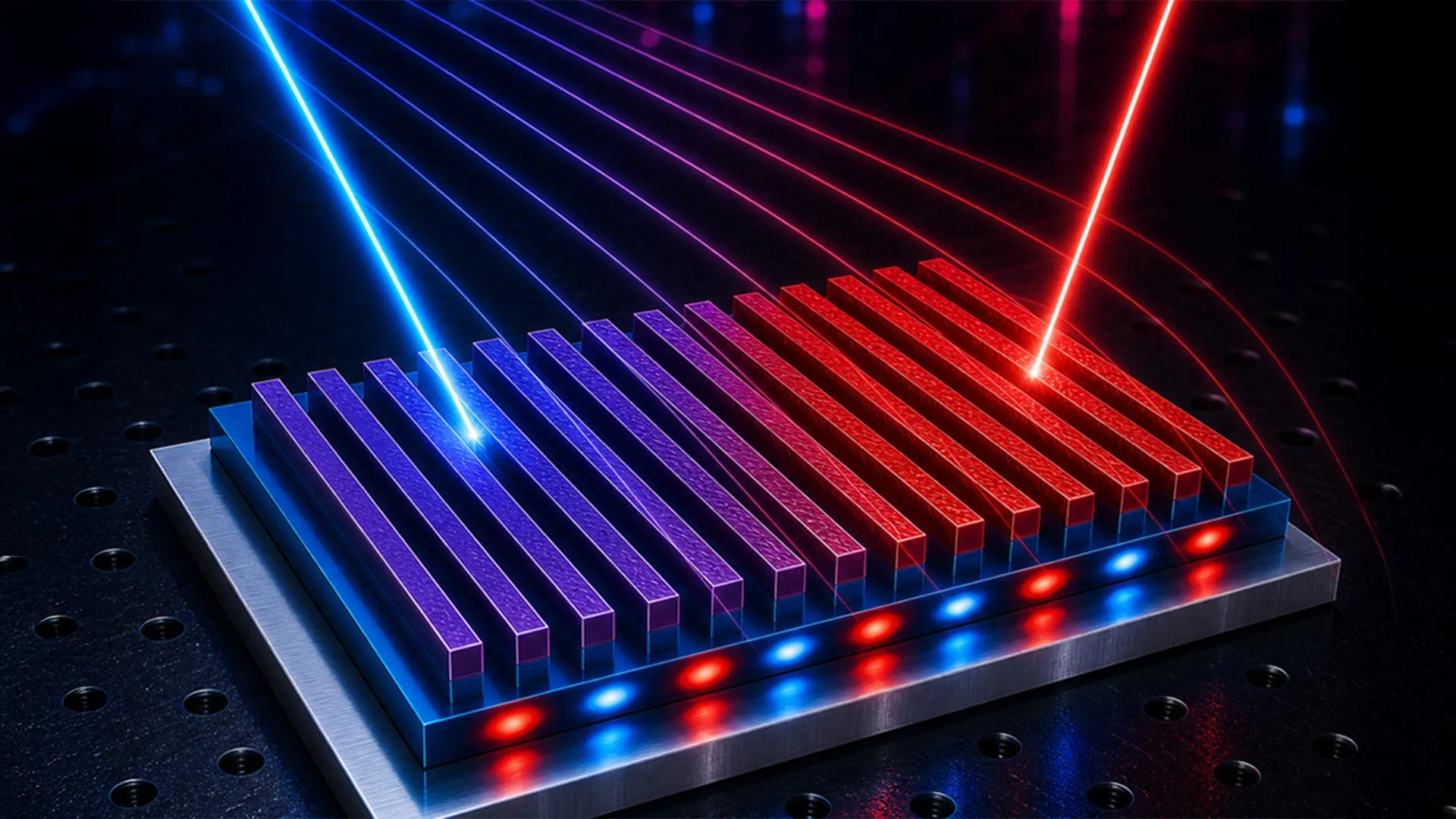
To overcome this limitation, an international team led by Professor Koichi Okamoto and Dr. Shunsuke Murai from the Osaka Metropolitan University Graduate School of Engineering has developed a new type of device using magneto-optic materials. When these materials are exposed to a magnetic field, the way they interact with light changes, making it possible to change their thermal behavior.
The researchers combined a magneto-optical material with a phase-change material known as GST. The resulting device can control the direction in which heat is radiated, switch its operation on or off, and retain its configuration after being powered off. In fact, heat can be programmed in a way similar to how data is stored and controlled within computer chips.
“We made thermal radiation work more ‘smartly’,” Dr. Murai explained. “Achieving these capabilities in practical models could enable a new generation of efficient infrared emitters, thermal energy devices, sensors, and photonic memory technologies.”
Better performance than previous designs
The researchers discovered that even when the light hits it almost head-on, the device reacts differently depending on the direction the light hits it. Previous techniques typically required light to strike the material at a very steep angle to achieve a similar effect, reducing both absorption and radiation efficiency compared to normal incidence.
The new design also addressed other shortcomings of the previous system. Previous devices would inconsistently switch between “on” and “off” states and lose saved settings when powered off. In contrast, new materials can reliably switch states while retaining memory, making them more practical for future applications.
Towards programmable thermal devices
Researchers believe the technology is an important step toward devices that manage heat with the same level of precision that electronic circuits control electricity.
“Our ultimate goal is to develop small devices that can actively control heat dissipation in the same way that electronic circuits control the flow of electricity,” Professor Okamoto said. “Such devices could be used for smarter infrared sensors, more efficient energy systems, and new types of photonic memory that use light and heat instead of electrical charges to store information.”
