


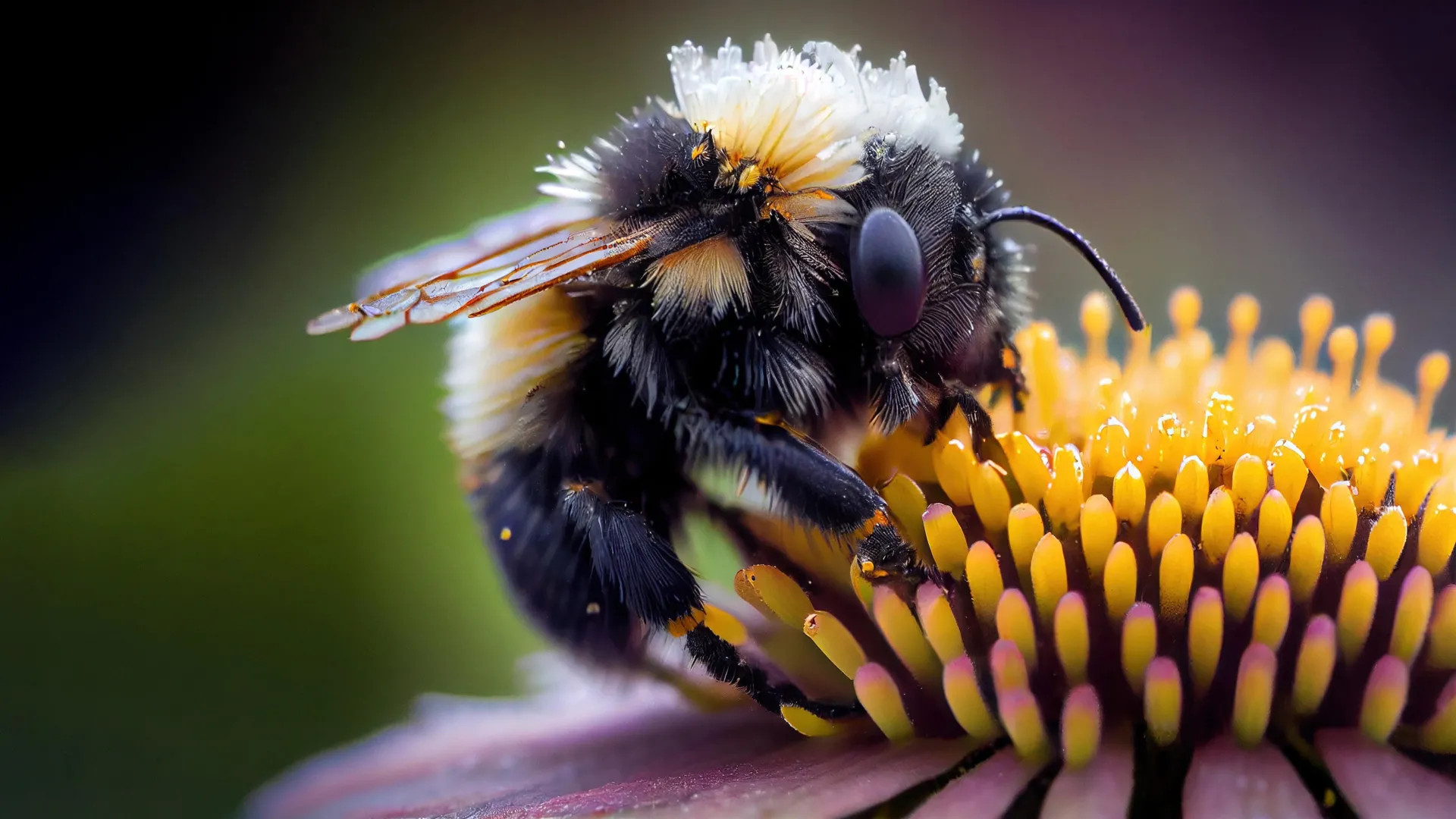
Bumble bees can accumulate dramatically higher levels of toxic heavy metals than honey bees, even when both species forage in the same area, according to new research from the University of Cambridge. Scientists have discovered that bumble bees collect up to seven times more heavy metals in their pollen, raising concerns about how hidden pollution affects their health, survival and reproductive ability.
Heavy metal pollution is commonly found around industrial areas, mining areas, cities, and towns, but the pollutants can also spread into the countryside through the air, sewage sludge, fertilizers, and other agricultural products.
How do bees absorb heavy metals?
When bees collect nectar and pollen, they are also exposed to contaminated soil, dust, and pollen, which can contain heavy metals. Even relatively small amounts of these elements can interfere with learning and memory, making it difficult for bees to navigate and find food. Previous studies have linked exposure to metals to lower reproductive success, fewer offspring, and disrupted chick development.
Bees have long been used as biological indicators of environmental pollution in highly polluted areas. However, new research published in 2016 shows that ecological entomologyThe journal of the Royal Entomological Society shows that different bee species accumulate toxic metals in very different ways, with bumblebees being particularly vulnerable.
Comparison of bumblebees and honey bees
Researchers from the Department of Zoology at the University of Cambridge used pollen traps to collect pollen and measured levels of arsenic, cadmium, chromium, cobalt, lead and tin in both pollen and adult bees. They compared honeybee and bumblebee colonies located adjacent to Cambridgeshire, England, where soil contamination is generally thought to be low.
Although both species were foraging in the same landscape, the results showed marked differences.
For most metals examined, pollen collected by bumblebees contained two to seven times more heavy metals than pollen collected by honey bees. Bumblebees also accumulated about three times as much heavy metals in their bodies.
Dr Sarah Scott, who conducted the research while at Cambridge University and is now based at Newcastle University, said: “Although most of the metal levels we found were not high enough to kill bees, even low levels can negatively impact bee health and colony success in subtle but important ways, such as affecting foraging ability and reproductive ability.”
Why bumblebees are more exposed
The researchers say this difference is likely due to a combination of bee biology and foraging behavior.
Bees typically nest in above-ground tree cavities or managed hives, and their colonies typically contain 30,000 to 60,000 bees. In comparison, bumblebees nest underground in soil or leaf litter, and their colonies are much smaller, typically numbering between 50 and 500 individuals.
The two species also differ in their feeding methods. Flower selection will vary based on nutritional needs, body size, tongue length, and eating habits. Some plants absorb more heavy metals than others, so their preferences can influence the amount of pollution bees encounter.
Bees collect pollen from a variety of flower species, which can dilute contaminants throughout the food supply. Bumble bees collect smaller amounts of pollen from fewer plant species, so their exposure to those plants is more dependent on whether those particular plants contain high levels of metals.
Bees travel further while foraging, sometimes up to 10 km from their colony. Due to the large number of employees, they can be spread over a larger area and potentially avoid contaminated areas. Bumblebees typically forage within about 1.5 km of their nests, giving them less opportunity to avoid contaminating the area.
Another factor may be appearance. Bumble bees have much hairier bodies than honeybees, which makes it easier for dust and airborne particles containing heavy metals to stick to their bodies before being carried back to the hive with pollen.
Hidden risks even in the countryside
Lead author of the study, Professor Lynn Dix from the University of Cambridge’s School of Zoology, said: “Bees can ingest toxic metals even in areas where the risk of heavy metals is usually thought to be safe or low, typically rural areas away from industrial or mining areas. Bumble bee colonies tend to have fewer workers available to carry out the work, so the loss of individuals can have a big impact on the functioning of the entire colony.”
Despite these findings, researchers stress that people need to continue planting flowers to support pollinators.
Dr Scott added: “Bees play an important role in both biodiversity and food security, so I would encourage people to plant flowers to help bees, even if they live in areas where the potential for pollution is high. After all, bees still need food. Even if there are traces of heavy metals, food is better than no food.”
This research was funded by the Royal Society. Professor Dix is also a Fellow of Selwyn College, University of Cambridge.
