


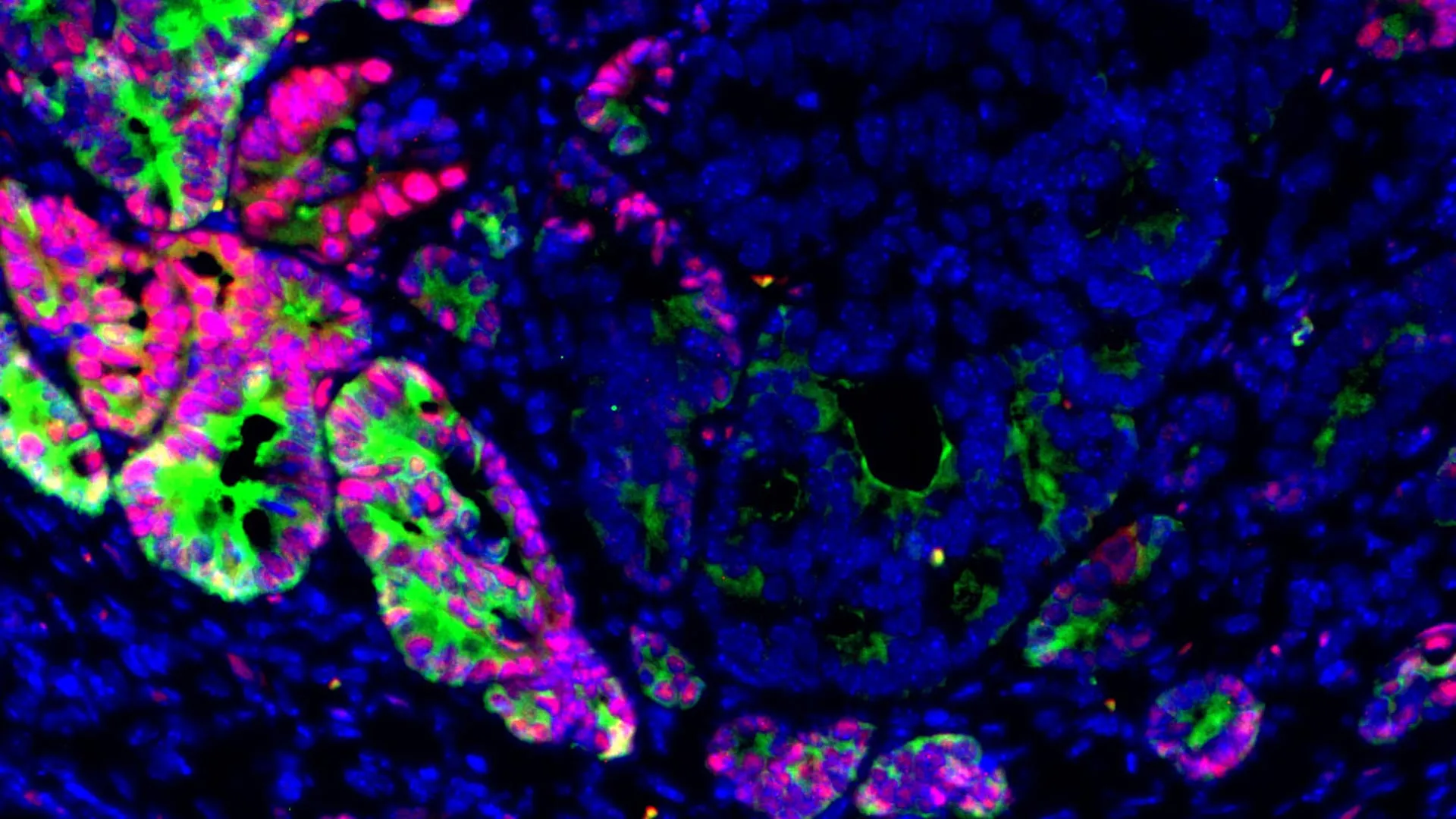
Researchers at Weill Cornell Medicine and the Massachusetts Institute of Technology have identified a key factor that may help colorectal cancer spread to the liver. Their findings suggest that losing GATA6, a transcription factor that helps control which genes are turned on and off, may push cancer cells into a more primitive and adaptive state, allowing them to metastasize. Understanding how this change occurs could lead to new strategies to prevent one of the most deadly aspects of colorectal cancer.
GATA6 normally acts as a molecular “identity keeper” within the cells lining the intestine, helping to maintain specialized cell functions. However, in a study published on June 22nd, cell stem cellsfound that GATA6 levels were much lower in liver metastases from both mice and colorectal cancer patients. The researchers also found that reduced GATA6 expression was associated with worse patient outcomes. Once colorectal cancer spreads beyond its original site, it becomes much more difficult to treat, and metastases remain the leading cause of death from the disease.
Scientists have been searching for genetic mutations that can cause liver metastases for years, but no clear contributing mutation has been found. Instead, new research points to a different mechanism.
“We discovered that loss of GATA6 acts as a critical switch that transforms cancer cells within the primary tumor from non-metastatic to pro-metastatic,” said Norihiro Goto, Ph.D., assistant professor in the Department of Gastroenterology and Hepatology at Weill Cornell University, who co-led the study. “Our findings suggest that epigenetic changes may be more important for promoting liver metastasis.”
Unlike genetic mutations, which change the DNA sequence itself, epigenetic changes affect which genes are active or inactive, and therefore which proteins a cell produces. Dr. Saori Goto, a medical instructor at Weill Cornell University, served as the study’s lead author. Dr. Omar H. Yilmaz, associate professor of biology at the Massachusetts Institute of Technology, also co-led the study.
Organoid models reveal how cancer cells metastasize
According to Norihiro Goto, MD, studying tissue samples taken from established liver metastases provides limited insight into the metastatic process.
“When researchers analyze patient samples with liver metastases, they fail to capture important signals that occur early in the metastatic process,” said Norihiro Goto, MD.
To better understand these early events, the research team developed a laboratory model using organoids derived from liver metastases. These small three-dimensional cancer cell clusters reproduce many features of real tumors. When the researchers transplanted the organoids into the colons of mice, aggressive tumors formed that later spread to the liver. By repeating this process several times, the research team was able to watch the cancer cells gradually acquire the ability to metastasize.
Their experiments revealed that loss of GATA6 promotes lineage plasticity. Lineage plasticity is the ability of cells to change their identity and behavior. In the absence of GATA6, colorectal cancer cells activated an alternative genetic program and adopted a flexible fetal-like state. These transformed cells have an improved ability to travel through the bloodstream and colonize tumors in distant organs.
This type of cell remodeling is typically performed by the body during wound repair or adaptation to stress. However, the same process can promote metastasis in cancer.
GATA6 deficiency generates cells primed for liver metastasis
One sign of this plasticity was the appearance of cells lacking LGR5, a marker commonly found in intestinal stem cells. Previous studies have shown that LGR5-negative cells can cause liver metastases.
A new study demonstrated that shutting down GATA6 shifts cancer cells from an LGR5-positive state to an LGR5-negative state. These cells exhibit fetal-like characteristics and have the ability to spread to other organs. In contrast, restoring GATA6 activity or activating related pathways reduced the metastatic potential of colorectal cancer cells.
“Genetic deletion of GATA6 significantly increases the frequency and burden of liver metastases in mouse models, but has little effect on primary tumor growth,” said Dr. Norihiro Goto, a member of the Jill Roberts Inflammatory Bowel Disease Institute and Sandra Edward Meyer Cancer Center at Weill Cornell University.
Based on these findings, the researchers suggest that metastasis may depend more on specific transitions between cellular states than on the growth rate or size of the primary tumor.
Potential biomarkers and future therapeutic targets
This finding raises the possibility that GATA6 may serve as a biomarker for metastatic risk. Tumors with low GATA6 levels are more likely to contain cells that can switch to a pro-metastasis state. Such information could help doctors identify patients who might benefit from closer monitoring and more aggressive treatment.
This study also suggests potential therapeutic strategies focused on maintaining cell identity or preventing cancer cells from entering a highly malleable metastasis-promoting state. However, Dr. Norihiro Goto noted that researchers need to find ways to target these processes without interfering with normal tissue repair, which relies on similar biological programs.
Future research will focus on identifying unique vulnerabilities in GATA6-deficient cancer cells that could be exploited with new treatments. The research team also plans to investigate how the tumor microenvironment, including immune cells and liver-specific signals, influences these cell migration in preclinical models.
“In addition to treating the primary tumor, we need to find strategies that target the mechanisms of liver metastasis,” said Dr. Norihiro Goto. “Our research is a step toward developing treatments that stop the spread of cancer in its early stages.”
This research was supported in part by the Astellas Foundation. Japan Society for the Promotion of Science Overseas Research Fellowship, National Institutes of Health (Grants R00AG076987, 01CA254314, 5U01CA25055, R01CA258523, R01CA25723, R01DK133919, R01DK140310, R01CA299955, and 3OT2CA297570). Pew Stewart Trust. AFAR and Glenn Foundation for Medical Research Deliver Breakthrough in Gerontology. Kenneth Rainin Foundation; Crohn’s and Colitis Foundation and Mark Cancer Research Foundation.
