


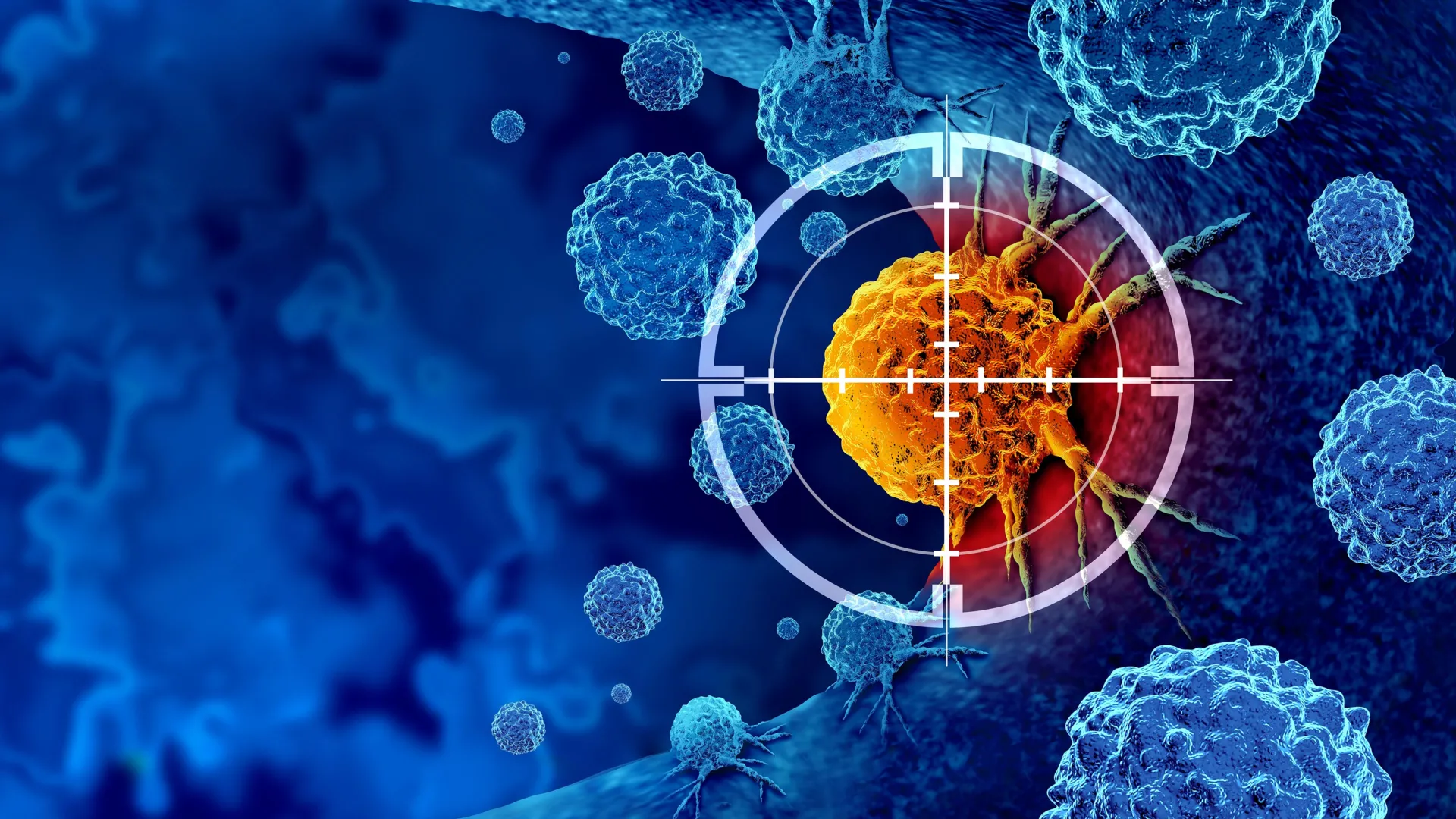
UCLA researchers have identified hidden weaknesses in some of the most aggressive and difficult-to-treat cancers, raising hopes for new ways to attack tumors that have resisted treatment for decades.
Small cell neuroendocrine cancer can occur in the lungs, prostate, and ovaries. These fast-growing tumors tend to metastasize early and remain among the most difficult cancers to treat.
A key feature of these cancers is the deletion of a gene called RB. Under normal conditions, RB helps control cell proliferation. When the gene is missing, cancer cells grow rapidly and become resistant to many targeted therapies.
Now, a new study has been published Proceedings of the National Academy of Sciences It has been suggested that loss of RB also creates unexpected vulnerabilities, which researchers believe could be a powerful therapeutic target.
The hidden addiction of deadly cancer
The UCLA team discovered that cancer cells lacking RB rely heavily on a protein called E2F3 to survive. In laboratory experiments, blocking E2F3 stopped tumor growth through a process known as “synthetic lethality.”
Simply put, cancer cells can survive without RB, but cannot survive when both RB and E2F3 are lost. Removing E2F3 along with the missing RB revealed a critical weakness that researchers believe could be exploited in future treatments.
“The discovery of vulnerabilities like this opens the door to considering entirely new therapeutic strategies,” said study lead author Owen N. Witte, Ph.D., who holds the Chancellor’s Chair in Developmental Immunology in the Department of Microbiology, Immunology, and Molecular Genetics and is a member of the UCLA Health Johnson Comprehensive Cancer Center. “This is especially important because the way these cancers are treated hasn’t changed much in decades. When I first encountered these tumors as a medical student more than 50 years ago, survival statistics were essentially the same as they are today.”
Building better models to study small cell cancer
Progress against small cell neuroendocrine cancers, particularly those that occur in the prostate, has been slowed by the lack of realistic laboratory models. Without these, scientists have struggled to identify the genes these tumors depend on and uncover their biological weaknesses.
To overcome this challenge, UCLA researchers engineered normal human prostate cells with five key oncogenic genetic changes, including deletions in RB and TP53. The cells were grown into organoids and used to generate tumors in mice, creating a model that closely resembles small cell prostate cancer in humans.
The study builds on more than a decade of research by Witte’s lab to develop a specialized model of small cell neuroendocrine prostate cancer.
CRISPR screens reveal common weaknesses
Using these models, the research team performed a genome-wide CRISPR screen, testing thousands of genes to determine which genes are essential for cancer cell survival.
Researchers have identified about 1,400 genes that play important roles in cancer cell survival. One of the most important findings was that small cell carcinomas of various organs all have a strong dependence on E2F3.
When the researchers lowered E2F3 levels in RB-deficient cancer cells, the tumors stopped dividing, were unable to form clusters, and in some cases died completely.
“No two genes do the same thing,” says Witte, founding director emeritus of the UCLA Broad Center for Stem Cell Research and co-director of the UCLA Parker Institute Center for Cancer Immunotherapy. “But the combination of what they do together becomes essential for cancer cells. Loss of one gene may not matter much, but loss of both genes has a dramatic effect on tumor growth.”
“These new model systems have allowed us to discover genetic vulnerabilities that would otherwise be very difficult to discover,” added lead author Evan Abt, Ph.D., assistant professor of molecular medical pharmacology at UCLA’s David Geffen School of Medicine.
Existing FDA-approved drugs may provide a shortcut
There are currently no drugs that directly target E2F3, so researchers looked for another way to exploit cancer’s weakness.
They found that blocking the metabolic pathway involved in the production of DNA building blocks by inhibiting an enzyme called DHODH reduced E2F3 levels and slowed tumor growth.
This finding is particularly interesting because DHODH inhibitors, including leflunomide and teriflunomide, are already approved by the FDA to treat autoimmune diseases. Repurposing existing drugs could accelerate the development of new treatments for patients with these cancers.
“What’s interesting is that our discovery opens the door to applying existing drugs in new ways,” Abt said. “By understanding how these cancers rely on E2F3, we can begin to think of strategies that may be more quickly effective in patients.”
Although the research is still in its early stages, the findings provide important new insights into how these aggressive cancers survive and point to promising new directions for future treatments.
Other UCLA authors include Liang Wang, Grigor Varuzhanyan, Jack Freeland, Tian He, Guadalupe M. Peña-Garcia, Lauryn Ruegg, Jami McLaughlin, Donghui Cheng, Nikolas G. Balanis, Chia-Chun Chen, Sanaz Memarzadeh, Caius G. Radu, and Thomas G. Graeber.
