


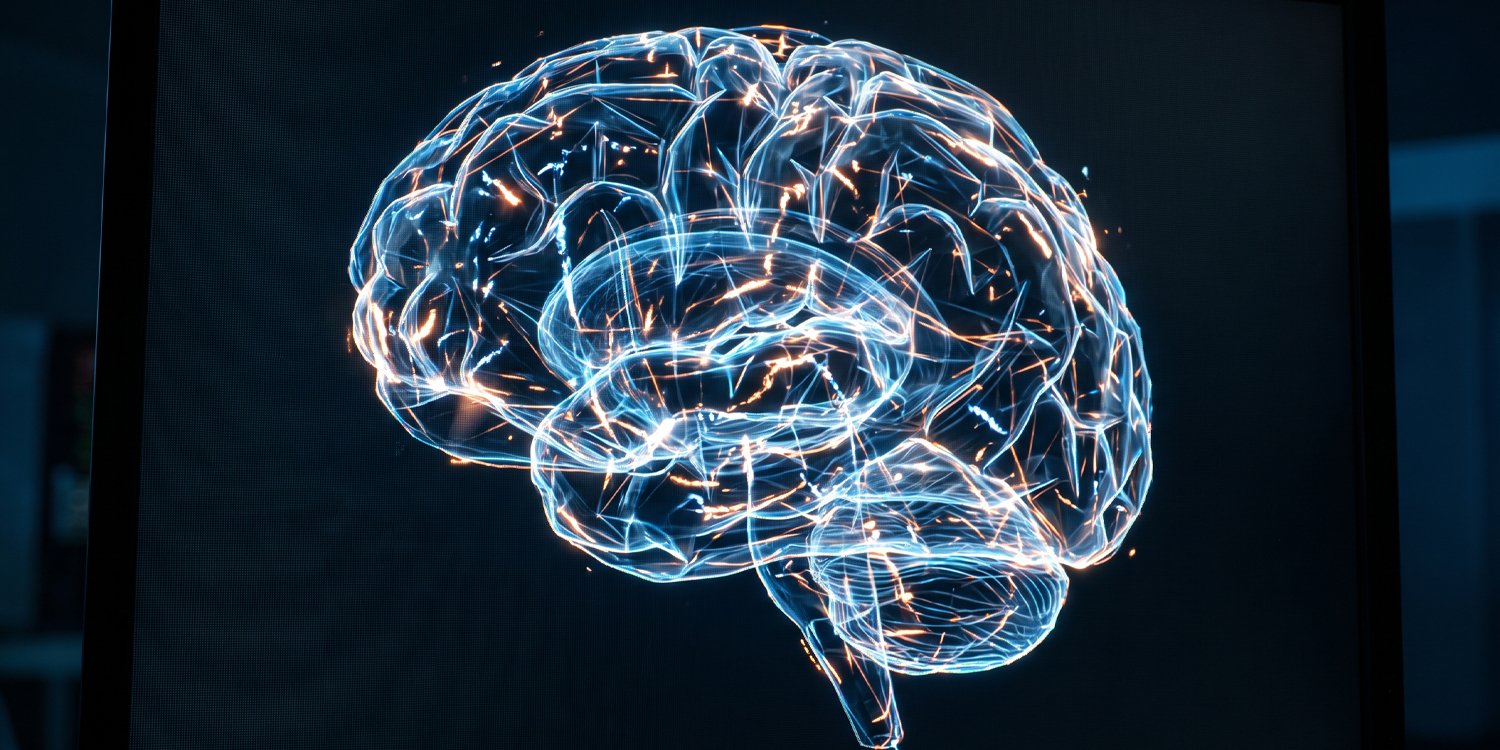
People with migraine experience a reduction in the complexity of their innate brain activity, resulting in their neural networks being unable to adapt to everyday stimuli. A recent study published in the journal NeuroImage suggests that an active migraine attack temporarily shakes the brain back into a more flexible state. This momentary increase in neural unpredictability provides a new perspective on how recurring headaches alter the brain’s internal rhythms.
Majid Saberi, a researcher at the University of Michigan School of Dentistry, led the study with Alexandre F. DaSilva and his team. They wanted to investigate how the internal dynamics of the brain change over the entire period of recurrent headache disorder. Migraines affect more than 1 billion people worldwide and cause severe head throbbing, nausea, and severe sensitivity to light and sound.
This condition is increasingly seen as not just a problem of blood vessel constriction, but a widespread disruption of how the brain’s networks communicate with each other. To measure this communication, the research team focused on a concept called brain entropy. In general physics, entropy refers to the degree of disorder or unpredictability within a physical system.
When applied to neuroscience, brain entropy measures the complexity and irregularity of brain signals. High entropy means that the brain is highly adaptable, able to process information efficiently and respond flexibly to new environments. Low entropy indicates rigid and restricted patterns of brain activity, where neural connections become stuck in predictable loops.
Imagine a conversation in which participants recite the exact same script over and over, rather than adapting to new topics. In the brain, this lack of flexibility can limit the biological ability to appropriately process incoming sensory data and regulate emotional states. The researchers also wanted to assess whether these brain signals are purely random or driven by chaotic dynamics.
In mathematics, chaos refers to a system that follows strict rules of operation but remains highly sensitive to seemingly small changes in starting conditions. Weak and chaotic brain states suggest that neural connections form complex patterns that are flexible enough to break out of rigid behavioral loops without falling into complete randomness.
To investigate these patterns, the research team recruited 66 adult participants. This cohort included 24 healthy adults, 25 with episodic migraine, and 15 with chronic migraine. Episodic migraine is defined as occurring less than 15 days per month, whereas chronic migraine occurs more than 15 days per month and is a more disabling condition.
The research team used functional magnetic resonance imaging to track blood flow in the brain while participants rested quietly in the scanner with their eyes open. This particular approach, called resting-state scanning, is designed to capture the default hum of background activity, rather than the brain’s response to a specific task. By mapping this spontaneous behavior, scientists can assess the mind’s baseline connectivity.
This imaging technique allows researchers to see which areas of the brain absorb the most oxygen, a proxy for active neural firing. The researchers then calculated the entropy, or signal complexity, of thousands of small three-dimensional cubes of brain tissue throughout the organ.
The results demonstrated that people with migraine have a widespread reduction in brain entropy compared to healthy adults. This reduction in complexity was most pronounced in people with chronic migraine. Affected brain regions include the visual network, areas involved in paying attention to the outside world, and the default mode network.
The default mode network is a group of connected brain regions that control internal thinking, memory retrieval, and pain perception. The researchers observed that a longer overall history of migraine and a higher frequency of monthly headaches reflected a sharp drop in brain entropy. This association suggests that long-term headache disorders are consistent with increasing limitations in the organ’s operating modes.
When the researchers looked at the exact timing of the brain scans, a different pattern emerged in the chronic migraine group. Participants who were scanned during or immediately after a migraine attack showed a relative increase in brain entropy. This temporary boost occurred primarily in multisensory integration areas of the brain.
These multisensory areas are located near the top and back of the brain and process sights, sounds, and physical sensations simultaneously to create a unified image of reality. To understand this temporal increase in complexity, the researchers applied mathematical tools to measure the underlying nature of brain signal changes. They calculated a metric known as the maximum Lyapunov exponent, which identifies how quickly a system’s internal workings diverge over time.
If a system has a positive index, it means that even microscopic differences at the starting line will produce significantly different results later on. The researchers found that the sudden spike in complexity during an attack is related to weak chaotic dynamics rather than pure biological noise. This dynamic instability suggests that the intense neural storm of a migraine attack may act as a biological reset switch.
Seizures coincide with the brain’s temporary withdrawal from overly rigid retention patterns, allowing it to briefly return to a more chaotic and flexible state. The specific symptoms experienced by individuals also mapped to completely different brain entropy patterns. They found that participants who felt highly sensitive to sound during a recent attack had increased complexity in the areas where incoming sensory information mixes.
This underlying acoustic irregularity may explain why everyday noises suddenly seem overwhelming and impossible to eliminate. Similarly, those who experienced severe nausea showed higher entropy in the default mode network. This network is highly involved in processing internal body sensations and maintaining a baseline sense of physical normality, meaning that disruptions in communication in this region can contribute to the severe physical discomfort associated with headaches.
To ensure the measurements were accurate, the researchers considered multiple outside variables that could cloud the data. They adjusted their mathematical model to the participants’ age and gender, as these factors naturally influence brain activity. The researchers also verified that the entropy measurements were not artificially skewed by slight head movements during the scanning process.
Additional tests confirmed that the overall severity of depressive symptoms did not explain the major brain differences observed between the various groups. However, this study has some methodological limitations. The total number of participants was not large, so it was difficult to draw comprehensive conclusions about all migraine variations.
Additionally, the project only took one snapshot in time of each participant, rather than continuously tracking their brainwaves. The study did not follow exactly the same individuals through the onset, peak, and resolution of a single migraine, so the exact order of events remains somewhat abstract. Results related to specific symptoms were also exploratory.
The researchers did not find that the between-group differences related to symptoms were statistically significant enough to withstand certain rigorous mathematical corrections. This means that these specific associations require independent verification. Researchers hope to conduct repeated assessments that follow patients over time. By observing changes in the brain in real time, they aim to precisely map how these chaotic states arise and eventually dissipate.
Such research may ultimately reveal new targets for treatments that safely restore brain plasticity without causing the pain of a full-blown migraine attack.
The study, “Decreased brain entropy in migraine with ictal partial recovery: A resting-state fMRI study,” was authored by Majid Saberi, Dajung J. Kim, Xiao-Su Hu, and Alexandre F. DaSilva.
