


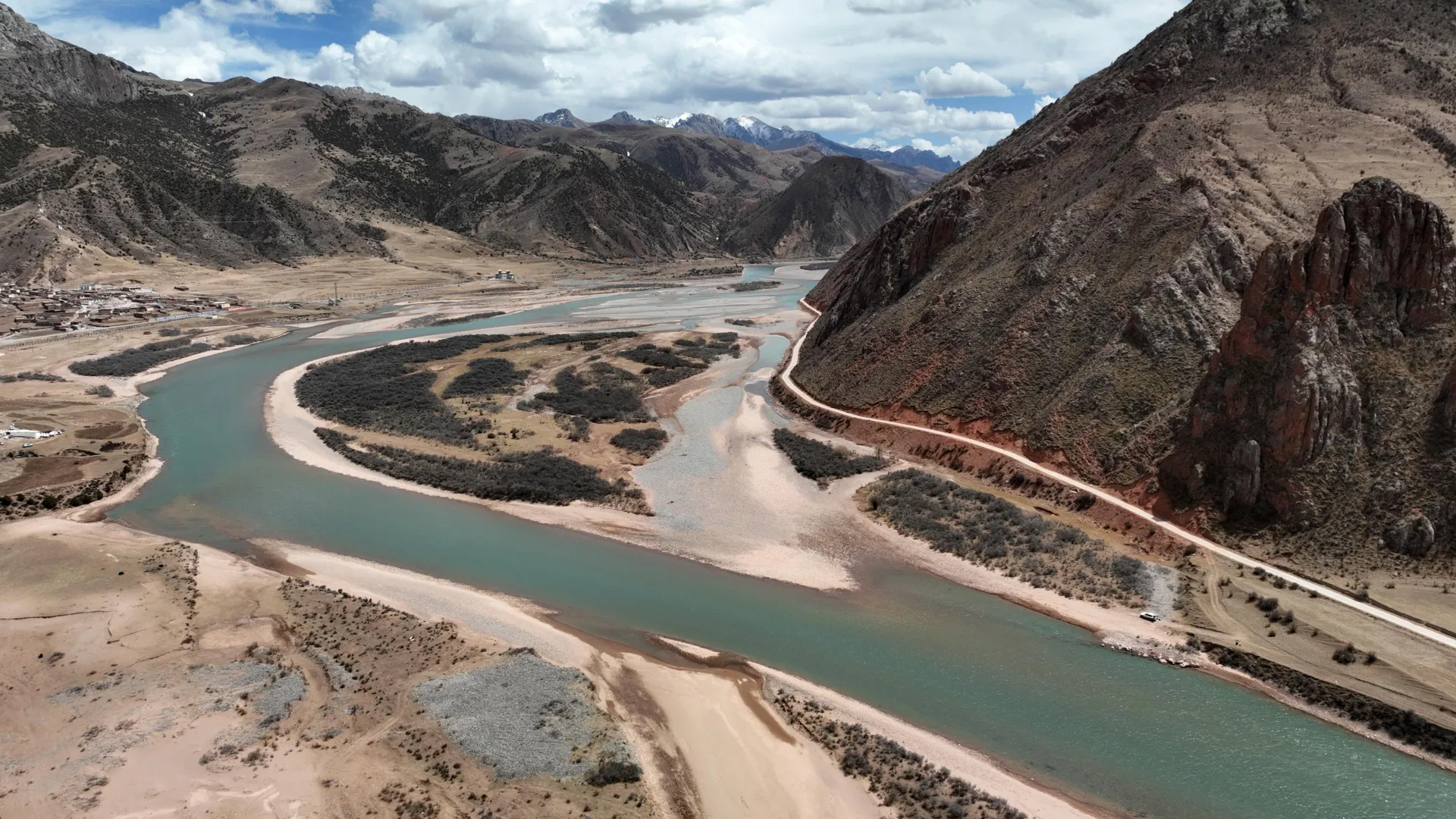
Research published in nature This suggests that permafrost thaw may have unexpected effects on the carbon cycle. Melting frozen ground is widely known for releasing greenhouse gases, but researchers have found that it can also enhance the natural processes that remove carbon dioxide (CO2) from the atmosphere.
The research was conducted by scientists from Umeå University in Sweden and East China Normal University in China.
Thawing permafrost may increase CO2 removal
As global temperatures rise, permafrost in many regions is thawing, exposing long-frozen organic matter. Many scientists see thawing permafrost as the main source of increased emissions, as microorganisms break down this ancient carbon and release greenhouse gases.
But new research points to another process happening at the same time. As frozen ground degrades, previously buried minerals are exposed and water interacts more extensively with rock surfaces. These changes promote chemical weathering, a process that can consume atmospheric CO2.
According to the researchers, this uptake of carbon through weathering could significantly reduce the amount of carbon dioxide emitted by rivers. In some cases, those emissions can even be completely offset.
To investigate this phenomenon, the researchers surveyed 50 rivers on the Qinghai-Tibet Plateau, the world’s largest high-altitude cryosphere outside the polar regions. They analyzed river CO2 emissions, dissolved carbon, isotopic tracers, and geochemical models to better understand how permafrost thaw affects the carbon cycle.
Their results showed that snowmelt landscapes promote chemical weathering, moving carbon into dissolved inorganic forms and simultaneously removing CO2 from the atmosphere.
Carbon dioxide intake may exceed river emissions
“We found that as permafrost cover decreases, river carbon dioxide emissions decrease, while carbon uptake from rock weathering increases,” said Liwei Zhang, a biogeochemist at East China Normal University. “In some permafrost-speckled catchments, the uptake of carbon dioxide through weathering was large enough to offset or even exceed river carbon emissions.”
Across the study area, the researchers estimated that rock weathering offsets an average of about 35 percent of river carbon dioxide emissions.
The effects varied depending on the extent of permafrost coverage. Regions with continuous permafrost showed only small offsets. In contrast, in areas with discontinuous or isolated permafrost, carbon uptake through weathering could exceed 100 percent of river CO2 emissions. These findings indicate that carbon removal by geological processes can, in some cases, be comparable to carbon release by biological activity.
Geological and biological carbon cycles interact
The study challenges the idea that permafrost thaw only acts as a source of carbon emissions.
When frozen soil thaws, rivers receive large amounts of ancient organic carbon. The microorganisms then convert some of that material into greenhouse gases, which are released into the atmosphere. New findings suggest that geological processes that occur in parallel to these biological processes may help offset some of these emissions.
The researchers stress that rock weathering should not be seen as a simple or permanent solution to climate change. The carbon cycle in thawing environments is very complex, and depending on the minerals involved, CO2 may be released through weathering reactions.
Instead, this study focuses on important mechanisms that are not fully represented in many climate and carbon cycle models.
“Our results show that the biological and geological carbon cycles are closely linked,” says Jan Karlsson, professor at Umeå University’s School of Ecology and Environmental Geosciences. “To understand whether permafrost thaw will ultimately amplify or limit climate warming, we need to consider both the carbon released from ancient soils and the carbon consumed by weathering rocks.”
Researchers say future climate assessments should go beyond just biologically-induced carbon emissions and consider geological sources and sinks that emerge as frozen landscapes continue to thaw.
