


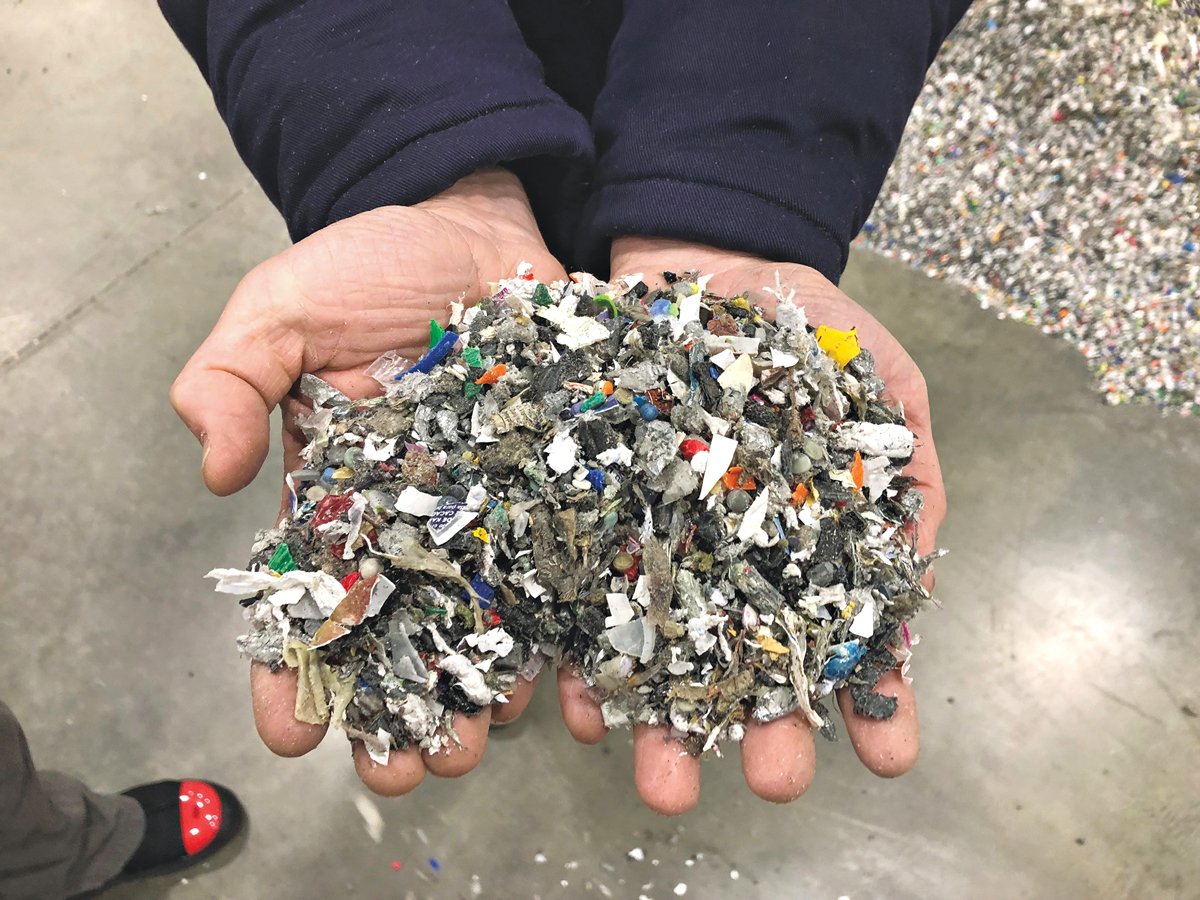
The U.S. Environmental Protection Agency has proposed eliminating air emissions regulations from plastic pyrolysis plants, also known as chemical facilities or advanced recycling facilities, that essentially burn plastic to make fuel.
Pyrolysis plants are currently regulated as incineration facilities under the Clean Air Act. But buried in Part IV of the proposal to change permit requirements for incinerators during natural disasters, the EPA is seeking public comment on the agency’s proposal to remove references to “pyrolysis/combustion equipment” from the definition of “municipal waste incineration equipment” in the emission guidelines for what the EPA calls “other solid waste incinerators.”
“What the EPA is trying to do now is illegal,” said Cynthia Palmer, senior petrochemical analyst at the advocacy group Mums Clean Air Force. If the proposal passes, there would be no environmental regulations for pyrolysis facilities other than state law, she said. “There will be no pollution controls, no air monitoring, no reporting requirements.”
The way the EPA presented this potential change is shocking, said Jessica Roff, plastics and petrochemical program manager at the Global Alliance for Incinerator Alternatives (GAIA), an environmental advocacy group. “This (measure) is not listed in the title of the proposed rule. It is not listed in the explanation. It is not listed in the announcement,” she said.
In the EPA’s proposal announcement, the agency said it is taking two steps, but changes to pyrolysis and combustion equipment are not one of them, Roff said. “This is the third time we’ve done the action, so it’s really a ‘if it’s buried in something else, you might not notice it’ situation.”
Pyrolysis breaks down plastic to produce pyrolysis oil, also known as pie oil. This oil can be made into fuel or further processed into chemicals and new plastics. But plastic pyrolysis incinerators are among the most dangerous types because they operate at relatively low temperatures, around 300 to 900 degrees Celsius, Palmer says. Coupled with lower oxygen levels, she says, this promotes the formation of incomplete combustion products such as dioxins, furans, polycyclic aromatic hydrocarbons, polychlorinated biphenyls, and formaldehyde.
The American Chemistry Council, an industry group, praised the EPA’s move. “Rather than burning plastic for energy purposes or sending it to landfill, these advanced recycling technologies convert used plastics into valuable raw materials to make new products,” Ross Eisenberg, president of the group’s plastics division, said in a statement.
According to a recent study on plastic recycling technologies by scientists at the U.S. Department of Energy (ACS Sustainable Chem. Eng. 2023, DOI: 10.1021/acssuschemeng.2c05497), between 0.1% and 6% of plastic waste sent to pyrolysis facilities becomes new chemicals or plastics, depending on the type of plastic waste.
Around the world, plans for chemical recycling plants are decreasing and existing plants are closing. As of September 2025, there are six chemical recycling plants operating in the United States and two under construction, according to the 2025 Global Chemical Recycling Plant Counter by Last Beach Cleanup, an advocacy group fighting plastic pollution. Six of the eight were pyrolysis plants.
Palmer said the EPA has been considering pyrolyzer incinerators under the Clean Air Act since 1995. Although the law has strict emissions limits, only two sources of hazardous air pollutants must be monitored, reported, and permitted: incinerators and major sources. EPA considers facilities that generate 9.07 tons (10 US tons) of a single hazardous air pollutant per year or 22.68 tons (25 US tons) of a combined hazardous air pollutant to be a major source. But if pyrolysis facilities are no longer legally incinerators, Palmer said, most will not be regulated at all because “most pyrolysis incinerators are not large enough to qualify as a major source of these.” She says Congress understood that when it wrote the law.
Roff said the plastics and chemical industries have been pressuring the government to change this designation for years. Two federal bills have been introduced in the U.S. House of Representatives, one for 2024 and one for 2025, but neither has progressed. During President Donald J. Trump’s first term, the EPA proposed changes that are nearly identical to what is currently being proposed. However, under President Joe Biden’s administration, the EPA reversed this change.
“It’s strange that such an important issue is buried in a federal gazette that deals with a completely different topic,” Judith Enck, a former EPA regional administrator and president of the environmental group Beyond Plastics, said in a statement. Beyond Plastics reviewed EPA visitor records (PDF) and found that 16 members of the plastics and fossil fuel industry, including ExxonMobil, Dow, and the Plastics Industry Association, visited EPA headquarters in Washington, DC, on February 10th and 11th.
“It’s unclear what was discussed at the February meeting between EPA, companies and industry groups, but the March regulatory changes should be rejected because they will result in more pollution,” Enck said.
EPA held a virtual public hearing on the proposed rule on April 6, and the proposal is open for public comment until May 4.

Chemistry & Engineering News
ISSN 0009-2347
Copyright © 2026 American Chemical Society
