


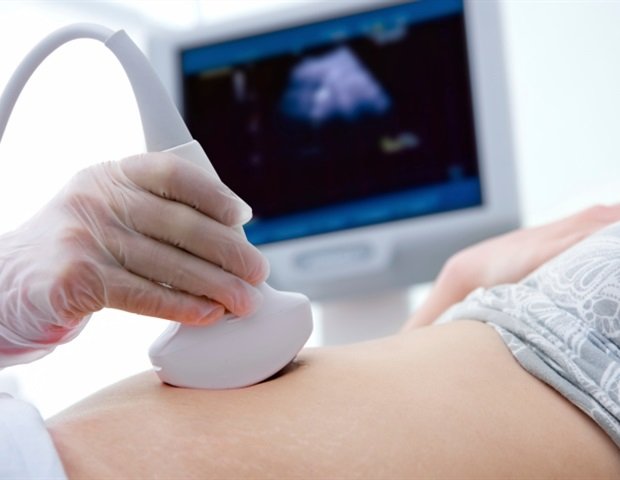
Engineers at the University of California, San Diego have developed a soft, wearable ultrasound patch that can continuously monitor a fetus for hours at a time. It allows for consistent monitoring even when the fetus and umbilical cord are constantly moving during pregnancy.
This technology could help doctors detect complications in high-risk pregnancies early. In one case during clinical trials, researchers say the patch detected prolonged abnormal fetal signals, prompting medical intervention with an early Caesarean section, which may have saved the baby’s life. This technology also has the potential to expand access to prenatal care in low-resource settings, where skilled ultrasound technicians and ongoing long-term monitoring are often limited or unavailable.
The study was published May 26 in the journal Nature Biotechnology.
Wearable ultrasound technology enables continuous prenatal monitoring and has the potential to improve pregnancy outcomes in ways not previously possible. ”
Geonho (Tom) Park, study co-lead author, chemical and nanoengineering doctoral student, UC San Diego Jacobs School of Engineering
Park co-led the study with co-lead authors Yizhou Bian, Hao Huang and Sai Zhou from the University of California, San Diego Jacobs School of Engineering.
Currently, most prenatal ultrasounds typically provide only a brief snapshot of the fetus’s health and require a trained sonographer to operate the equipment. A new wearable ultrasound patch is designed to continuously track a baby’s anatomy and blood flow in real-time while worn on the body, without the need for a person to manually guide the ultrasound probe.
“Comprehensive monitoring of mother and baby for the period necessary to detect complications like pre-eclampsia requires a system that works continuously and almost independently,” Bian said. “That’s why the sensing depth, functional capabilities, and autonomy of this ultrasound technology are so important.”
A major challenge in continuous fetal monitoring is that both the fetus and the umbilical cord are constantly in motion. To address this, researchers developed an autonomous tracking algorithm that automatically identifies and tracks the movement of the umbilical cord. This allows the device to maintain consistent readings even if the mother or fetus changes positions.
“Through continuous monitoring, we were able to observe dynamic fluctuations in blood flow that would otherwise be missed by traditional ultrasound,” Huang said.
“Our system also detected anomalies during our clinical visits,” Park added. “That pregnancy then went on to deliver at 29 weeks, demonstrating how continuous monitoring can help identify complications much earlier than today.”
The project is based on more than a decade of research in the lab of Sheng Xu, a chemistry and nanoengineering professor at the University of California, San Diego. His team has led the development of wearable ultrasound technology for a variety of healthcare applications, including non-invasive monitoring of central blood pressure, mobile cardiac monitoring, and efforts to reliably control robotic devices using everyday gestures. This research was conducted at the Yuho Aiso Lijia Department of Chemistry and Nanoengineering at the University of California, San Diego Jacobs School of Engineering.
In this new study, the team evaluated a wearable ultrasound patch through a multicenter clinical study conducted at the University of California, San Diego’s Jacobs Medical Center and the University of Oxford’s John Radcliffe Hospital. In testing, the patch produced measurements that closely matched those of a standard handheld ultrasound device. The researchers also collected continuous monitoring data for several hours at a time in 62 pregnancies, including healthy pregnancies as well as pregnancies complicated by gestational diabetes, preeclampsia, hypertension, and fetal growth abnormalities.
Next, the team plans to integrate the patch into a compact electronic system and eventually allow the patch to work wirelessly.
On November 1, 2025, Xu transferred his primary affiliation to Stanford University, where he serves as a faculty member in the Department of Anesthesiology, Perioperative and Pain Medicine, and holds ceremonial appointments in the areas of Electrical Engineering and Materials Science and Engineering.
This research was supported by Wellcome Leap (HER01430), the National Institutes of Health (1R01EB033464-01 and 1R01HL171652-01), and the University of California San Diego Accelerating Innovation to Market.
sauce:
University of California, San Diego
Reference magazines:
Park, G. others. (2026). Fetal monitoring of high-risk pregnancies using a wearable ultrasound patch. nature biotechnology. DOI: 10.1038/s41587-026-03140-1. https://www.nature.com/articles/s41587-026-03140-1
