


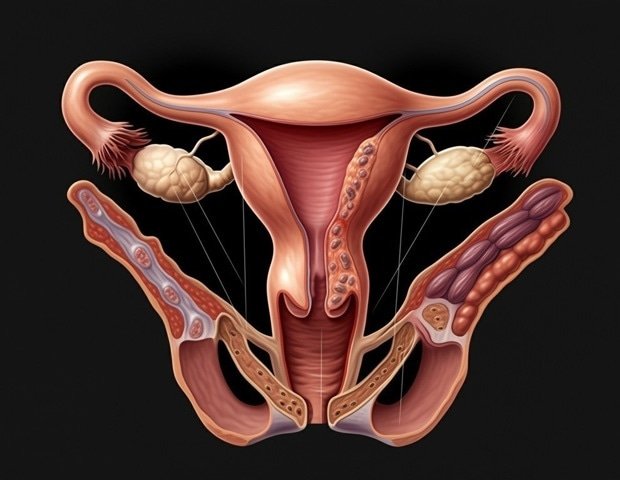
Migraines, digestive problems, anxiety, and depression can be part of endometriosis, but they are often interpreted as separate diseases. In a study led by the Institut Saint-Pau (IR Saint-Pau), human reproduction identified different symptom patterns in more than 22,000 women, reinforcing the idea that the disease extends far beyond traditional gynecological symptoms.
For many years, endometriosis has been classified primarily based on the location and extent of lesions observed during surgery and imaging tests. However, these systems only partially describe patients’ real-life experiences and do not adequately account for the large variation in symptoms associated with the disease. Additionally, a definitive diagnosis cannot rely solely on invasive surgical procedures that carry risks, costs, and long recovery periods.
To better understand this heterogeneity, researchers from the United States and Spain analyzed clinical and health data of women with endometriosis enrolled in the All of Us Research Program, one of the world’s largest population-based biobanks. This study identified different symptom patterns and examined how they relate to quality of life and disease severity.
For a long time, endometriosis was thought to be primarily a gynecological disease, but increasing evidence shows that endometriosis affects multiple systems throughout the body. Understanding this diversity is essential to increasing awareness of the disease and moving towards more personalized care. ”
Dr. Dora Koller, researcher in the Women’s Health and Perinatal Research Group at IR Saint-Pau and lead author of this study
Endometriosis affects approximately 10% of women of reproductive age, and diagnosis is often delayed by 4 to 11 years after the onset of first symptoms. This is partly because the symptoms vary widely among women and are often ignored, attributed to nonspecific causes, or unrecognized over time.
Beyond pelvic pain
To conduct the study, researchers analyzed 19 symptoms and comorbidities commonly associated with endometriosis, including chronic pelvic pain, abdominal pain, gastrointestinal symptoms, migraines, anxiety, depression, chronic fatigue, infertility, and irritable bowel syndrome.
This analysis identified four major symptom patterns in premenopausal women, which are considered the group most representative of active disease. The initial profile included 18.8% of patients and was characterized by a high disease burden with severe pain, gastrointestinal symptoms, and mood disorders. The second group was the largest, comprising 30% of women, and had moderate symptoms, primarily related to pain and mental health.
The third profile was found in 29.6% of patients and was dominated by psychological and neurological symptoms such as anxiety, depression, and migraines. Finally, 20.6% of women were in a group with a much lower symptom burden.
This distribution differed from that observed in the overall study cohort, where the group with the lowest clinical burden was significantly larger. This difference reinforces the idea that endometriosis of reproductive age is rarely a silent disease and that most patients fall into a profile with well-defined symptoms.
“The identification of this psychological and neurological profile shows that endometriosis does not always present in the way we expect, and that even in women seeking care for physical complaints, these symptoms may be recorded for the first time. If we continue to think only in terms of pelvic pain or menstrual pain, we risk missing many patients,” says Dr. Koller.
Possible explanations for the delay in diagnosis
Identifying these patterns can also help explain why many women wait years to receive a diagnosis. If gastrointestinal, neurological, or psychiatric symptoms predominate, the association with endometriosis may be overlooked, resulting in repeated visits to different specialties before a common explanation is found.
Patients may initially seek treatment for recurrent migraines, gastrointestinal discomfort, anxiety, fatigue, or chronic pain, but these symptoms are not interpreted as being part of the same underlying process. As a result, patients often go through multiple treatment pathways before receiving a final diagnosis.
“Many patients spend years searching for explanations for symptoms that are individually evaluated. Recognizing that endometriosis can present in very different ways may help identify endometriosis early and save years of uncertainty for many women,” says Dr. Koller.
Researchers note that one of the key messages of this study is the need to adopt a more integrated view of the disease. “If a woman has not only menstrual pain but also migraines, digestive symptoms, or mental health problems, it is important to consider whether all these symptoms may be related. Too often they are evaluated separately, even though they may be part of the same clinical picture,” she explains.
Increasing awareness of this clinical diversity may facilitate early recognition of the disease, especially in primary care where initial visits are frequent. It may also facilitate faster referral to the appropriate specialist, reducing the time between symptom onset and treatment initiation.
Adenomyosis is associated with the most severe form
The study also looked at women with endometriosis and adenomyosis. Adenomyosis is a disease closely related to endometriosis, in which endometrial-like tissue grows within the muscular wall of the uterus, causing gynecological symptoms such as severe pain and excessive menstruation.
The results showed that these patients had a significantly more severe clinical profile than women with endometriosis without adenomyosis. In the analyzed cohort, 57% were concentrated in the group with the highest symptom burden, characterized by severe pain, gastrointestinal symptoms, and psychological distress.
Furthermore, the low symptom burden profile identified in other patients was virtually absent in this subgroup. The coexistence of both conditions was consistently associated with particularly complex and debilitating forms of the disease.
“Adenomyosis appears to act as a factor that significantly increases the clinical burden of endometriosis. When both diseases coexist, we observe a concentration of patients in the most severe profile,” explains Dr. Koller.
These findings reinforce the importance of identifying the simultaneous presence of both conditions and suggest that patients with endometriosis and adenomyosis may benefit from more individualized monitoring and management strategies.
Impact on quality of life
In addition to identifying different symptom patterns, this study evaluated how these profiles were related to patients’ quality of life. The results revealed clear differences between the groups, suggesting that the profiles identified reflect not only differences in how the disease manifests, but also differences in the level of impact on daily life.
Women in the group with the highest symptom burden had poorer physical and mental health, greater limitations in carrying out daily activities, and more difficulties in areas such as social relationships and mental well-being. They also reported lower perceptions of their overall health status and lower satisfaction with their quality of life.
Differences were not limited to pain or physical symptoms. The most severe profile had poor outcomes in nearly every dimension assessed, from functional ability to mental health. In contrast, women in the low clinical burden group experienced a much more limited effect.
The analysis also revealed differences in less obvious aspects of daily life. Patients with a more severe profile were less likely to participate in certain social activities and were more likely to experience limitations in mobility and personal independence. These findings demonstrate that the impact of endometriosis extends far beyond the gynecological field and can affect many aspects of daily life.
“While we often tend to assess diseases based on pain intensity or extent of involvement, our results show that the actual impact is much broader. Endometriosis can affect physical health, mental health, social relationships, and quality of life in very different ways, depending on each patient’s profile,” says Dr. Koller.
“For years, we have attempted to classify endometriosis primarily based on lesion location. Our results show that understanding how this disease manifests in each patient may be equally important for improving diagnosis and clinical care,” she concludes.
sauce:
Institut de Recerca Sant Pau
Reference magazines:
Goroshchuk, O. Others. (2026) Characteristics of endometriosis and adenomyosis symptom clusters and their impact on quality of life in the All of Us Research Program. human reproduction. DOI: 10.1093/humrep/deag101. https://academic.oup.com/humrep/advance-article-abstract/doi/10.1093/humrep/deag101/8722271
