


Harare, Zimbabwe – On a cold autumn morning in eastern Zimbabwe, Precious Mbundula woke up with joint pain, a high fever and a throbbing headache.
The 37-year-old initially thought it was just the flu. But when the headache lasted for three days, she became worried.
Her 5-year-old son also became ill and was sweating profusely.
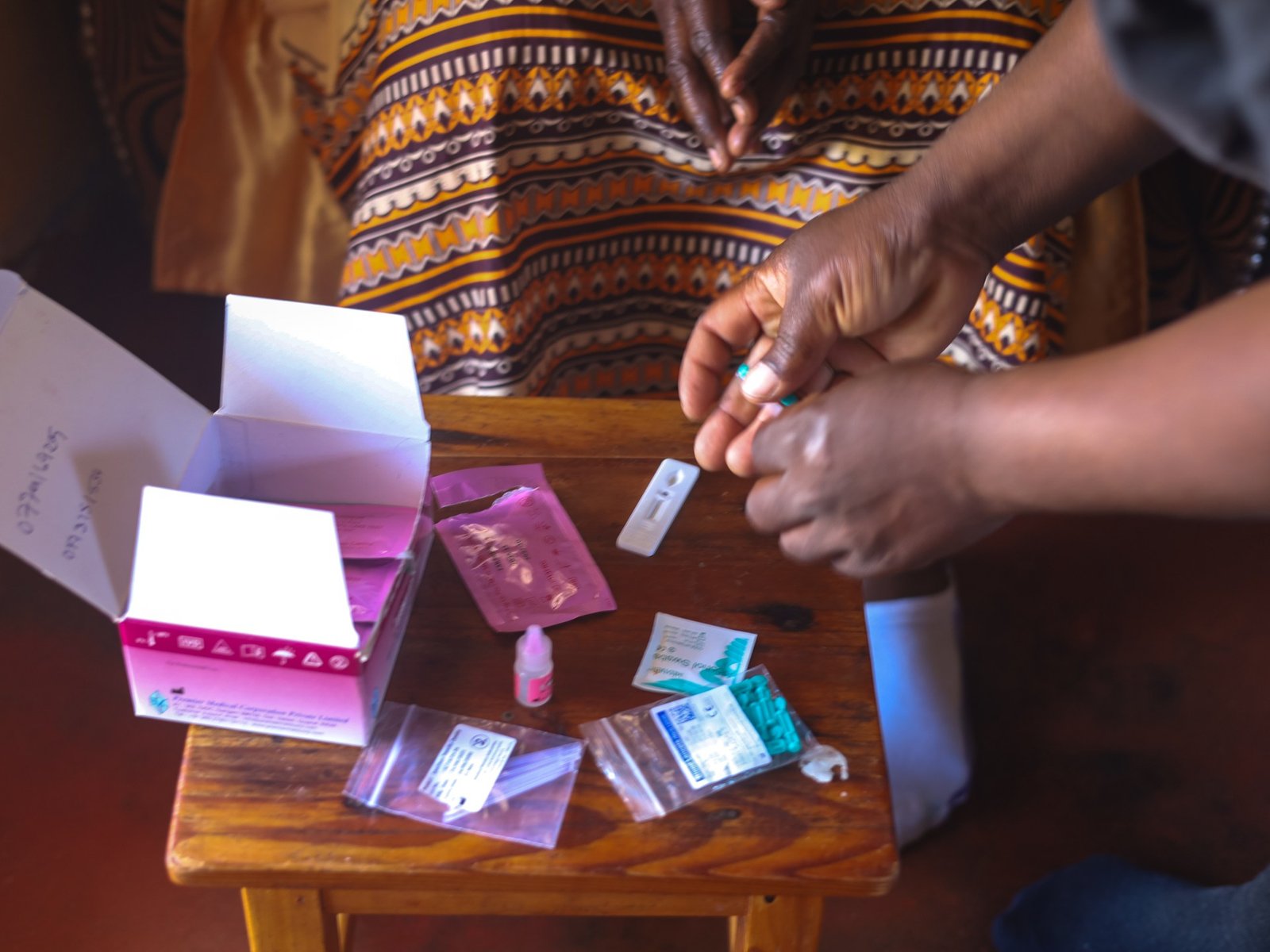
In early May, they sought help from health workers in Chishakwe, a rural village on the outskirts of Mutare, Zimbabwe’s third-largest city. Both tested positive for malaria.
“I felt relieved,” Mbundula told Al Jazeera.
“From the moment I took that drug, I started getting better.”
Her son has also recovered and is back at school.
Their test comes as U.S. funding cuts disrupt key malaria control programs and malaria cases and deaths soar across Zimbabwe.
Shortly after returning to office for a second term in 2025, US President Donald Trump cut foreign aid funding, including programs supported by the US Agency for International Development (USAID). In Zimbabwe, the cut has disrupted research, prevention and treatment programs for tuberculosis, HIV/AIDS and malaria.
Among the initiatives affected include the Zimbabwe Entomology Support Program in Malaria (ZENTO) at the University of Africa in Mutare, which provided scientific research to support the country’s malaria control programme, and the Zimbabwe Support Program in Malaria II (ZAPIM II), which supported the strengthening of malaria diagnosis, treatment and prevention in high-infection areas.
USAID was spending $270 million on health and agriculture programs in Zimbabwe in 2024.
The number of malaria infections soared to 65,399 between January and April 2026, up from 36,000 in the same period in 2025 and 17,000 in 2024, according to the Zimbabwe Ministry of Health’s National Malaria Control Plan Weekly Monitoring Report.
The number of deaths also rapidly increased, reaching 174 from January to April 2026, compared to 85 in the same period last year and 34 in 2024.
Mwandula and her son survived because they sought early treatment. In many other cases, the disease is fatal.
Lack of mosquito nets and test kits
Save the Children Zimbabwe’s head of health programs, Thomas Tutu, said several malaria eradication efforts previously supported by ZAPIM II had been suspended.
“In reality, eradication continues through the government and other partners, but operational capacity is weakened and implementation is delayed,” Tutu told Al Jazeera.
 Zimbabwe’s dependence on donor funding for essential medicines, diagnostic kits and mosquito repellent supplies leaves the country vulnerable (Farai Sean Matiash/Al Jazeera)
The ZAPIM II program was implemented through the Zimbabwe Ministry of Health system in 11 districts in Mashonaland Central, Mashonaland East and Matabeleland North.
Mwandula said she had not used mosquito nets or repellents before she became ill.
“When I got sick, I started using mosquito nets that my friends shared with me,” she said.
In December 2025, Caroline Mawonbezi was diagnosed with malaria while living in Burma Valley, a rural area about an hour’s drive from Mutare.
She last contracted the disease in the late 2000s, when she was still a child.
In mid-May, her five-year-old daughter was also diagnosed with malaria by health workers in the village of Chishakwe after suffering severe headaches and stomach problems.
Mawonbezi said her daughter received treatment but could not afford preventive measures such as mosquito nets.
“I’m unemployed. I can’t afford a mosquito net. We haven’t slept under a mosquito net for years,” she said.
Virginia Chakandinakira, a village health worker in charge of Chishakwe, said there is currently a shortage of malaria diagnostic kits and treatment drugs.
“Earlier, we received a lot of malaria test kits and medicines, but in 2025 we won’t receive them either. We have referred everyone suffering from malaria to the nearby Chitakatila clinic,” she said. Chitakatila is a rural village about an hour’s drive from Chishakwe.
“I just received test kits and medicines in February. But supplies are limited. Officials said they are only distributing them to hotspot areas.”
research program malfunctions
Professor Sungano Marakulwa, director of the Malaria Institute at the University of Africa, said the sudden withdrawal of US aid affected the program and worsened the malaria epidemic.
He said ZENTO provides data from its surveillance of malaria-carrying mosquitoes, which the National Malaria Control Program employs in its strategies to control malaria transmission.
The Trump administration’s funding cuts also effectively halted the U.S. President’s Malaria Initiative (PMI), launched by former President George W. Bush in 2005 to control and eliminate malaria worldwide. Mr Maharakulwa said PMI plays a major role in funding malaria drugs, without which communities remain at risk.
He said the Malaria Research Institute later secured funding from the United Methodist Church’s World Mission Directorate, but it fell far short of previous U.S. aid.
Zimbabwe’s dependence on donor funding for essential medicines, diagnostic kits and mosquito repellent supplies leaves the country in a vulnerable situation.
Itai Rushike, director of Zimbabwe’s Regional Working Group on Health, said the government needed to strengthen domestic health financing to reduce dependence on foreign donors.
“It is dangerous for countries to rely heavily on external partners, because donors can withdraw financial support at any time if their interests change,” he said.
Climate change fuel spreads
Experts say climate change is also driving the spread of malaria and other vector-borne diseases across Africa.
Rising temperatures are allowing malaria to spread to high-altitude areas where the risk of outbreaks was once low.
Zimbabwe experienced El Niño in 2023-2024. El Niño is a climate phenomenon characterized by unusually high temperatures in the Pacific Ocean, which typically disrupts rainfall patterns across southern Africa.
Continued heavy rains in 2025 and 2026 created ideal breeding conditions for mosquitoes.
Save the Children Zimbabwe’s Tutu said the current surge in malaria cases was closely linked to heavy rains in 2025-2026.
“This rain has created favorable breeding conditions for mosquitoes, especially in provinces where it is already endemic, such as Mashonaland Central, Manicaland, Mashonaland East and Mashonaland West,” he said.
 Health workers say there is currently a shortage of malaria diagnostic kits and medicines in rural Zimbabwe (Farai Sean Matiash/Al Jazeera)
“The impact of the heavy rains is likely to be amplified by weakened prevention systems, including reduced bed net coverage, delays in vector control activities, reductions in community surveillance, and challenges in timely testing and treatment due to the cancellation of ZAPIM,” it added.
Meanwhile, Professor Mahakulwa said above-normal rainfall requires equally strong preparations and resources to stop malaria transmission.
Government initiatives
Zimbabwe aims to eliminate malaria by 2030, in line with targets set by the African Union.
For years, the government, in collaboration with international donors and aid groups, has relied on indoor residual spraying, distribution of mosquito nets, mass testing, and public awareness campaigns to contain outbreaks, especially in rural areas.
Health workers are continuing indoor spraying campaigns in malaria-endemic areas, and village health educators are using community meetings and radio programs to encourage early testing and treatment. Authorities also expanded surveillance and rapid response systems in high-risk areas.
However, some of these efforts have been weakened by the suspension of donor-funded programs. Key malaria eradication efforts previously supported by ZAPIM II included active case tracking, targeted distribution of long-lasting insecticidal nets, and regional rapid response systems.
For years, the government and aid organizations have been distributing bed nets annually to vulnerable communities such as Chishakwe. However, since the US funding cuts, funding shortages have become increasingly common.
Village health workers say malaria diagnostic kits and drugs are also in short supply in some rural areas, forcing suspected malaria patients to travel long distances to clinics for testing and treatment.
Health experts have warned that unless funding gaps are urgently addressed, Zimbabwe risks losing years of progress in reducing malaria infections and deaths.
For Mwandula and her son, surviving malaria still feels like escaping death.
“We were cheating death,” she said. “It was so bad.”
