


Democratic Maine Rep. Cherry Pingree introduced a bill last week that would overturn a U.S. Supreme Court ruling that favored Monsanto and other pesticide manufacturers.
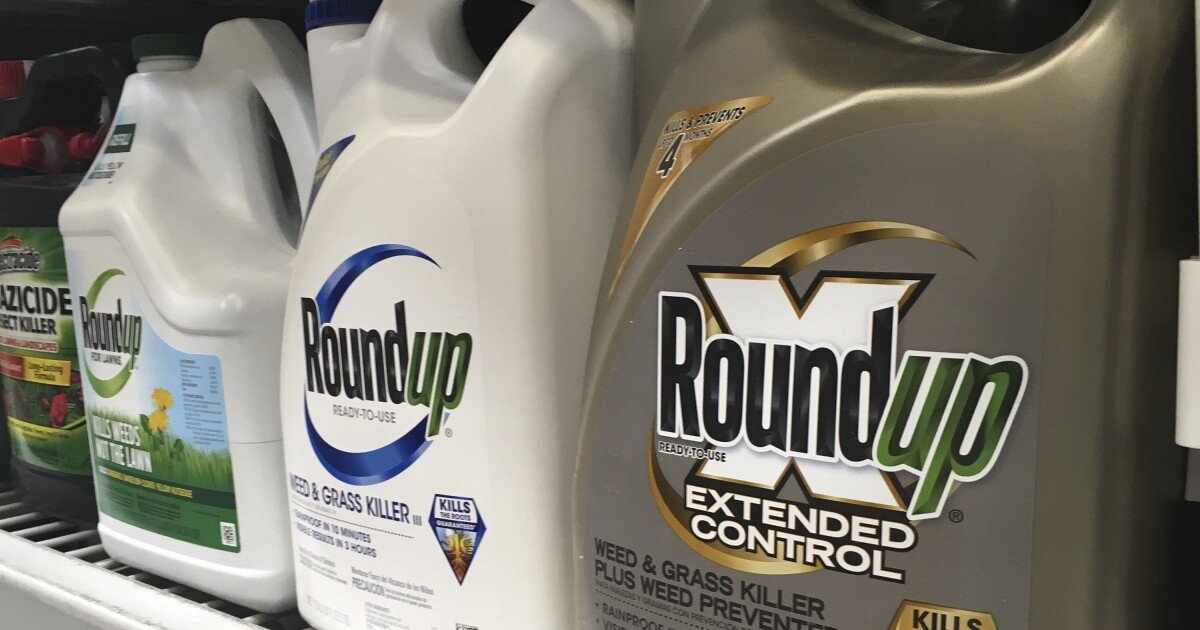
Monsanto currently faces thousands of lawsuits from people who claim its herbicide Roundup is linked to cancer. On June 25, a court ruled that the Environmental Protection Agency is the only agency that can mandate cancer warnings on product labels, effectively shielding companies from state-level claims.
But Pingree said her bill, called the Toxic Poisoning Act, would restore the power to consumers to sue businesses over health concerns.
“Maine people care about what’s in their food, and we’re really hearing that resonate across the country,” she said. “People are really paying attention to this issue because cancer rates are rising and there are more problems with our overall health.”
Seven states do not pre-empt local governments from regulating pesticide use within their jurisdictions: Maine, Alaska, Hawaii, Maryland, Utah, Nevada, and Vermont. In Maine alone, there are more than 30 state and local regulations related to pesticide use and warning requirements that could be affected by the court’s decision, according to Pingree’s office.
This is not Pingree’s first move to push for tighter regulation of pesticide companies. Pingree introduced a similar measure in his draft farm bill in April.
The Farm Bill is a large legislative package that funds food and rural development programs and sets the nation’s agricultural policy. The last Farm Bill was passed in 2018 and has been extended multiple times since then. The Agriculture, Food, and National Security Act of 2026 is the latest attempt by Congress to update the law.
“A farm bill that protects chemical companies more than American farmers is not pro-farmers. It’s not pro-health and it’s not pro-America,” she said. “That’s a donation to a major chemical company.”
President Donald Trump signed an executive order in February to increase domestic production of glyphosate, saying there is “no chemical that can directly substitute one-for-one” for the herbicide.
“Unavailability of glyphosate-based herbicides could significantly threaten agricultural productivity, put pressure on the nation’s food system, and potentially shift agricultural land to other uses due to low productivity,” President Trump said in the executive order.
Pingree also introduced legislation to counter the executive order. But while her efforts are supported by Kentucky Rep. Thomas Massey and other Republicans who support the “Make America Healthy Again” agenda, they have yet to reach the voting booth.
“This is not a battle that will end with a one-shot silver bullet,” she said. “We continue to emphasize that people are looking for ways to reduce the amount of harmful chemicals in their food, and they want a federal government they can trust to regulate dangerous chemicals and not be manipulated by chemical companies.”
!function(f,b,e,v,n,t,s) {if(f.fbq)return;n=f.fbq=function(){n.callMethod? n.callMethod.apply(n,arguments):n.queue.push(arguments)}; if(!f._fbq)f._fbq=n;n.push=n;n.loaded=!0;n.version=”2.0′; n.queue=();t=b.createElement(e);t.async=!0; t.src=v;s=b.getElementsByTagName(e)(0); s.parentNode.insertBefore(t,s)}(window, document,’script’, ‘https://connect.facebook.net/en_US/fbevents.js’); fbq(‘init’, ‘1316195455504306’);
Source link
