


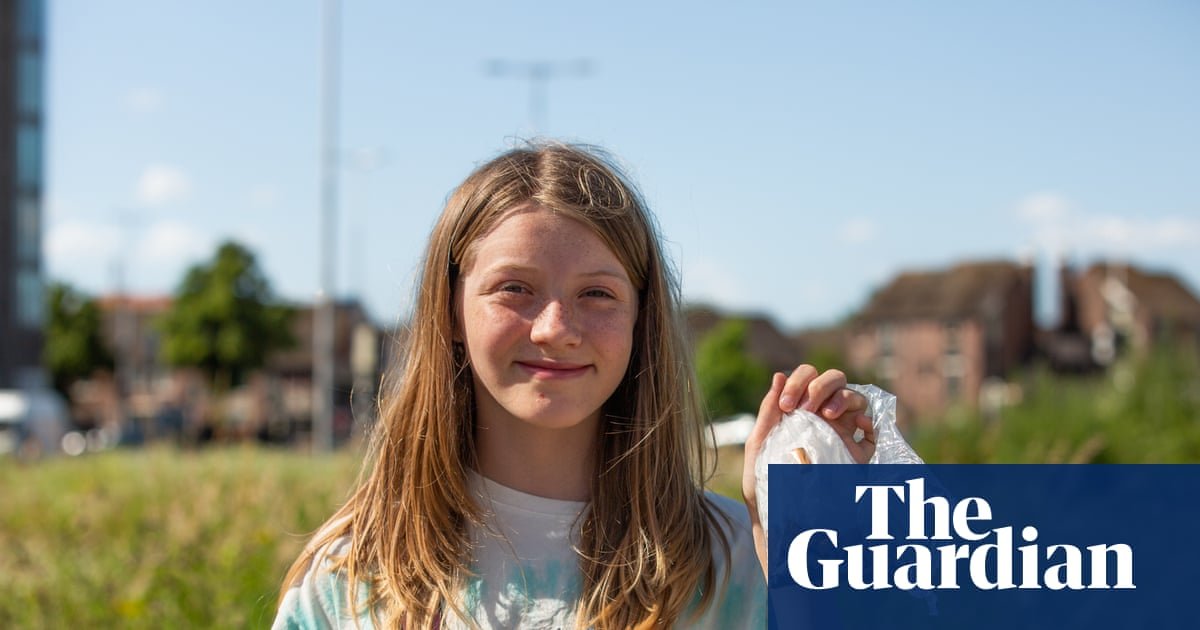
Would you use a cigarette butt to buy buttery Dutch pancakes? This is the deal one food truck is offering at a festival in the Netherlands as a way to get people thinking about trash.
Cigarette butts are the most common plastic waste in the world, with more than 4.5 tonnes of cigarette butts produced each year. In the Netherlands, the number is estimated to be in the hundreds of millions.
To combat this problem, some companies are accepting them as payment for a plate. pancakes – Small Dutch pancakes are usually eaten with heaps of butter and sugar.
At the Het Vrije Westen Liberation Festival in Amsterdam’s Westerpark this month, WasteBar’s yellow trucks were decorated with catchy slogans such as “Don’t waste your waste!” A sign next to it read:Pay with garbage here” (Pay with garbage here).
At WasteBar, cigarette butts become money. Poferches You can buy cigarettes for 20 pieces, drinks for 10 pieces, and fruits and candies for 15 pieces. Also accepts plastic: 15 pieces per piece pancakes.
WasteBar appears at Dutch festivals, children’s events and business gatherings
Cigarette butts contain plastic, heavy metals, and other harmful substances that are extremely difficult to remove from the environment. Dutch municipalities reportedly spend €36m (£31m) on cleaning each year.
The problem is so pervasive that thousands of people take part in No Cigarettes Day on the first Saturday of July. The event is an annual event that started in the Netherlands and is expanding internationally. WasteBar, on the other hand, is active all year round, appearing at festivals, children’s events, business gatherings, etc. to ease the burden.
This creative concept was born in Goa, India, as part of Dutch entrepreneur Noreen van Holstein’s 2019 campaign to combat coastal litter.
After spending 17 years in Goa, she returned to the Netherlands in 2020 and realized she could benefit from a similar initiative. She merged the bar into a foundation she runs with fellow entrepreneur Larita Van Lamsweerde, and launched the WasteBar food truck in 2022.
“We didn’t know if people would be concerned about picking things up off the ground,” Van Holstein said. “But right from the start, it was just positive.”
The team has collected more than 500,000 cigarette butts so far.
WasteBar, funded through a combination of grants and municipal funding, has held more than 50 events and collected more than 500,000 cigarette butts, some of which were used in last year’s art exhibition.
Some are waiting to be properly disposed of. “I have about 100,000 drums in my yard right now,” Van Holstein said with a laugh. This year, she hopes to find partners to help with recycling.
Reducing this pervasive source of waste is a lofty goal, but Van Holstein is optimistic. “I believe we can solve the littering problem,” she said, pointing to Singapore and the Nordic countries as places that have managed to keep their cities clean.
She has also seen how the Netherlands has made progress in reducing dog poop, another form of waste. But she admits she can’t do it with just one truck. “Even if we did 500 events a year, we wouldn’t solve the problem,” she said.
Through WasteBar, she hopes to encourage a “change in mindset” about trash and inspire an anti-littering attitude among children. “We want to get people into action mode, and we hope that by picking up trash they won’t litter any more, because we believe that once you see something, you can’t unsee it,” Van Holstein says.
WasteBar uses several mechanisms, said Reint-Jan Renes, a behavioral scientist at the Amsterdam University of Applied Sciences who was not involved in the effort. It is known to be effective in reducing littering and increasing environmentally friendly behavior. Its strength lies in social dynamics and social norms, he said.
“It takes something as abstract as littering and turns it into a tangible, collective social action,” he says. “People see others getting involved, talking about waste, picking up cigarette butts together and contributing to something tangible.
“If more people begin to associate trash picking with civic pride, creativity, and community participation, rather than punishment or obligation, this effort may help plant the seeds of broader cultural change.”
Van Holstein also sees WasteBar as a creative way to promote. reconsider: Dutch word meaning “reconsider”.
“People are always used to paying with money, but the moment you pay with something else, it triggers something in your brain,” she said. “Giving people something as useless as trash value changes the way they see things.”
At the Wester Park festival, children inspecting cigarette butts were doing just that. And by the end of the day, they had picked up 6,000 cigarette butts. This is equivalent to several hundred servings of pancakes.
