


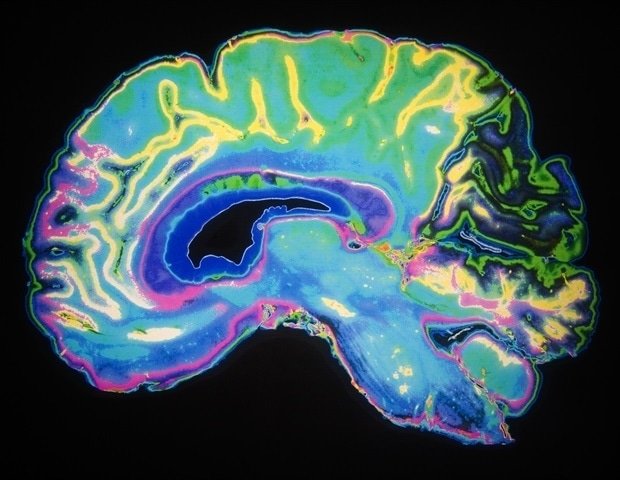
A new study by Georgetown scientists shows how the brain can be rewired to automate learned tasks. The findings challenge long-held understandings of how humans learn complex skills and suggest that true multitasking is indeed possible.
This research not only provides encouragement to busy people that they can indeed do two things at once, but also has important implications for the development of artificial intelligence, which, like the brain, can build on prior learning.
“This is a new stepping stone in understanding how the brain learns,” said lead author Dr. Maximilian Riesenhuber, professor of neuroscience and co-director of the Center for Neuroengineering at Georgetown University School of Medicine.
The good news is that you can actually learn to multitask. In fact, there are ways to modify the structure of the brain to use other parts of the brain. ”
Maximilian Riesenhuber, Georgetown University
This new study builds on decades of research into how learning occurs in the brain.
Scientists wanted to understand the mechanisms behind automation and how the brain moves from learning a new task to performing that task more unconsciously through extensive experience.
A good example, Riesenhuber says, is driving a car. When learning to drive for the first time, maximum concentration is required. However, after years of driving, most people become able to talk, listen to music, and consider problems without fully concentrating on operating the vehicle.
“The question is, how does your brain do it?” Riesenhuber said.
Most previous research on learning has focused on the early stages, but what happens to the brain over the long term is difficult to study and poorly understood.
In the new study, researchers had people learn to classify morphed images of cars into two categories and find subtle differences to distinguish them. Participants completed more than 30,000 trials over five to 10 weeks using an app on their phones that allows them to sort images as a game. Researchers used fMRI and EEG to conduct brain scans on participants before and after completing the study.
They found that after people first learned to classify images, the task activated their prefrontal cortex. This area of the brain is responsible for executive function and thinking, but it can usually handle only one task at a time.
But when the researchers scanned the brains of participants who had practiced the classification task over several weeks, they found that the classification task took place in the temporal cortex, a part of the brain involved in encoding memories and recognizing complex objects.
“Previous studies have shown that parts of the temporal cortex can be activated by experienced observers, and by certain object categories such as birds, cars, and even Pokemon, but the limitation of all these studies is that they only observed people after they became experts.” “The strength of our study is that it is longitudinal, and we measure it before and after training, so we can see that extensive training essentially creates category-selective areas in the temporal lobe that didn’t exist before,” said first author Patrick Cox, Ph.D., who began the study as a graduate student. in Riesenhuber’s lab and is currently an assistant professor of psychology at Lehigh University.
“This has implications for important real-world scenarios, such as when radiologists, thanks to years of training, can accurately classify masses on radiographs as benign or malignant fairly automatically, often without extensive deliberation,” Cox said.
Categorical information from the car-selective area of the temporal cortex was connected directly to the output part of the brain, bypassing the prefrontal cortex. “Experience restructures the brain to avoid bottlenecks in the frontal lobe. The prefrontal cortex is then freed up to do other things you want to do, increasing your ability,” Riesenhuber explained. In fact, researchers found that the more the car task was “offloaded” from the prefrontal cortex, the more efficiently people were able to perform another task alongside the car task.
This discovery challenges the long-held belief that humans are incapable of true multitasking. Instead, the brain was thought to be rapidly switching between the two tasks.
“What we’re showing is that the circuitry actually changes and allows the brain to do two things at the same time,” Riesenhuber said. “This is true multitasking.”
The findings may also have implications for our understanding of compulsive behaviors, as they show that learned behaviors are transferred to brain circuits that are less accessible to conscious thought and executive functions.
“The first step to forgetting something is understanding where in the brain it’s actually happening,” Riesenhuber said. “This shows why strategies like telling someone to think differently don’t actually work, because their behavior is not under conscious control.”
This also helps explain why humans are good at continuous learning and building skills on top of each other, something that remains difficult for AI.
By transferring learned skills to the temporal cortex and freeing up space in the prefrontal cortex, the brain may be able to use old information as building blocks for learning new things, Riesenhuber said. He pointed out that current AI models do not have the same capabilities.
Next, the researchers hope to study the mechanisms and signals involved in transferring learning from one part of the brain to another, and to understand what the limits of multitasking are.
“Another really interesting question is: What kinds of tasks can we learn enough to perform in parallel?” Cox says. “We can walk and chew gum at the same time, but texting while driving is never safe, as it takes your eyes off the road. Ultimately, juggling the two tasks depends on training completely separate neural circuits.”
sauce:
Georgetown University Medical Center
