


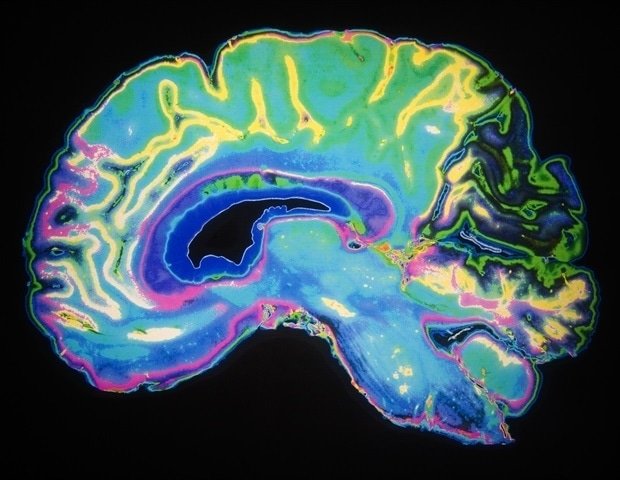
A new study in mice shows that cells long thought to play a secondary role in brain function are building their own far-reaching connections. These pathways appear to connect distant regions in ways that have not been previously mapped.
Experts usually describe the brain as a network of nerve cells (neurons) that transmit information by sending signals to each other. These neurons are maintained by another type of brain cell, astrocytes, which transport nutrients and transport waste products.
The study, led by researchers at NYU Langone Health, found that astrocytes, like neurons, form organized webs that allow them to send locally generalized signals as well as communicate with other specific astrocytes throughout the brain. In some cases, this pathway connects regions not already connected by neurons.
For more than a century, neuroscientists have believed that neurons are the brain’s mainstay. However, our findings suggest that astrocytes, which are usually considered simply supporting cells, also carry out a wide range of signaling pathways of their own, adding a new layer to how brain regions are kept connected. ”
Dr. Melissa Cooper, lead study author
In previous research, Dr. Cooper reported that astrocytes can redistribute resources from those surrounding healthy neurons to damaged neurons in a mouse model of the visual neurodegenerative disease glaucoma. But the researchers had no way to determine whether this kind of supporting cell network was spread throughout the brain.
Dr. Cooper, a postdoctoral fellow in the Department of Neuroscience at New York University’s Grossman School of Medicine, said this latest study maps for the first time the active brain-wide communication networks established by astrocytes and shows that these pathways are highly specific.
The findings were published in the journal April 22nd. naturerelied on custom-built tracing tools that allowed the team to track cell connections in far greater detail than previous methods.
In the study, researchers used a harmless virus to deliver a “network tracer” to astrocytes in selected brain regions of laboratory mice. These tracers allowed the researchers to see which cells were part of the same signaling pathway by tagging small molecules as they passed through tiny channels called gap junctions that connect astrocytes.
The scientists then made the mouse’s brain transparent and used a special microscope to take three-dimensional images of all the tagged astrocytes. By doing this in hundreds of mice, they were able to map a network of astrocytes across brain regions. The tracing tools and brain cleaning methods are designed to be relatively low cost and easy to reproduce, allowing other laboratories to use them to study networks in many brain diseases.
In another part of the study, the team evaluated mice genetically engineered to have astrocytes lacking gap junctions. The communication network has largely disappeared, suggesting that the route is active and dependent on these physical bridges.
“By challenging our understanding of how the brain communicates over long distances, our findings may provide new insights into how the brain develops, ages, and behaves in conditions such as Alzheimer’s disease and Parkinson’s disease,” said study co-author Dr. Shane A. Riderow. Dr. Riderow is an associate professor in the Department of Neuroscience and Ophthalmology at New York University Grossman School of Medicine.
Another important finding was that the astrocyte network is dynamic. When the researchers trimmed the whiskers on one side of the mice’s faces, the pathway from the region that processes whisker contact became smaller and reconnected to the other partner’s astrocytes.
“The fact that astrocyte networks shrink and reroute after the loss of sensory signals suggests that astrocyte networks may be shaped by experience,” said study co-author Moses V. Chao, PhD. “This also raises the possibility that each of us has somewhat unique patterns of connectivity, shaped by what our brains have learned and experienced,” added Dr. Chao, a professor of cell biology, neuroscience, and psychiatry at New York University’s Grossman School of Medicine.
The authors plan to investigate which molecules move within the network and apply their tracking tools to models of brain disorders. They also hope to examine how these webs change during development and aging, Dr. Chao said.
Dr Riderow emphasized that humans also have gap junctions and astrocytes, but it is unclear whether their networks connect the same regions as in mice.
Funding for this research was provided by National Institutes of Health grants R01EY033353, U19NS107616, P30AG066512, P30CA016087, T32MH019524, K99NS139313, and K00AG068343. Additional funding was provided by the Alzheimer’s Disease Treatment Fund, the New York Academy of Sciences Leon Levy Fellowship in Neuroscience, the Pew Charitable Trusts Postdoctoral Fellowship, the Simmons Foundation SURFiN Fellowship, the Belfer Neurodegeneration Consortium, the Carol and Jean Ludwig Family Foundation, and the Swiss National Science Foundation.
Dr. Ridereau maintains financial interests in AstronautTx Ltd., a company researching potential therapeutic targets for Alzheimer’s disease, and Synapticure, a telemedicine company that provides care to patients with Alzheimer’s disease, dementia, and other neurological diseases. He is also a member of the Scientific Advisory Board of the Global BioAccess Fund. None of these activities are related to the current study. The terms and conditions of these relationships are governed by NYU Langone Health in accordance with its policies and procedures.
With the doctors. In addition to Cooper, Riderow, and Chao, researchers at New York University Langone College who were involved in the study included Dr. Maria Clara Sellers. Michael Comer, MFA, MAT. Dr. Holly Gildea. Joseph Sal. and Caitlin Chiuri. Other study collaborators are Chase Redd, Philip Chan, MD, and Damian Wheeler, PhD, of Translucence Biosystems in Irvine, California. Dr. Ayman Saab of the University of Zurich, Switzerland.
sauce:
Reference magazines:
Cooper, M.L.; Others. (2026). Astrocytes connect specific brain regions through plastic networks. nature. DOI: 10.1038/s41586-026-10426-6. https://www.nature.com/articles/s41586-026-10426-6
