


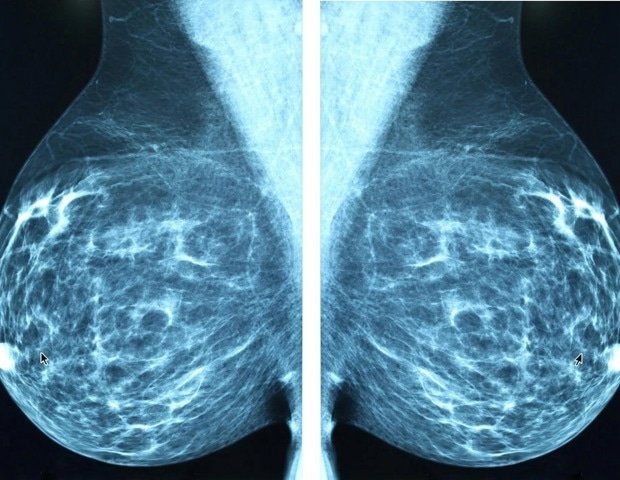
An experimental drug targeting triple-negative breast cancer overwhelms cancer cells with toxic fats, according to a new study of human tumors in mice. Triple-negative breast cancer lacks three common drug targets, making it one of the most aggressive types of breast cancer.
The compound, known as DH20931, appears to push cancer cells over the edge by causing a surge of fat-like molecules called ceramides. If cells are already under stress, they will not be able to cope and will eventually self-destruct.
In laboratory experiments, the drug also made standard chemotherapy more effective. When combined with the commonly used drug doxorubicin, the researchers were able to reduce the dose needed to kill cancer cells by about a fifth.
This drug targets an enzyme known as CerS2, dramatically increasing production of these lipids and stressing cancer cells. In contrast, healthy cells showed less sensitivity to the drug in clinical tests.
Although early results are promising, additional preclinical and clinical studies are needed to determine the safety and efficacy of DH20931 as a potential anticancer agent in humans.
Dr. Satya Narayan, a professor at the University of Florida School of Medicine, led the study. Dr. Narayan and a group of international collaborators published their findings on human-derived tumors in the journal Molecular Cancer Therapeutics on April 21, and presented their findings on combination therapy at the American Association for Cancer Research’s annual meeting in San Diego.
Narayan likens the drug’s impact to a home’s electrical system dealing with a power surge. Healthy cells in the body function like properly grounded and installed circuits, but cancer cells are more like a jumble of mismatched wires and bad fuses. However, DH20931 overwhelms cells with fat rather than electricity.
“When that surge gets into the cancer cell, the cancer cell can’t handle the amount of power it’s getting. The fuse blows, the cell can’t withstand the surge, and the cell dies,” said Narayan, who is also a member of the UF Health Cancer Institute.
The compound was developed in the laboratory of Dr. Seokwon Hong at the university. Hong, now a professor at Gwangju University of Science and Technology in South Korea, created DH20931 as one of many drug candidates tested for efficacy in Narayan’s lab.
In this study, researchers transplanted human triple-negative breast cancer tumors into mice and treated them with DH20931. The drug significantly slowed tumor growth without causing significant weight loss or signs of toxicity in the animals. Separate laboratory experiments also showed activity against other breast cancer subtypes.
In addition to increasing lipid levels, DH20931 triggers a second stress signal by flooding cells with calcium. Together, these effects destroy mitochondria, the cell’s energy-producing structures, and ultimately lead to cell death.
Rather than just following one path, we traverse multiple paths. This is a two-hit hypothesis. Because these pathways are common to all types of breast cancer and other solid tumors, we believe this drug could be useful not only for triple-negative breast cancer, but potentially for other cancers as well. ”
Dr. Sathya Narayan, Professor, University of Florida School of Medicine
sauce:
Reference magazines:
Alatawi, H. Others. (2026). CerS2 is a druggable target in triple-negative breast cancer. Molecular cancer therapy. DOI: 10.1158/1535-7163.MCT-25-1159. https://aacrjournals.org/mct/article/doi/10.1158/1535-7163.MCT-25-1159/783961/CerS2-is-a-druggable-target-in-triple-negative
