


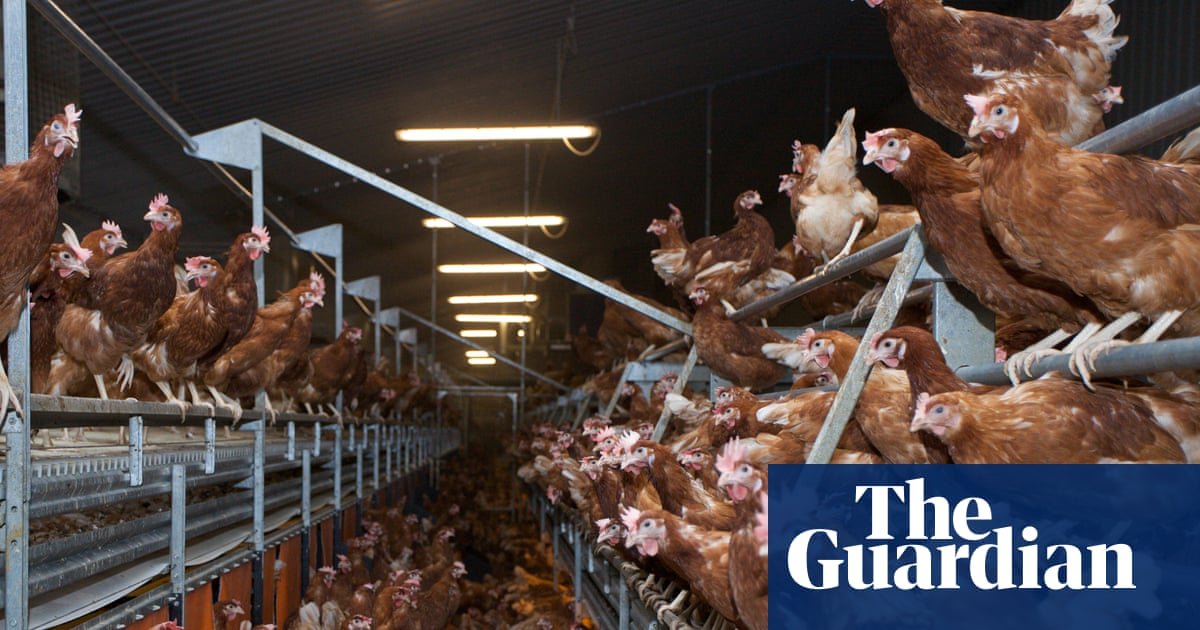
Ammonia pollution hotspots have been identified in areas with the highest concentration of pig and poultry farms in the UK, a study has found.
New maps reveal for the first time that the worst ammonia emissions levels are concentrated in Lincolnshire, Herefordshire and Norfolk. According to researchers from Compassion in World Farming (CiWF) and Sustain, these regions all have high densities of intensive poultry and pig farms that emit dangerous levels of ammonia.
The study comes as the government seeks to rewrite planning rules to make it easier to build intensive livestock farms, despite concerns over water pollution, air quality and local opposition, the Guardian revealed earlier this month.
Ammonia emissions are dangerous to human health and the environment. In the UK, agriculture accounts for 89% of domestic emissions of nitrogen-based gases used in the manufacture of fertilizers and released from livestock manure. CiWF said in a report released Thursday with the map that industrial-intensive livestock farming is increasing the environmental and health burdens associated with ammonia.
When ammonia is released into the air, it reacts with other pollutants to form particulate matter, or PM2.5, which is considered one of the most dangerous forms of air pollution. The Committee on the Medical Effects of Air Pollutants (COMEAP) estimated that between 28,861 and 29,000 premature deaths in the UK in 2010 were due to anthropogenic PM2.5 exposure.
Modeling shows that reducing emissions from agriculture could dramatically reduce mortality rates.
Map of ammonia emissions in the UK
Dr Amir Khan, general practitioner and CiWF patron, said: “As a general practitioner, I see firsthand the damage that air pollution has on people’s health. Ammonia from intensive agriculture is a major part of the problem, yet is often overlooked.”
“Fine particulate matter formed by ammonia exposure is linked to heart disease, stroke, asthma and chronic lung disease, and the most vulnerable patients pay the price.”
Excess nitrogen from ammonia deposition is released into the environment, acidifying soils and polluting rivers. In Shropshire, campaigners recently blocked permission for a huge chicken farm, claiming the council had not taken into account the full environmental impact of an industrial facility housing 230,000 chickens at a time when granting planning permission.
The proliferation of large intensive poultry farms, known as IPUs, in the Wye and Severn river basins is a major source of river pollution, as chicken waste contains more phosphates than other animal manure and cannot provide oxygen to fish or river plants.
The map released Thursday provides estimates of ammonia produced by the industrial livestock sector.
Calculations were derived from the permitted stocking numbers and average ammonia production factors for different categories of livestock, including broiler chickens, indoor eggs, and pigs.
Michelle Franks, who lives near a large poultry farm in Lincolnshire, told researchers that the exhaust gases force her to stay indoors regularly, causing chest tightness, eye irritation and difficulty breathing during shed cleaning, which can last up to five days at a time.
“When I clean the chicken coop, the smell and polluted air hit me right away. My chest tightens, my eyes hurt, and I have to close all the windows in the house to cope,” she said. “I have asthma and can’t even step into my garden for days on end. People tell me to run to the countryside for clean air, but no one should have to live between suffocating industrial areas.”
CiWF and Sustain are calling for an end to the expansion of factory farming.
Anthony Field, head of World Farming Compassion UK, said: ‘Factory farming is at the heart of the UK’s ammonia crisis.
“By cramming large numbers of animals into limited spaces and relying heavily on fertilizers, these concentrated systems release ammonia far beyond what the environment or our bodies can handle. The result is a cascade of damage to the animals living in these environments, the people who breathe the polluted air, and the ecosystems that absorb the excess nitrogen.”
