


SAN ANTONIO—With increasing evidence regarding the toxicity of per- and polyfluoroalkyl substances (PFAS), a global effort is underway to remove these substances from the environment or at least reduce routes of human exposure, such as drinking water. And analytical chemists are hard at work detecting and quantifying a useful but troublesome class of synthetic chemicals.
Meeting that measurement need was a major topic of conversation and commerce at Pitcon, the annual metrology and analytical sciences conference held in San Antonio last week. Attendees were eager to hear more information as multiple equipment manufacturers and lab supply vendors announced PFAS-related products or highlighted existing products at the show.
In recent years, the industry has focused on making tools and methods more sensitive, pushing detection limits to parts per trillion, said Ethan Hayne, product coordinator at equipment manufacturer Shimadzu. Hain specializes in liquid chromatography combined with mass spectrometry (LC/MS), the basis of the analytical methods required by most regulations to test for PFAS in drinking water, wastewater, and soil.

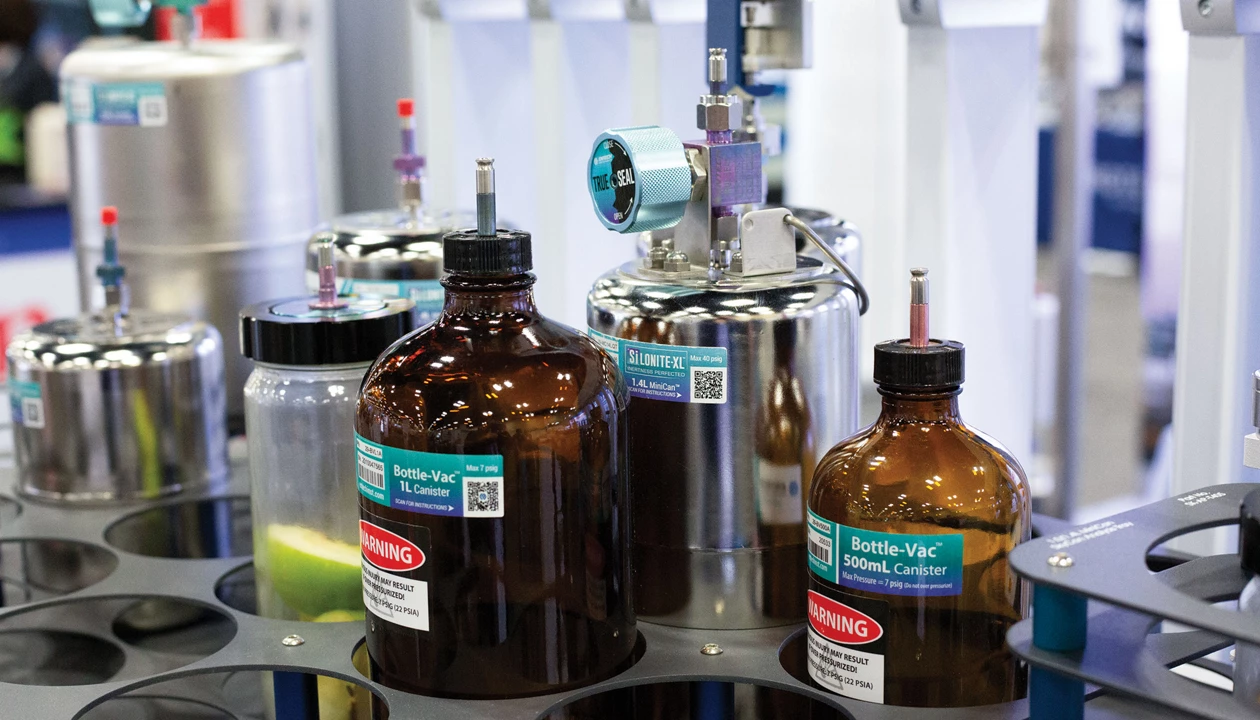
Pitcon will include exhibitions, scientific lectures, and social events (illustrated) for analytical scientists.
Credit: Craig Bettenhausen/C&EN
In addition to more powerful equipment, analyte enrichment techniques such as solid-phase extraction are now allowing chemists to sniff out PFAS at concentrations that were out of reach just a few years ago, Hayne said. This series of methods removes PFAS from water samples by passing them through weak anion exchange polymers or other materials. A subsequent wash with a special solvent removes the PFAS in much smaller amounts, making it easier to measure.
While global trends are toward tighter controls for PFAS in the environment, Hayne said he and his colleagues are closely monitoring proposed deregulation in the United States. “Without regulation, people will not invest in financial products,” he pointed out. However, in the long term, the instrumentation industry expects stronger environmental regulations and further restrictions on food, beverages, and personal care products.
Before scientists can reliably quantify PFAS in samples, they must be eliminated from the workflow, emphasized Bradley VanMiddlesworth, an analytical scientist at sample preparation automation company ePrep. Some plastic pipette tips are made using PFAS-based mold release agents, he said. VanMiddlesworth says all caps, septa, and tubing should be ensured to be PFAS-free and cleaned with alkaline acetone or methanol between samples.
A sales representative for lab supplier Trajan agreed, saying the company is seeing a surge in sales of PFAS-free lab consumables. Many PFAS polymers are robust, chemically inert, and flexible, so they have been widely used in analytical instrumentation for many years.
Analytical laboratories are figuring that out, VanMiddlesworth said. For example, in the city of Sugar Land, Texas, PFAS levels in drinking water consistently exceeded 600 parts per trillion, far above levels considered safe. He worked with lab technicians to implement better cleaning protocols, and the results fell below the level of detection. This change suggests that PFAS were either already present in the lab or were accumulating over time. “PFAS are very difficult analytes to clean up,” he said.
Now that parts per trillion detection of PFAS is possible, more chemists are gearing up to do benchwork. Mario Ruiz, a formulation chemist at Absolute Standards, a manufacturer of analytical reference standards, said demand for PFAS standards is accelerating. Research laboratories that use standards to calibrate instruments and verify substance identities seek both single-component samples and custom blends for detailed compositional analysis.
As if to emphasize this point, while Lewis was speaking with C&EN at the company’s Pitcon booth, a chemist approached him and asked for a PFAS catalog. “More research institutions are working on this,” Lewis says.

Chemistry & Engineering News
ISSN 0009-2347
Copyright © 2026 American Chemical Society
