


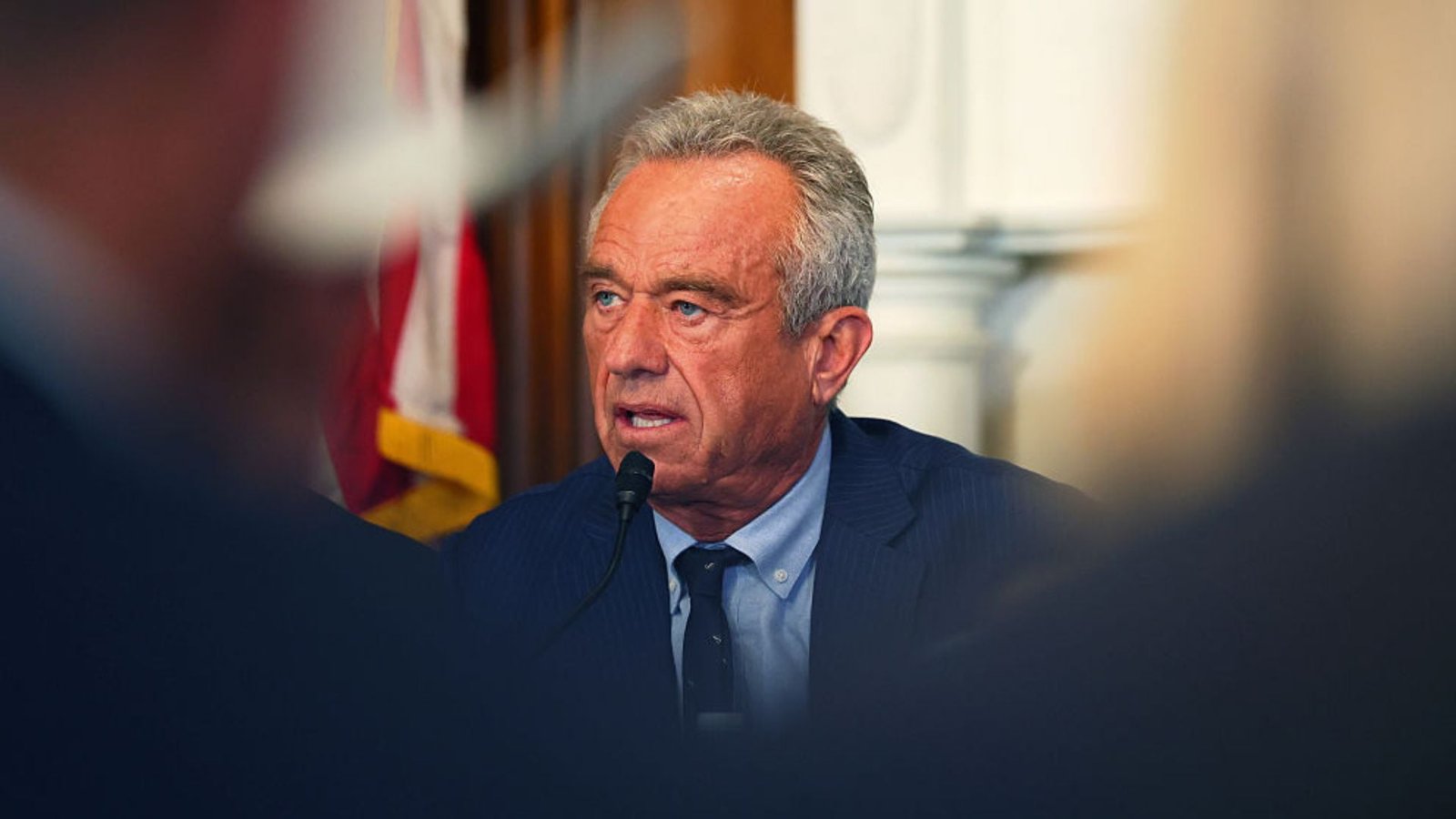
The Secretary of Health and Human Services is said to be campaigning behind the scenes amid the Trump administration’s apparent bid to suppress public criticism of vaccines ahead of this fall’s midterm elections.
Robert F. Kennedy Jr. is quietly overseeing a cross-agency effort to study vaccines’ potential role in America’s rising rates of chronic disease (a common rallying cry among vaccination skeptics), according to people The New York Times spoke to with knowledge of the effort. The anonymous sources said the investigation is a top priority for the HHS secretary.
The research study is reportedly being led by Dr. Martin Kulldorff, a biostatistician and vaccine safety expert, according to the NYT. He served on President Kennedy’s revamped Advisory Committee on Immunization Practices (ACIP) last year, before transitioning to the role of chief science and data officer at the U.S. Department of Health.
The report said Kennedy enlisted career scientists from the FDA and CDC, as well as outside contractors to provide statistical insight and access to patients’ medical records. The study specifically looked into unconfirmed links between vaccines and various neurological and autoimmune diseases, and resurfaced controversial research issues, including the alleged link between autism and vaccines and the potential risks of the increasingly rare preservative thimerosal in flu shots.
“At HHS, Secretary Kennedy is delivering on President Trump’s promise to strengthen public health by advancing gold-standard vaccine research,” a department spokesperson said in an emailed statement to Fierce. “Working with scientists at the NIH, FDA, CDC, and universities, we continue our research to better understand vaccine safety and effectiveness and to assess how vaccine exposure, timing, and patterns affect health across the lifespan.”
Failure to investigate these “critical gaps” would be a “gross negligence on the part of authorities tasked with protecting public health and restoring public trust,” the statement continued.
One of NYT’s sources said the estimated cost of the project to the CDC alone is expected to reach $40 million to $50 million.
The Times report comes as President Kennedy’s efforts to influence the U.S. vaccine framework face legal backlash and criticism from some industry heavyweights, and as the broader Trump administration appears to be at a crossroads with the more staunchly anti-vaccine supporters of the Kennedy administration.
Back in March, in response to a lawsuit from the American Academy of Pediatrics (AAP) and several other medical groups, a federal judge in Boston blocked key parts of HHS’s vaccination program under the Kennedy administration, putting on hold the ACIP appointments that followed last year’s directorial changes and invalidating controversial changes made to the CDC’s pediatric vaccine schedule earlier this year.
In issuing his decision, Judge Brian Murphy highlighted procedural errors the government may have made in drafting changes to ACIP and the U.S. vaccine schedule.
“Here is a way to show how these decisions were made, which is essentially a scientific method and codified into law through procedural requirements,” Murphy wrote at the time of previous precedents behind U.S. vaccination policy. “Unfortunately, the government ignored these measures, thereby undermining the integrity of its actions.”
Although ACIP’s current ability to convene and other changes under Kennedy’s Department of Health remain frozen as the department appeals in defeat, Kennedy’s influence over the FDA’s external vaccine expert panel, which plays a key role in shaping CDC vaccination recommendations, remains evident.
ACIP’s new charter, announced last month, appears to sharpen the group’s focus on side effects and safety, with the committee now tasked with identifying “gaps in vaccine safety research, including post-vaccination side effects.”
Members will also be tasked with reviewing new vaccine platforms, such as those based on mRNA.
According to the charter, while the committee will continue to accept members with expertise in pharmaceuticals, vaccines and immunology, ACIP will also begin seeking someone with know-how related to toxicology, pediatric neurodevelopment and recovery from serious vaccine injuries, and at least one person with insight into the “consumer perspective” and social factors involved in immunization programs.
