



Hoosier National Forest mandates burning – yes or no?
Hear from those for and against prescribed burning in the Hoosier National Forest.
If environmentalists have their way, Indiana could soon see less water pollution, fewer data centers and more options for home solar power generation. But the 2026 Indiana General Assembly had other ideas and killed several laws proposed in the session that could make Indiana a greener state.
And this is not the first time in recent history that environmental legislation has failed to achieve any success in state legislatures.
“We’ve lost ground over the last few years,” said John Ketzenberger, director of government relations for the Indiana Conservancy. “It’s really hard to move forward with something because it’s the right thing to do. As long as that remains the case, I think we’re only going to get incremental wins at best.”
The splashiest environmental bill to pass the state Legislature this year aims to reduce the size of the state Department of Environmental Management. At the time of publication, the bill was awaiting Governor Brown’s signature. But few, if any, bills aimed at protecting air, water and land quality sit next to it on Brown’s desk.
The General Assembly unusually began in mid-December with lawmakers focused on redrawing district maps, but once things got underway in earnest at the beginning of the year, several bills addressing environmental issues were introduced. However, no one could cross the finish line.
Here are now-defunct bills introduced to protect Indiana’s natural resources.
HB 1414: Forest Health and Forest Admission Fees
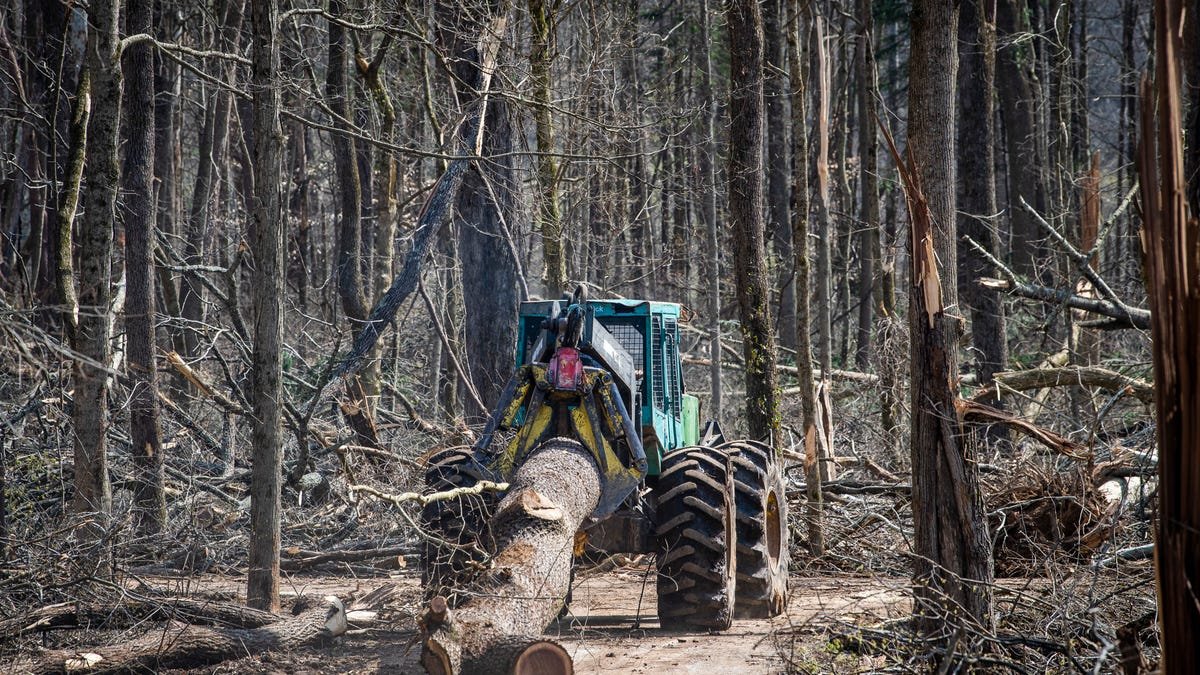
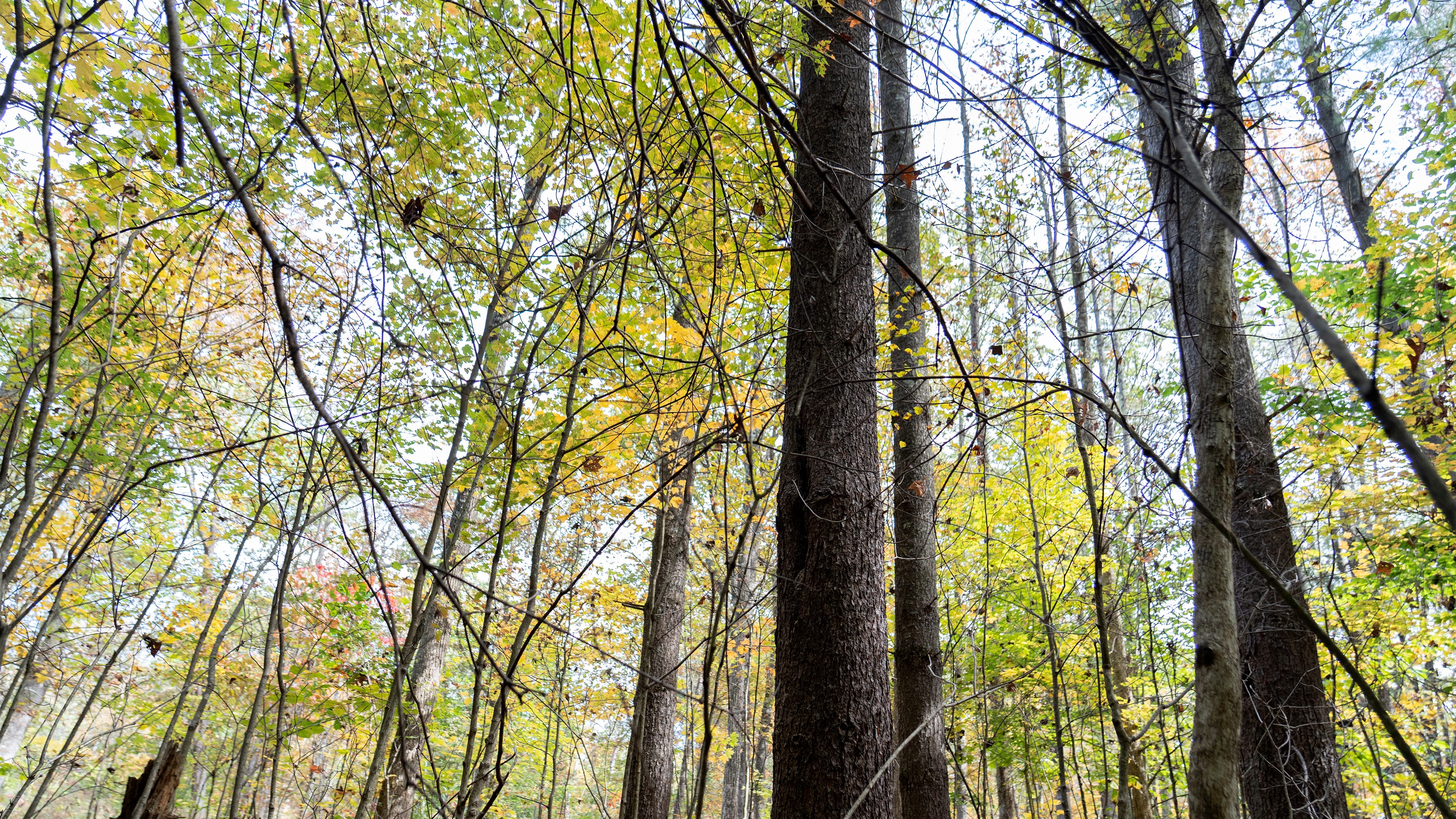
Rep. Beau Baird (R-Greencastle) said his forest health bill is an attempt to protect Indiana’s endangered forests so that future generations can enjoy them. The bill would have required the Department of Natural Resources to maintain different generations of trees on national forest lands and could have given additional protections to some old-growth forests.
Additionally, the bill would impose an admission fee to the National Forest, which is currently free. Supporters said the influx of money could help cash-strapped state forestry programs.
The House Natural Resources Committee passed the bill, but it was never brought to the House floor.
HB 1124: Lead testing of drinking water in school buildings
The bill, sponsored by Rep. Carolyn Jackson (D-Hammond), would require all school buildings to test drinking water for lead. The bill provided testing deadlines and a framework for how to test for lead. Schools that do not comply will be fined.
The House Public Health Committee was unable to consider the bill.
HB 1326: Response to Natural Disasters
The bill, also authored by Baird, would create a statewide task force made up of state lawmakers and agency representatives to study flooding risks from extreme weather events. The group will report on how Indiana can become more resilient to natural disasters.
Members of the Indiana Department of Homeland Security, the American Flood Coalition, and Indiana Conservation Voters testified in support of the bill, which was ultimately never considered by the Veterans Affairs and Public Safety Committee.
HB 1084: Plug-in Solar Systems
Rep. Carrie Hamilton’s (D-Indianapolis) solar energy bill would essentially legalize plug-in solar power systems, small portable devices that collect solar energy from places like porches and balconies to power homes directly. The device allows for easy, cheap, and independent energy generation, but is also subject to complex utility interconnection regulations in much of the United States.
Mr. Hamilton’s bill would allow Hoosiers to avoid complex regulatory confusion. Both this bill and a similar iteration that started in the state Senate, SB 74, did not advance because they failed to receive a hearing in committee.
HB 1245: State Survey on Data Centers
Rep. Robin Shackleford (D-Indianapolis) authored the bill, which would require state regulators to study how heavy-duty electric customers like data centers affect utility bills to meet energy demands. The study would also have looked at the impact data centers have on electricity bills and included potential solutions to keep costs down.
The bill died before a hearing in the House Utilities, Energy, and Telecommunications Committee.
HB 1043: Data Center Water Regulations
One of many attempts to address data centers, a bill by Sen. Alex Barton, D-Evansville, would require data center operators to obtain a permit from the Department of Natural Resources. The DNR permit would also have mentioned how much water the data center proposed to use and where that water would come from. The DNR could have denied certain permits.
Burton’s data center bill failed a hearing in the House Natural Resources Committee
HB 1297: Water intensive facilities
Barton also proposed a second bill that would deal more broadly with industrial water use from data centers and other facilities. The bill would give Indiana the power to deny financial incentives to data centers and other large water users if the facilities don’t meet certain requirements. These requirements include ensuring that the utility can provide adequate water to the facility and that the facility covers the associated infrastructure costs.
The bill died before it received a hearing in the House Utilities, Energy, and Telecommunications Committee.
SB 79: Electricity Demand Due to Data Center Boom
While some of the bills targeted water use in data centers, J.D. Ford, D-Carmel, proposed a bill that would primarily target electricity use. The bill would create a task force to estimate future energy needs for data centers across Indiana. It would also have given local authorities powers to inspect potential development sites to assess potential impacts on local areas.
The Senate Public Works Committee was unable to consider the bill.
HB 1185: Weather, Agriculture, and Pesticide Runoff
Rep. Mike Aylesworth (R-Hebron) introduced a farm bill that would allow Indiana’s Clean Water Fund to help install and maintain Mesonet sites, environmental monitoring stations that track weather events such as thunderstorms and windstorms.
Mesonet’s data can help farmers planning pesticide applications avoid periods of gusty winds and heavy rain that can cause chemical drift and nutrient runoff.
Indiana currently has 15 Mesonet sites, but Purdue researchers hope the additional funding will help encourage the establishment of sites in each of the state’s 92 counties.
The bill passed the House Agriculture and Rural Development Committee but died before reaching the Senate.
HB 1110: PFAS chemicals in wastewater
Rep. Becky Cash’s (R-Zionsville) bill would establish state standards for PFAS in industrial wastewater. PFAS, commonly known as permanent chemicals, persist in the environment for long periods of time. Cash’s bill would require Indiana waters to be tested for PFAS and cleaned up if found.
The bill died before it received a hearing in the House Environmental Affairs Committee.
HB 1239: PFAS…again
HB 1110 was intended to regulate PFAS in wastewater, while Rep. Ryan Dvorak’s (D-South Bend) bill sought to limit the amount of PFAS in public water systems. The bill would set state standards intended to protect public health that could not be more stringent than those set by the U.S. Environmental Protection Agency.
Dvorak’s PFAS bill was not considered by the House Environmental Affairs Committee.
SB 67: Natural Land Research
Sen. Shelley Yoder (D-Bloomington) has introduced a bill that would strengthen the state’s knowledge of public land use. The bill would have required the DNR to study how public lands improve public health outcomes and recover from natural disasters, and, from a slightly different perspective, would have required the DNR to study how to implement visitor fees on fish and wildlife habitat.
The bill passed the Senate but ultimately died in the House.
SB 17: Regional Control of Air Pollution
East Chicago Democrat Ronnie Randolph introduced a bill to improve monitoring and control of air pollution at the local level. The Indiana State Department of Health reported last year that 1 in 12 Indiana children has asthma. Asthma is a medical condition that is exacerbated by outdoor air pollution. Randolph’s bill would allow cities, counties and towns to establish air pollution control agencies.
The Environmental Affairs Committee did not consider the bill.
IndyStar’s environmental reporting is made possible through the generous support of the nonprofit Nina Mason Pulliam Charitable Trust.
Sophie Hartley is an IndyStar environmental reporter. You can reach her at sophie.hartley@indystar.com or @sophienhartley on X.. Karl Schneider is an IndyStar environmental reporter. Contact karl.schneider@indystar.com. Follow him at BlueSky @karlstartswithk.bsky.social or X @karlstartswithk.
