

Close Menu

    Subscribe to Updates

    Get the latest creative news from FooBar about art, design and business.

    What's Hot

    JAMA study: 988 hotline linked to 11% reduction in youth suicide deaths

    April 22, 2026

    Ancient DNA reveals lost inhabitants near Paris replaced by strangers

    April 22, 2026

    Merck partners with Google to advance AI, forming a partnership worth up to $1 billion

    April 22, 2026
    Facebook X (Twitter) Instagram
    Facebook X (Twitter) Instagram
    Health Magazine
    • Home
    • Environmental Health
    • Health Technology
    • Medical Research
    • Mental Health
    • Nutrition Science
    • Pharma
    • Public Health
    • Discover
      • Daily Health Tips
      • Financial Health & Stability
      • Holistic Health & Wellness
      • Mental Health
      • Nutrition & Dietary Trends
      • Professional & Personal Growth
    • Our Mission
    Health Magazine
    Home » News » The world’s smallest OLED pixel could change smart glasses
    Nutrition Science

    The world’s smallest OLED pixel could change smart glasses

    healthadminBy healthadminMarch 4, 2026No Comments4 Mins Read
    The world’s smallest OLED pixel could change smart glasses
    Share
    Facebook Twitter Reddit Telegram Pinterest Email


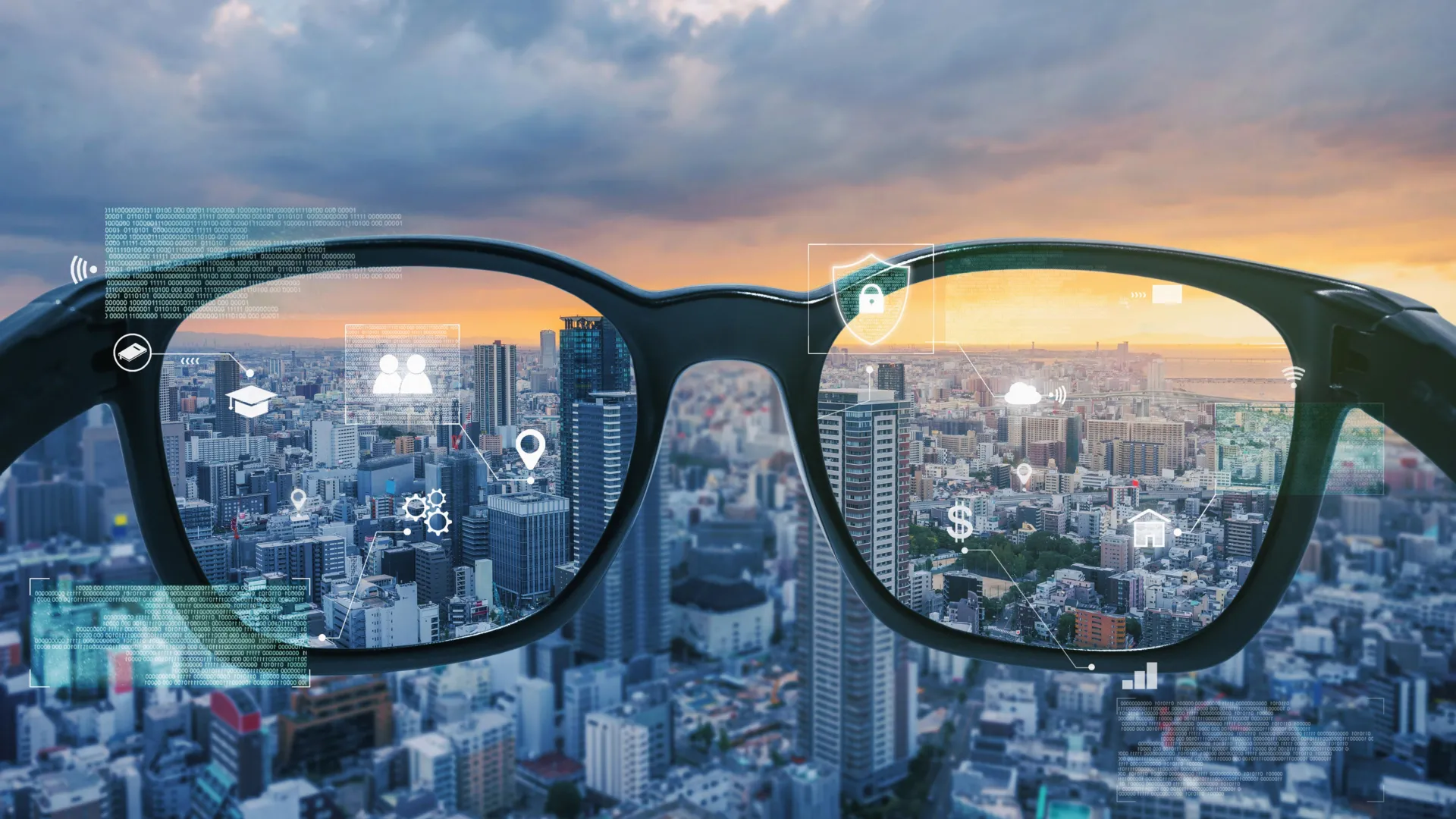
    Smart glasses are widely recognized as a breakthrough technology because they can project digital information directly into a person’s line of sight. However, in the real world, its adoption is slow. The main reason for this is that the hardware required to power these displays is bulky and impractical. The main hurdle comes from classical optics, which suggests that scaling down efficient light-emitting pixels to the scale of light’s own wavelength should not work.

    Physicists at the Julius Maximilian University of Wurzburg (JMU) have overcome that barrier. Using a specially designed optical antenna, the team built what is described as the smallest pixel ever created. A research group led by Professors Jens Pflaum and Bart Hecht reported their progress in the journal Science Advances.

    1 square mm full HD display

    “With the help of metal contacts that allow current injection into the organic light-emitting diode and simultaneously amplify and emit the light produced, we created a pixel of orange light on an area of ​​just 300 x 300 nanometers. This pixel is as bright as a conventional OLED pixel, which typically has dimensions of 5 x 5 micrometers,” says Bert Hecht, describing the key findings of the research.

    On a scale, a nanometer is one millionth of a millimeter. These pixels are very small at 300 x 300 nanometers. In fact, a projector or display with a resolution of 1920 x 1080 pixels fits within an area of ​​just 1 square millimeter. Such compact dimensions could make it possible to integrate the display directly into the arm of the glasses, directing the projected light to the lenses.

    OLED technology relies on multiple ultrathin organic layers placed between two electrodes. When electricity flows, electrons and holes recombine within the active layer. This process excites organic molecules and releases energy as photons. No separate backlight is required as each pixel generates its own light. This design enables deep blacks, vibrant colors, and energy-efficient performance for augmented reality (AR and VR) devices.

    Why shrinking OLED pixels is so difficult

    Simply scaling down existing OLED designs will not work at the nanoscale. The Würzburg team discovered that when the structures become very small, the current does not spread evenly. “Similar to a lightning rod, if you simply reduce the size of an established OLED concept, the current will be radiated primarily from the corners of the antenna,” says Jens Pflaum, explaining the basic physics. The gold antenna used in this device is shaped like a cuboid measuring 300 x 300 x 50 nanometers.

    “The resulting electric field will generate forces so strong that the now mobile gold atoms will gradually grow into an optically active material,” Pflaum continues. These thread-like growths, known as filaments, continue to stretch until they cause a short circuit and destroy the pixel.

    Insulating layer prevents short circuits

    To solve this problem, researchers introduced a precisely engineered insulating layer on top of the optical antenna. This layer leaves only a circular opening in the center, 200 nanometers in diameter. This design ensures stable and reliable operation of nano-light-emitting diodes by blocking current inflow at edges and corners. Under these conditions, filament formation is prevented. “Even the first nanopixels were stable for two weeks under ambient conditions,” explains Bert Hecht, explaining the results.

    The team’s next goals are to increase efficiency beyond the current level of 1% and extend the color range to cover the entire RGB spectrum. Achieving these milestones will pave the way for a new generation of miniature displays “Made in Würzburg”. In the future, displays and projectors based on this technology could become so compact that they are almost invisible when incorporated into wearable devices ranging from eyeglass frames to contact lenses.


    Source link

    Visited 12 times, 1 visit(s) today
    Share. Facebook Twitter Pinterest LinkedIn Telegram Reddit Email
    Previous ArticleSupreme Court case that could end local climate litigation
    Next Article A simple photo of a hand could be the key to detecting a serious disease
    healthadmin

    Related Posts

    Ancient DNA reveals lost inhabitants near Paris replaced by strangers

    April 22, 2026

    JWST discovers ice clouds on giant alien planet, leaving scientists stunned

    April 22, 2026

    A simple blood test could reveal Alzheimer’s risk years earlier

    April 22, 2026

    Study finds two common drugs may reverse fatty liver disease

    April 22, 2026

    This ‘quantum’ material fooled scientists and revealed something new

    April 22, 2026

    This donut-shaped discovery broke 150 years of mathematical rules.

    April 22, 2026
    Add A Comment

    Comments are closed.

    Categories

    • Daily Health Tips
    • Discover
    • Environmental Health
    • Exercise & Fitness
    • Featured
    • Featured Videos
    • Financial Health & Stability
    • Fitness
    • Fitness Updates
    • Health
    • Health Technology
    • Healthy Aging
    • Healthy Living
    • Holistic Healing
    • Holistic Health & Wellness
    • Medical Research
    • Medical Research & Insights
    • Mental Health
    • Mental Wellness
    • Natural Remedies
    • New Workouts
    • Nutrition
    • Nutrition & Dietary Trends
    • Nutrition & Superfoods
    • Nutrition Science
    • Pharma
    • Preventive Healthcare
    • Professional & Personal Growth
    • Public Health
    • Public Health & Awareness
    • Selected
    • Sleep & Recovery
    • Top Programs
    • Weight Management
    • Workouts
    Popular Posts
    • the-pros-and-cons-of-paleo-dietsThe Pros and Cons of Paleo Diets: What Science Really Says April 16, 2025
    • Improve Mental Health10 Science-Backed Practices to Improve Mental Health… March 11, 2025
    • How Healthy Living Is Transforming Modern Wellness TrendsHow Healthy Living Is Transforming Modern Wellness… December 3, 2025
    • Kankakee_expansion.jpgCSL releases details of $1.5 billion U.S.… March 10, 2026
    • urlhttps3A2F2Fcalifornia-times-brightspot.s3.amazonaws.com2Fc32Fcd2F988500d440f2a55515940909.jpegA ‘reckless’ scrapyard with a history of… October 24, 2025
    • Healthy Living: Expert Tips to Improve Your Health in 2026Healthy Living: Expert Tips to Improve Your Health in 2026 November 16, 2025

    Demo
    Stay In Touch
    • Facebook
    • Twitter
    • Pinterest
    • Instagram
    • YouTube
    • Vimeo
    Don't Miss

    JAMA study: 988 hotline linked to 11% reduction in youth suicide deaths

    By healthadminApril 22, 2026

    Since the U.S. launched a new abbreviated 988 national suicide and crisis hotline, suicide deaths…

    Ancient DNA reveals lost inhabitants near Paris replaced by strangers

    April 22, 2026

    Merck partners with Google to advance AI, forming a partnership worth up to $1 billion

    April 22, 2026

    Everyday infections, not vaccines, are associated with increased risk of childhood stroke

    April 22, 2026

    Subscribe to Updates

    Get the latest creative news from SmartMag about art & design.

    HealthxMagazine
    HealthxMagazine

    At HealthX Magazine, we are dedicated to empowering entrepreneurs, doctors, chiropractors, healthcare professionals, personal trainers, executives, thought leaders, and anyone striving for optimal health.

    Our Picks

    Everyday infections, not vaccines, are associated with increased risk of childhood stroke

    April 22, 2026

    JWST discovers ice clouds on giant alien planet, leaving scientists stunned

    April 22, 2026

    Courier Health invests $50 million in AI-powered patient experience

    April 22, 2026
    New Comments
      Facebook X (Twitter) Instagram Pinterest
      • Home
      • Privacy Policy
      • Our Mission
      © 2026 ThemeSphere. Designed by ThemeSphere.

      Type above and press Enter to search. Press Esc to cancel.