


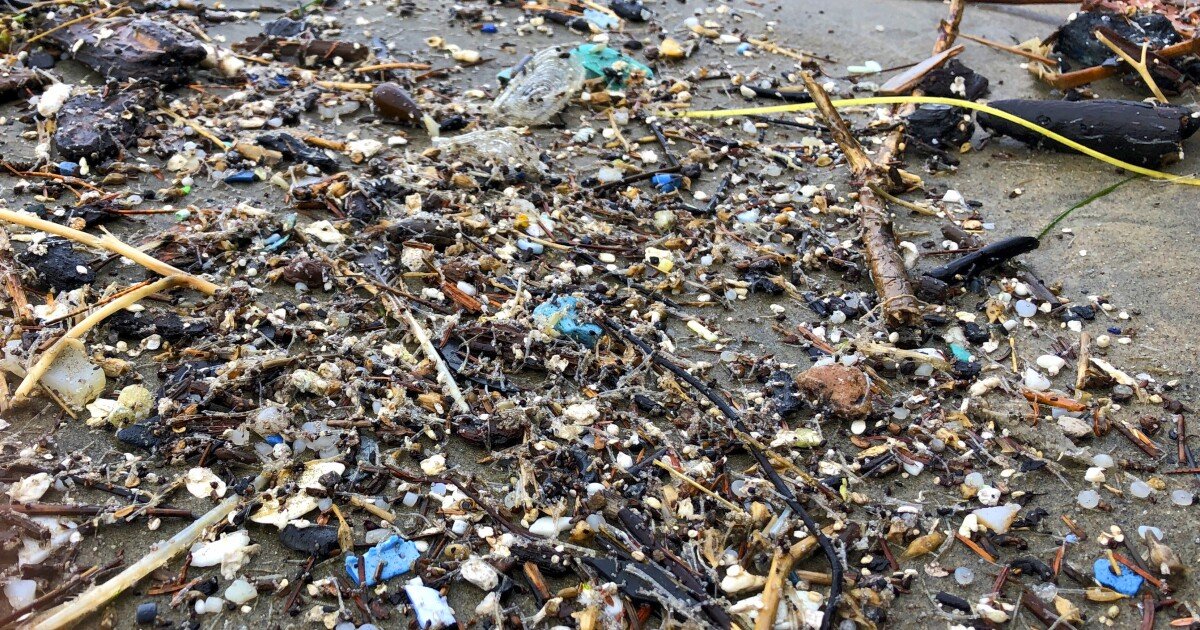
A new study by Dallas-based researchers finds that nearly all of the region’s waterways are contaminated with microplastics.
A report from the Texas Center for Environmental Research and Policy urges policymakers to take steps to regulate waste that ends up in the state’s waters.
“Today’s report finds that microplastics are an almost invisible constant in Texas’ waterways,” Ian Seamans, an environmental advocate with Texas City Hall, said at a press conference Thursday. “So whether you’re fishing on the Gulf Coast, swimming in the Hill Country, or paddling, for example, on White Rock Lake here in Dallas, microplastics can be present there as well.”
According to the National Oceanic and Atmospheric Administration, microplastics are small pieces of plastic less than 5 millimeters in length that come from sources such as larger pieces that break down or microbeads found in certain health and beauty products, such as body wash.
Researchers and local volunteers sampled water from 77 waterways in North Texas, including the Trinity River, White Rock Lake and Mountain Creek Lake, the crew said.
“The vast majority of sites contained plastic fibers,” Seamans said. “Plastic pellets, a raw material used in the manufacture of plastic products, were also found in multiple locations.”
The report says microplastics can threaten wildlife and human health.

Microplastic debris can pose a threat to humans and wildlife.
“This is a serious physical danger,” the report states. “These plastics can cause choking and intestinal blockage, and animals that ingest too much plastic can starve to death.”
Seamans called on Gov. Greg Abbott and the Texas Commission on Environmental Quality to enact stronger regulations for items such as plastic pellets, manufactured beads used to melt and mold everyday plastics. Seamans says pellets are “one of the most preventable sources of microplastics.”
“TCEQ should act now to require zero pellet discharges into Texas waterways,” he said.
He said the Texas Department of Environment has already convened more than 100 doctors, fishermen, anglers and representatives from the Gulf Coast tourism industry from across the state to urge the governor to take action.
Former North Texas Congressman Jason Villalba also joined Seamans during the meeting and said that legislation to better regulate microplastics has been introduced in the past few Congresses.
“The fishing and tourism industries have been dramatically impacted by these microplastics, and unless we take action as a state in the next legislative session, these industries will be in great difficulty,” Villalba said. “What we’re seeing is a real push toward Congress in 2027.”
Pablo Arauz Peña is KERA’s growth and infrastructure reporter. Any tips? Please email Paul at parauzpena@kera.org.
KERA News is made possible through the cooperation of our members. If you found this report valuable, please consider making a tax-deductible gift today. thank you.
