


Research published in onco target highlights a promising new approach to combating pancreatic cancer. The paper, titled “The anticancer effects of PCAI in pancreatic cancer cells involves hyperactivation of the MAPK and PI3K/AKT pathways,” was led by first author Kweku Ofosu-Asante and corresponding author Nazarius S. Lamango of the Florida A&M University College of Pharmacy and Department of Pharmaceutical Science at the Institute of Public Health in Tallahassee, Florida.
Pancreatic ductal adenocarcinoma is one of the most deadly cancers. The main reason is the high prevalence of KRAS mutations, which promote tumor growth and often make tumors difficult to treat. Although scientists have recently developed treatments that target specific KRAS mutations, many patients still lack effective treatment options. As a result, researchers continue to search for broadly effective treatments for cancers caused by KRAS.
In the new study, researchers looked at a group of experimental compounds called polyisoprenylated cysteinylamide inhibitors (PCAIs). These compounds were originally created to interfere with aberrant KRAS signaling. The research team used pancreatic cancer cells with KRAS mutations to study how PCAI affects signaling pathways involved in cancer cell survival, migration, invasion, and tumor development.
Experimental compound slows cancer cells
Two of the PCAIs tested showed particularly strong anticancer effects. So researchers focused on a key compound known as NSL-YHJ-2-27.
This compound significantly reduced the survival rate of pancreatic cancer cells and significantly limited the migration ability of pancreatic cancer cells. NSL-YHJ-2-27 inhibited cancer cell migration by more than 90% at a concentration of just 1 μM. This finding suggests that this compound may help reduce the spread of cancer to other parts of the body.
Researchers also found that PCAI interferes with several biological processes that cancer cells rely on for survival. Treatment reduced levels of important monomeric G proteins involved in cell migration and invasion. It also altered the activity of genes associated with tumor progression and caused significant disruption to the actin cytoskeleton. As a result, the cancer cells became rounded and significantly lost their mobility.
Hyperactivation of cancer signaling pathways
One of the most surprising findings of this study involved two major signaling pathways commonly associated with cancer growth: MAPK and PI3K/AKT.
Rather than blocking these pathways, PCAI highly overactivated them. Although these pathways normally support tumor growth, excessive activation can destabilize normal cellular function and ultimately lead to cell death.
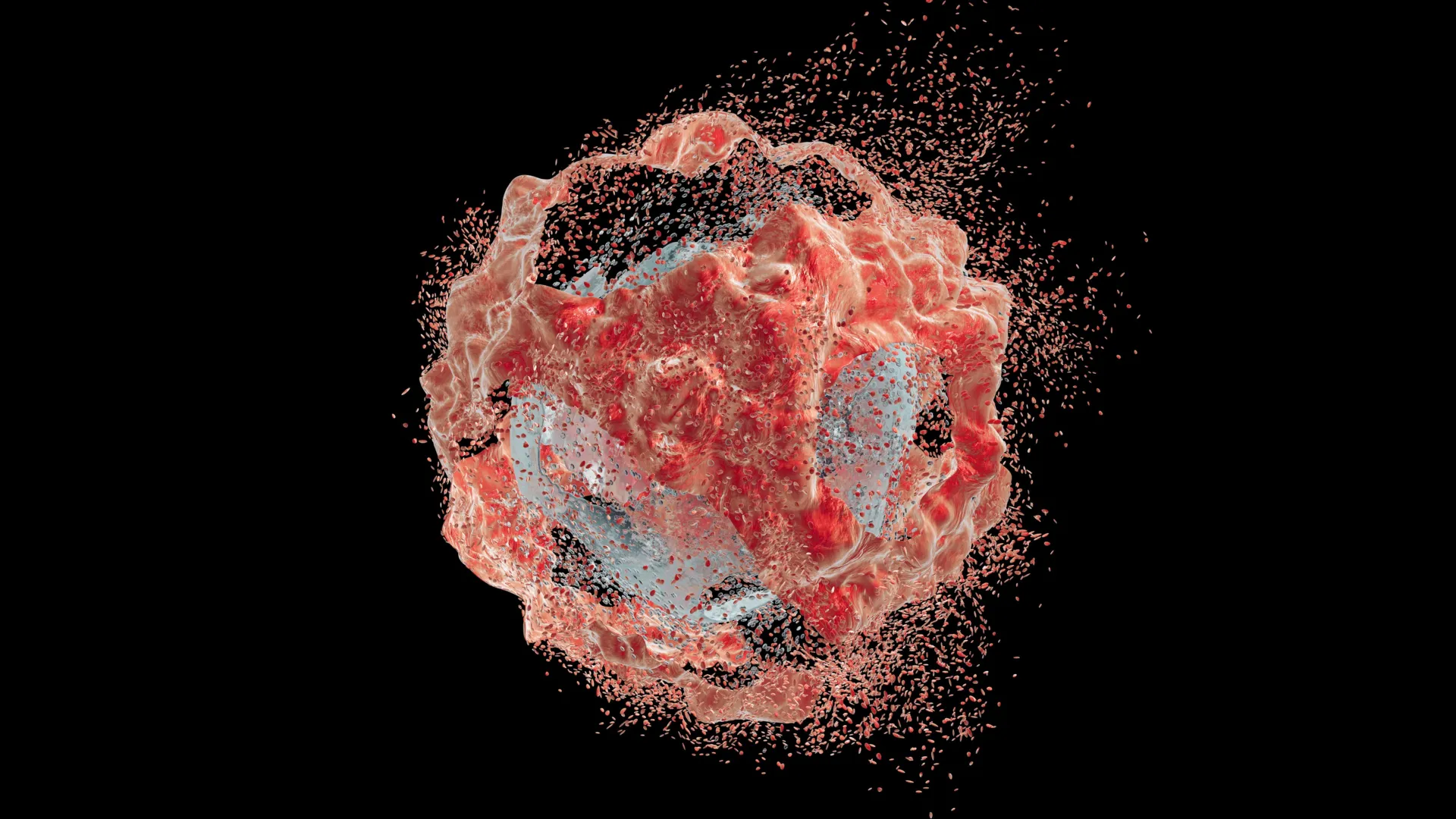
Evidence from research supports this explanation. Cells treated with PCAI produced higher levels of reactive oxygen species, activated caspase enzymes, and increased levels of the pro-apoptotic protein BAX, causing extensive apoptosis, a form of programmed cell death.
Changes in gene activity and tumor models
The researchers also performed transcriptome analysis to examine changes in gene activity after treatment. They found significant changes in gene expression. The activity of several genes known to have tumor suppressor functions increased, while the activity of genes associated with cancer progression and metastasis decreased.
Additional tests were performed using a three-dimensional tumor spheroid model, which more closely resembles a real tumor than standard cell culture. In these models, PCAI treatment disrupted tumor spheroids, reduced their ability to invade the surrounding tissue-like matrix, and increased the number of apoptotic cells. These results suggest that these compounds are also effective in more realistic tumor settings.
“One such promising class of drugs are PCAIs that are designed to target oncogenic G proteins differently than drugs that target KRASG12C.”
Potential benefits of multiple KRAS mutations
According to the researchers, one of the most important aspects of this discovery is that PCAI appears to be able to target cancer cells caused by several different KRAS mutations, rather than focusing on a single variant. This widespread activity may help address some of the limitations of current KRAS-targeted treatments.
Overall, this study showed that PCAI can produce potent anticancer effects in pancreatic cancer cells by disrupting important signaling networks, increasing oxidative stress, and activating apoptosis. This finding supports further research on PCAI as a potential treatment for pancreatic cancer and other cancers caused by KRAS mutations.
