


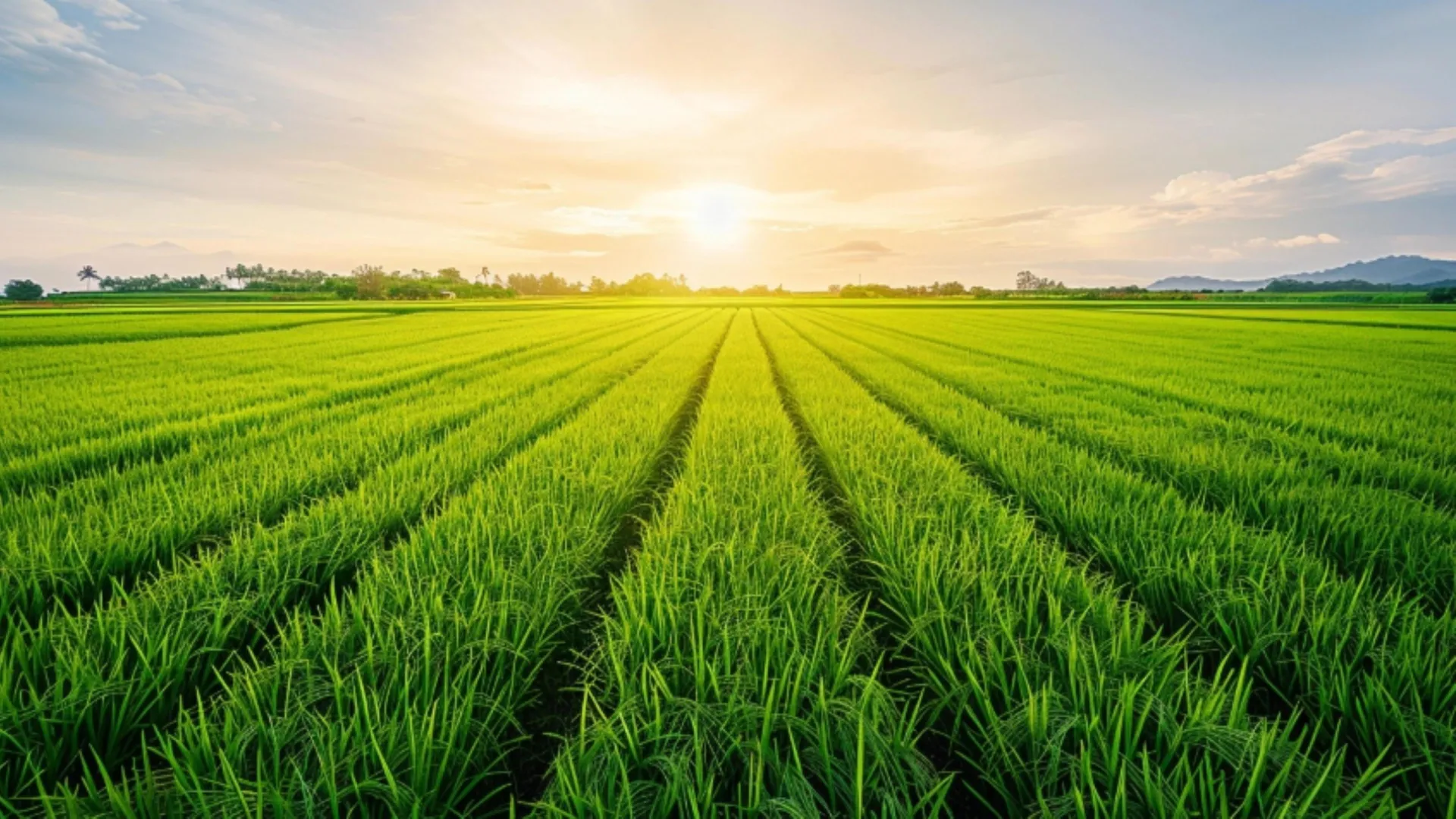
Researchers have discovered an unexpected natural ally that could help farmers tackle one of agriculture’s fastest-growing challenges: saline soils.
A team including scientists from the University of East Anglia (UEA), led by Chinese researcher Dr Yanfeng Zheng, has discovered that naturally occurring soil bacteria can significantly improve the ability of plants to survive under saline conditions.
The study also revealed previously unknown ways in which these microbes protect crops such as corn, tomatoes and rapeseed from salinity stress. The discovery could eventually help farmers grow food on land that is too saline for conventional farming.
Soil salinity threatens global agriculture
Due to climate change, irrigation activities, and sea level rise, salt buildup on agricultural land is becoming an increasingly serious problem. When salts accumulate in the soil, they can stunt plant growth, damage roots, and significantly reduce crop yields.
Professor Jonathan Todd, from UEA’s School of Biological Sciences and the Quadrum Institute at Norwich Research Park, said: “Salt accumulation on agricultural land is a serious and serious problem due to climate change, irrigation and rising sea levels.”
“Salt stunts plant growth and damages roots, severely impacting overall harvests and endangering the world’s food supply.
“We know that plants rely on the microbial community around their roots (called the root microbiome) to cope with environmental stress. However, exactly how these relationships work and whether they are consistent across crops and soils remains largely unknown.
“We found that plants recruit beneficial bacteria under salty soil conditions, which causes internal changes that appear to strengthen their physical structure and resilience.
“If scientists can exploit this natural process, it could be the beginning of a new era in climate-resilient agriculture.”
Root microorganisms attracted to salt-stressed plants
To better understand these plant-microbe partnerships, researchers examined the root microbiome of multiple crop species grown in different soil types.
They found that a group of naturally occurring bacteria known as pseudomonads consistently clustered around the roots of plants exposed to salt stress. The same pattern was seen in several crops, including corn, tomatoes, and rapeseed, suggesting that this is a broad biological response rather than specific to a single plant.
Genetic analysis also explained why these bacteria perform so well in salty environments.
Professor Todd said: “Compared to other microorganisms, Pseudomonas have specialized genes that help them tolerate high salinity, including sodium transport systems and other stress tolerance mechanisms.”
Stronger roots and higher yields
The research team then introduced the selected pseudomonad strains into soybean plants. In both greenhouse studies and field trials, the bacteria successfully colonized roots and significantly improved plant growth under salty conditions.
“We found that microbially treated plants had stronger root systems, better development and higher yields compared to untreated plants grown in saline soils,” Professor Todd said.
Unexpected plant defense
The researchers were surprised to discover that the bacteria did not help the plants by reducing salt levels in their tissues.
“The most surprising thing was that we discovered how bacteria helped plants cope.
“For decades, it was thought that plants survived in salt conditions by controlling sodium levels – by blocking harmful salts. However, we found no evidence that bacteria affect sodium transport or ion balance.
“Instead of helping plants directly manage salinity, the bacteria stimulated plants to produce more of a substance called lignin.
“Roots of bacteria-treated plants showed a significant increase in lignin content, with some measurements measuring more than a 30 percent increase under salt stress.”
Lignin naturally strengthens plants
Lignin is a strong woody substance that forms part of plant cell walls. It acts like a built-in support system, strengthening plant tissues and helping them withstand environmental stress.
Researchers have identified key genes involved in increasing lignin production. When these genes were artificially overexpressed, the plants performed much better in saline soils.
In contrast, plants that cannot produce lignin do not benefit from the bacteria, indicating that lignin production is essential for the newly discovered protective effect.
Professor Todd said: “We hope this discovery will open up new possibilities for agriculture.
“By harnessing naturally occurring microorganisms like Pseudomonas, we may be able to develop bio-based treatments to help crops grow in saline soils without the need for large amounts of chemical input.
“With large tracts of agricultural land already affected by salinity, and more under threat, microbial solutions could be an essential tool to maintain crop yields and ensure food security.”
The research results were published in a magazine scientific progress The paper states, “Pseudomonas species associated with salt-stressed plants promote stress adaptation in soybean through enhanced lignin biosynthesis.”
