


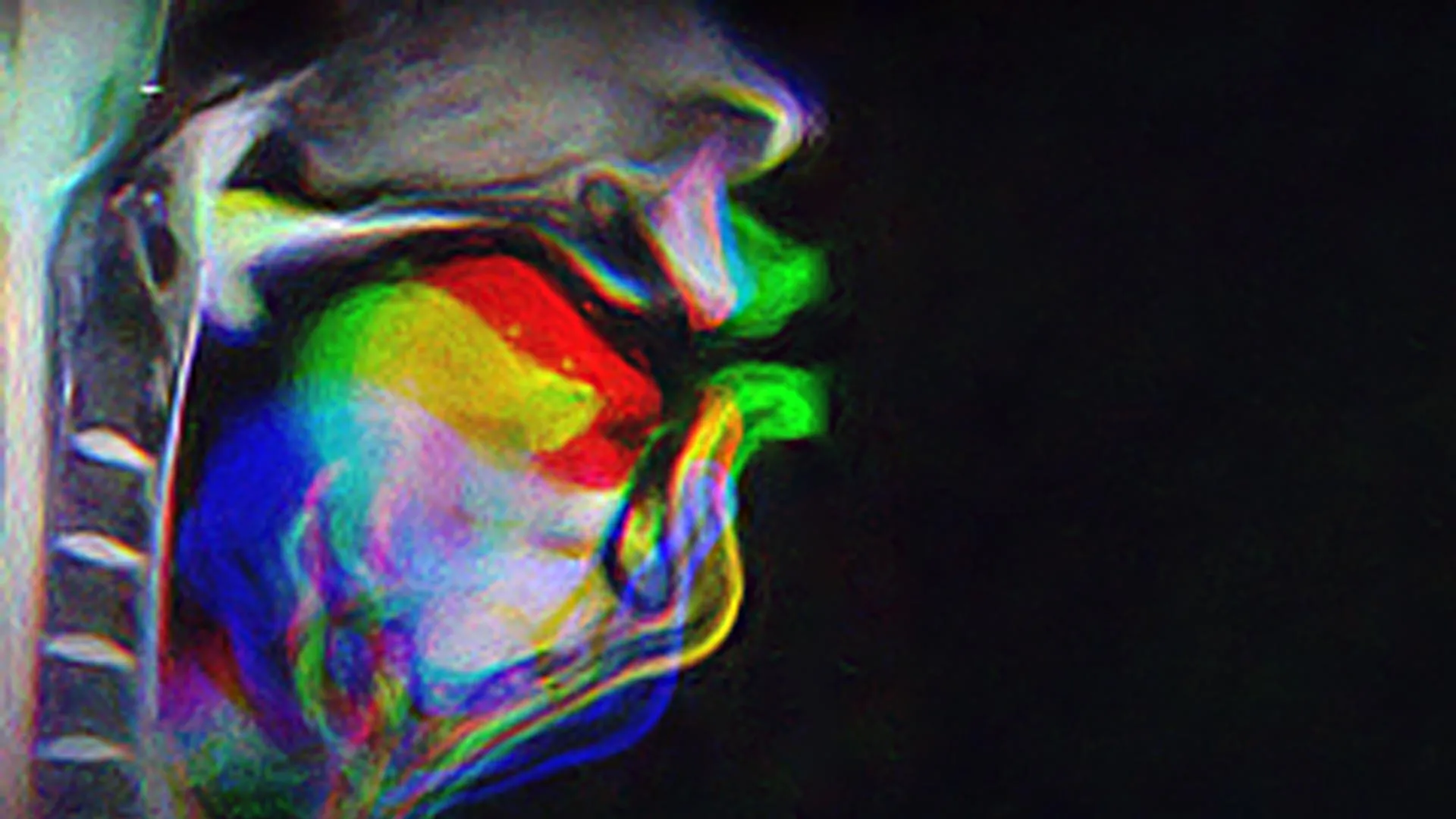
Learning a new language or regaining the ability to speak may not rely as much on the brain’s motor centers as scientists once believed. New research suggests that regions involved in processing sounds and physical sensations play a much larger role in vocal learning and memory.
The study, conducted by researchers at McGill University and Yale University School of Medicine, reshapes scientific understanding of how speech is learned and may influence the design of future speech recognition and brain-based communication technologies.
Mainly sensory areas of the brain
For years, researchers have generally assumed that learning and remembering the complex movements required for speech relies primarily on the brain’s motor cortex. These areas control the movements of the face, mouth, and vocal tract that allow us to speak.
New discoveries point in a different direction. Rather than emphasizing motor areas as the main drivers of vocal learning, this study suggests that the auditory and somatosensory systems are important for acquiring and maintaining new vocal patterns.
“Sensorimotor neuroscience has traditionally focused on the frontal motor cortex as the primary driver of movement. This study changes that understanding by showing that human vocal learning is broadly sensory in nature,” said David Ostry, professor of psychology at McGill University.
These results may also serve as guidelines for the development of new brain-speech technologies. By incorporating sensory processes to improve performance and ease of use, such systems could one day help restore communication skills after stroke.
Test of vocal learning using brain stimulation
To investigate how different brain regions contribute to vocal learning, the researchers first modified participants’ voices in real time and played the modified sounds through headphones. This approach encouraged participants to adapt their speech patterns and created a form of phonomotor learning.
The team then used transcranial magnetic stimulation (TMS), a non-invasive brain stimulation method, to temporarily disrupt activity in three key brain regions involved in speech: the auditory cortex, somatosensory cortex, and motor cortex.
The researchers assessed retention of newly learned speech patterns after 24 hours.
Their prediction was straightforward. If a particular brain region is essential for learning and storing voice-related memories, then disrupting that region should reduce memory retention. If the space is not critical, the retention rate should not change.
This result strongly supported the importance of sensory processing. When activity in either the auditory or somatosensory cortex was disrupted, participants showed significantly reduced retention of learned verbal actions. In contrast, destroying the motor cortex had little effect on retention.
“Our study challenges the assumption that new verbal memories rely solely on changes in the brain’s motor cortex. Instead, it highlights the importance of changes in auditory and somatosensory brain regions in shaping how we learn to speak,” said study co-author Nishant Rao, an associate research scientist at Yale University.
Brain plasticity and future stroke treatments
This study is part of a larger effort to understand how plasticity in the brain’s sensory systems contributes to learning and long-term memory.
It also builds on previous work on arm and hand movements by the same research group. These studies similarly found that disrupting sensory areas of the brain impedes the ability to learn and retain new motor skills.
Future research will focus on identifying specific cortical circuits involved in learning and investigating sensory-based treatments for movement disorders. The researchers are particularly interested in applications in stroke rehabilitation and language recovery.
About research
The study “Sensory Basis of Vocal Motor Learning and Memory” by Nishan Rao, Rosalie Gendron, Timothy Manning, and David Ostry Proceedings of the National Academy of Sciences of the United States of America.
This study was funded by the (U.S.) National Institute on Deafness and Other Communication Disorders.
