


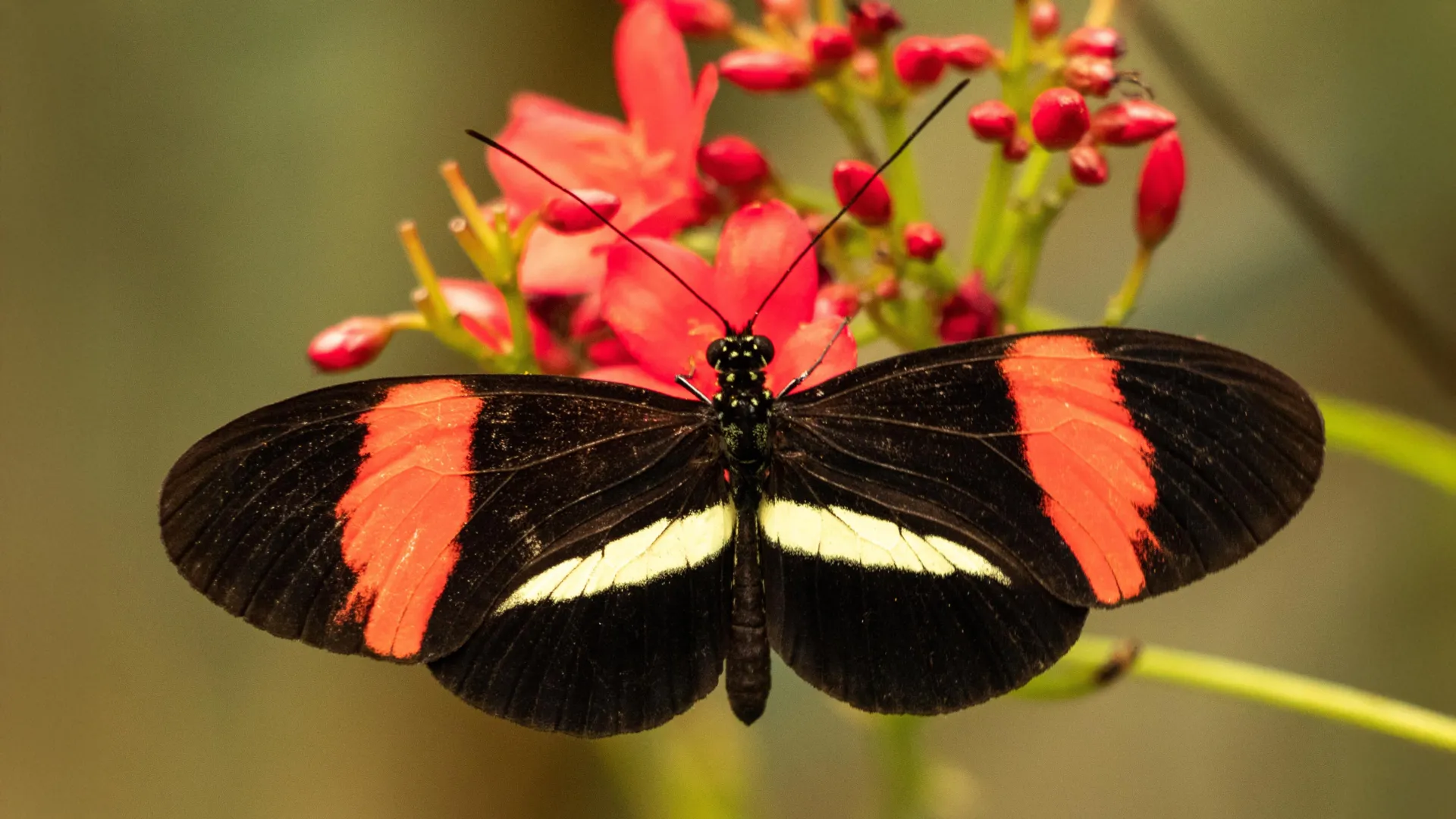
A group of tropical butterflies may have evolved a surprising way to stay healthy longer by slowing the aging process itself, according to research led by the University of Bristol published on June 16. nature communications.
This butterfly belongs to the Heliconius family, which lives in the rainforests of Central and South America. Researchers say these insects rank among the longest-lived butterflies ever recorded and could be important models for studying the biology of longevity.
Most butterflies only live for a few weeks as adults. In contrast, the study found that some species of Heliconius live on average about three times longer than their closest relatives, with certain individuals surviving for nearly a year. One of the most striking examples is Heliconius Hutusonithe maximum lifespan reached 348 days. It is a closely related species, Dione Junosurvived for only 14 days, resulting in a 25-fold difference in maximum lifespan.
The results suggest that the Heliconius butterfly has evolved a unique lifespan-extension strategy that may provide new clues about how aging is slowed in nature.
Evidence that aging is slow
Working with scientists from the Smithsonian Tropical Research Institute in Panama, the research team discovered another surprising discovery. at least one species, Heliconius Hekalethere appeared to be little or no measurable physical decline due to aging.
To assess physical performance, the researchers used a grip strength test. old H. Hekale The butterflies functioned similarly to young individuals and showed no obvious signs of deterioration. In comparison, Dorias Juliaa closely related species with a shorter lifespan, experienced a clear age-related decline.
This finding suggests that Heliconius butterflies may largely avoid the physical decline that accompanies aging in most animals.
To reach these conclusions, the team combined information from butterfly nest, tagging, release and recapture studies, and controlled insect experiments. This allowed us to compare lifespan and aging patterns across the Heliconii.
Across groups, Heliconius butterflies consistently showed longer mean and maximum lifespans, lower baseline mortality, and slower rates of aging compared to their non-pollen-feeding relatives.
Role of pollen food
Scientists have long known that the Heliconius butterfly lives an unusually long life, but the reason remained unclear. One likely explanation focuses on the insect’s rare ability to feed on pollen even as an adult. Most butterfly species rely primarily on nectar, so it is very unusual for adults to suck pollen.
To test this idea, the researchers compared pollen-sucking species. Heliconius Hekaleits related species that do not suck pollen, Dorias Julia. The results showed that H. Hekale They maintained their body weight and muscle performance over long periods of time and did not show age-related physical decline. D.Julia.
However, even when pollen was removed from the diet, the butterfly’s longevity advantage did not disappear. Even without food pollen, H. Hekale Still, it lived considerably longer than its relatives. This indicates that both nutrition and evolutionary adaptations contribute to lifespan extension.
A new model for longevity research
Researchers say long-lived species across the animal kingdom may provide valuable insight into the biological mechanisms behind healthy aging. The new findings suggest that the Heliconius butterfly may be a useful system for investigating how ecological changes, including the evolution of adult pollen feeding, promote longevity.
Lead author of the study, Dr Jessica Foley, from the School of Biological Sciences at the University of Bristol, said: “As the most species-rich animal class, insects are known for their extraordinary morphological and ecological diversity. They also exhibit extreme variation in lifespan, with maximum lifespans ranging from just a few days in adult mayflies to decades in some reproductive classes of ants and termites. This represents a difference of around 5,000 times around the world.” compared to the approximately 100-fold difference in lifespan observed in mammals.
“The Heliconius butterfly is one of the longest-lived butterflies, but what’s particularly remarkable is that it not only has a longer lifespan, but also appears to age more slowly, allowing it to live significantly longer than its evolutionary relatives.”
“An interesting implication of this lifespan extension is that it provides a powerful opportunity to identify the mechanisms that underpin longevity. Comparing the long-lived Heliconius butterfly and its short-lived relatives provides a natural evolutionary experiment that helps reveal how lifespan is extended, providing a very promising new model for studying the biology of aging and longevity.”
