


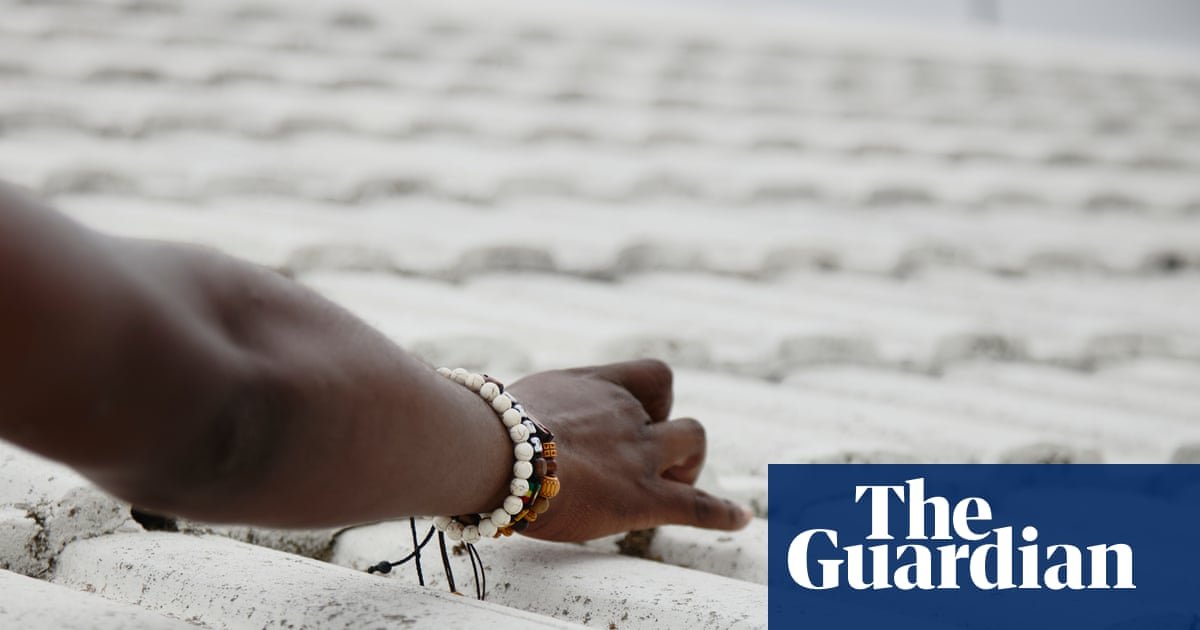
TSylvia lives with her three children in a Western Cape township on the outskirts of Cape Town.Every summer, the brick house that Sylvia lives in with her three children becomes so unbearably hot that her youngest child cries and her two older children struggle to concentrate on their homework. According to a recent report in The Lancet, Sylvia is not alone. “In 2024, South Africans were exposed to an average of 13 days of heatwaves, of which 10.5 days (80%) would not have been predicted to occur in the absence of climate change.”
But now that the asbestos roof has been coated with reflective paint, summer has become more bearable for the family.
“It’s still hot,” said the 49-year-old single mother who lives in Khayelitsha, the city’s largest township. “But now that the house is cooler, I can stay cozy inside even when the sun is hot outside. My kids sleep better. To me, that means everything.”
The evidence isn’t just anecdotal. Temperature data from three summers on 240 homes across Africa revealed that homes with painted roofs were on average 3 to 4 degrees cooler during the hottest parts of the day. A pilot project, The Benefits of Heat Adaptation for Vulnerable Groups in Africa (Habvia), gathered evidence that participants who lived in cooler homes also slept better.
In Khayelitsha, 60 homes were monitored by the survey. Thirty of the houses had painted roofs and 30 had unpainted roofs.
“Quality sleep isn’t just a nice-to-have,” says epidemiologist Lara Dugas, a principal investigator at Hubvia along with climate scientist Mark New. “Poor quality sleep worsens mental health and disease prognosis, making pre-existing conditions such as high blood pressure worse.”
It typically takes decades for science to understand the link between hotter homes and diseases like diabetes and cardiovascular disease, but disrupted sleep patterns are the canary in the coal mine.
“We know that sleep deprivation leads to poor health outcomes,” Dugas says, citing a number of studies, including his own work examining this relationship in the United States, Jamaica, Ghana, Seychelles and South Africa.
Data from 240 homes across Africa shows that homes with painted roofs are on average 3-4 degrees cooler during the hottest hours of the day.
Sylvia’s house is one of 30 in Khayelitsha with painted roofs. A control group of 30 unpainted houses in the township was used as a comparison. Habia is also being implemented in three other communities across Africa. Mphego village in rural South Africa, and Gamasie and Nkwantakese villages in urban and rural Ghana. Each uses the same methodology.
The goal is to understand the health benefits of specialized roof reflective coatings in different settings (rural vs. urban) and climates (temperate vs. hot and humid).
Double QuotesI find it especially rewarding to do work that has a direct and measurable impactLara Dugas, Researcher
Habvia is one of nine HeatNexus projects funded by the Wellcome Trust. “The first grant call was to evaluate existing heat adaptation interventions in low- and moderate-income settings,” Dugas says. “But we quickly realized that there were no existing interventions in Africa to evaluate.”
So they decided to create their own paint and settled on roof paint. We chose Rhinoluxe Heat Reflect, which is a South African product. This is an “infrared reflective roof paint” made for commercial and agricultural buildings such as chicken coops. “The paint had to be manufactured locally,” says Dugas.
The team, including research assistants Nandipha Sinyanya and Dr Buisile Moyo (pictured), built bonds in the Khayelitsha community over three summers of data collection.
“We ultimately want to paint millions of roofs, so price and local sustainability are big issues.”
Two years have passed and the roof has been completely painted. “There are so many factors to consider when comparing indoor temperature data,” says postdoctoral researcher Buisile Moyo, perched on a teetering municipal dumpster to inspect the roof of a tin shed.
Moyo inspects a roof painted with reflective paint
“What are the walls made of? What is the roof made of? Is there a ceiling? How many people are sharing that space?”
Moyo is primarily interested in people’s experiences, while his laptop-toting colleague Ebrahim Behardian collects environmental data. For the past three summers, they have been walking around Khayelitsha three days a week with Monwabisi Tuntu, a research assistant who lives in the town. While Moyo and Tintu conduct their interviews, Behardian downloads temperature data from iButtons (sensors smaller than a dime that hang on the walls of each home) and air pollution readings from another, slightly larger device.
Moyo and Behardian have forged a bond in the community. Through their work, they talk to people participating in the project and their neighbors. On the day the Guardian visited, they visited the family of a 49-year-old participant who had died the previous week. This visit was moving. Behardian and Moyo were given the best chairs in a small room packed with about a dozen relatives, ranging in age from 2 to 62, and shared a bottle of Fanta as they reminisced.
Back at Hubbia’s headquarters in the leafy suburbs of Cape Town, research assistants Nandi Sinyanya and Thabitha Setiwe are conducting medical examinations on the three women participating in the project. The women, who have fasted in preparation for blood sugar, urine and blood pressure tests, are enjoying sandwiches and tea. These are equipped with sleep and physical activity monitors, as well as core body temperature sensors, and record a week’s worth of data.
The study will measure participants’ body temperature, activity level, and sleep quality three times each summer, as well as test their blood sugar, urine, and blood pressure.
Everyone involved in the project at all four locations takes these tests three times each summer. “Anecdotal evidence only goes so far,” Dugas says. “People say they don’t sleep well when it’s hot, but it’s important to quantify how bad it is.”
Dugas, who has spent most of his career focused on obesity, says Hubbia has blazed a new trail. “I find it especially rewarding to do work that has a direct and measurable impact,” she says. “Painting a roof can change people’s lives in an instant.”
One man waiting for change is Bongani, 42, from Khayelitsha. “The worst part of the day is the heat,” he says. “Our tin house gets hot even at night. I can’t sleep properly and when I wake up I’m already exhausted. The heat makes me tired and angry and sometimes I can’t think straight. The roof of my house hasn’t been painted yet, but I sometimes visit my friend’s house who has a painted roof. It’s cooler over there, so when it’s too hot I prefer to sit at his house.”
The study was also conducted in two communities: one in rural South Africa and one in urban and rural Ghana.
“Painting the roof may seem like a small thing, but for us it changes the way we live,” he added.
I hope this is just the beginning. “In an ideal world, all these roofs would be painted,” says Moyo, sitting atop another rickety bin in another corner of Khayelitsha. “But we should start by painting schools and clinics.”
* Study participants were asked to: Identified by first name only.
