


Weight loss company Noom is offering at-home biomarker testing kits to its U.S. members and expanding its platform into diagnostics and metabolic health monitoring.
This marks an expansion of the company’s proactive health program, rolled out in December, which combines microdosed GLP-1 medicines with at-home biomarker testing and insights.
The company says its at-home blood collection and laboratory testing services allow members to establish baseline labs and track improvements in markers such as HbA1C, ApoB, triglycerides and hs-CRP over time. This test provides users with insight into biological outcomes such as blood sugar regulation, lipid profiles, and inflammatory markers. Executives say the kit allows members to skip lab visits and receive results within about a week in direct combination with access to medication and behavior change programs.
Noom says it now offers a platform where members can test, act on, and track A1C improvements in a single, unified experience.
The biomarker test kit costs $125.
Noom’s kit tests 17 biomarkers, including cardiovascular (ApoB, Lp(a), LDL, HDL, triglycerides), metabolism (HbA1c), hormonal balance (total T, estradiol, LH, DHEA-S), inflammation (hs-CRP), and vitamin levels (vitamin D, B12), which the company calls “clinically important biomarker-based insights.”
Lipoprotein (a), or Lp(a), is an inherited cardiovascular risk factor that both the American College of Cardiology and the American Heart Association recommend that all adults get tested at least once. Despite this guidance, only 1 in 1,000 people have been tested.
Jeffrey Eggler, M.D., Noom’s chief medical officer, who joined the company about a year ago, said the launch of the biomarker test kits reflects Noom’s continued shift to focus more broadly on preventive care, personalized health care and longevity.
“This was part of Noom’s overall transition from a wellness company to a medical and wellness company over the past several years,” Eggler told Fierce Healthcare. “I was hired by Noom as a strategist specifically from a longevity perspective. This is part of our plan to move from a weight and metabolism-based health perspective to a healthier aging perspective, and to help our audience achieve healthy aging and longevity in many areas, not just weight and metabolism.”
He added, “Our mission is to help people live better and longer lives. We’re looking at how we can broaden our horizons. We’ll help people achieve that by starting with weight and metabolic health and expanding beyond that to cardiovascular and cardiometabolic health.”
Noom Biomarker Test Results (Noom)
Executives say the biomarker test kits will allow members to better understand their baseline health and track how that baseline changes with meaningful behavior change activities and adherence to prescribed treatments, such as GLP-1.
“We wanted to give people more ways to see how a particular treatment or lifestyle intervention is impacting their health beyond weight loss or success on the scale. By being able to provide other types of metrics across multiple domains, we’ve made it possible for them to understand how they can actually impact their health beyond losing weight, or even if they’re not losing weight at all,” Eggler said.
By “bringing the lab into the living room,” as Noom calls it, the company is reducing the barriers for individuals to get blood tests for pre-health screenings.
“We work with a lot of hospital systems and insurance companies, and engagement is one of the biggest issues they have. They know there are people who would benefit from their services, but they can’t get them to come in or even get the basic diagnostic tests they need. So instead of having people come to a medical facility, we are now delivering health care to people, which means we can provide them with diagnostics and send them home diagnostic kits. he said.
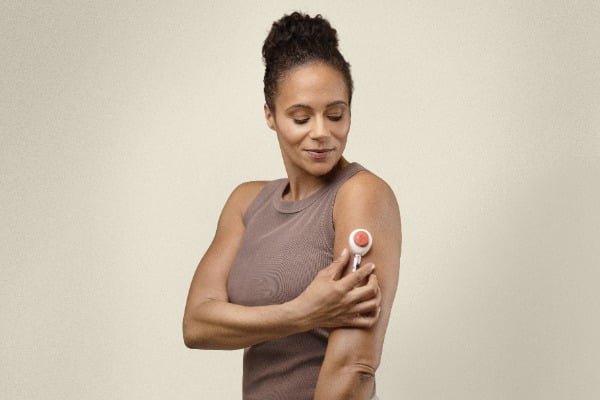
Noom’s kit uses the Tasso+ blood collection device to collect blood samples within 10 minutes. Users mail in a blood sample and the results are analyzed by a CLIA-CAP certified lab. Results will be delivered to members within the Noom app within one week.
Noom’s clinical team selected 17 biomarkers to provide a “complete picture of the entire spectrum,” according to the company.
“This is really the tip of the iceberg for me, but you have to start somewhere,” Eggler said. “We don’t want to overwhelm people with data. There are companies offering 150 blood tests, but I think that can be overwhelming for people who are starting to want to know more about their health.”
According to a study published in 2018, only 12% of Americans are metabolically healthy. Early data from Noom’s proactive health program reveals that even people who are considered “healthy” may have significant metabolic and cardiovascular risk factors. Data from participants with a median BMI of 23.8, considered a healthy BMI, revealed that 70% had elevated LDL-C (low-density lipoprotein cholesterol), 43% had elevated ApoB levels (apolipoprotein B), and 36% had suboptimal HbA1c (>5.5%), a marker of prediabetes risk.
Noom’s biomarker tests give members easy-to-understand insight into their metabolic health and allow them to have more informed conversations with their primary care physicians, Eggler said.
“We’re not trying to replace primary care providers, but we’re trying to help consumers find a more informed primary care provider who is better educated and takes more proactive action,” he said. “I think this will be really helpful in empowering and encouraging people to take ownership of their own health and well-being and allowing them to have more proactive conversations with their primary care providers.”
“Most people know little about their health until they get sick,” Noom CEO Jeff Cook said in a statement. “Now, all Noom members have a biomarker test at the tap of a tap, delivering on our promise that health is visible and happiness is tangible. And with easy at-home biomarker testing, GLP-1 members can see improved blood sugar levels and other important benefits for themselves.”
