


Tiny pieces of plastic can enter brain cells and change their physical development, with the smallest particles causing the most noticeable changes. A new study reveals that small amounts of polystyrene plastic do not kill brain cells or prevent them from communicating, but particles just 50 nanometers wide can cause nerve cell branches to grow abnormally long. These findings were published in the journal nano impactnew questions are arising about how environmental plastic pollution affects neurological health over time.
The world’s plastic production continues to increase every year, creating large amounts of waste that eventually breaks down into microscopic pieces. These debris can enter the human body through the water we drink, the food we eat, and the air we breathe. Once in the body, these small particles travel through the bloodstream and can lodge in various organs such as the lungs, liver, and kidneys.
Recent research has revealed that plastic particles can also cross the blood-brain barrier. This barrier is a highly selective cell boundary that protects the brain from harmful substances that normally circulate in the blood. The discovery of plastic in brain tissue has sparked widespread concern about potential neurological risks. This discovery prompted researchers to investigate exactly how these synthetic materials interact with delicate brain cells.
Most previous laboratory tests on plastic toxicity have used exceptionally high doses or large plastic particles. Scientists frequently tested these high doses against robust immortalized cancer cell lines rather than normal brain tissue. This approach has left a major gap in our understanding of how realistic amounts of small plastics affect healthy, developing brain networks. To address this blind spot, a research team at the University of Eastern Finland designed an experiment to observe the effects of low doses of microscopic plastic on highly sensitive brain cells.
Veronica Golova, a postdoctoral researcher at the AI Virtanen Institute for Molecular Science, led the study. Golova and colleagues focused on understanding how the physical size of a piece of plastic changes its biological impact. They hypothesized that smaller particles would be more easily absorbed into cells and cause more distinct biological changes than larger particles.
The researchers chose to study primary cortical neurons, specialized cells taken directly from the outer layer of the brain of mouse fetuses. Neurons are the main messengers of the nervous system, using electrical and chemical signals to process information and control the body. By using fresh cells rather than immortalized laboratory strains, the researchers created a model that more closely mimics how a living brain responds to foreign substances.
To test their hypothesis, the researchers exposed these neurons to small spheres made of polystyrene. Polystyrene is a very common type of plastic used in everything from food packaging to building insulation. They used three very small particle sizes: 50 nanometers, 100 nanometers, and 250 nanometers in diameter. For comparison, a human hair is approximately 80,000 to 100,000 nanometers wide, and even the largest plastics tested are completely invisible to the naked eye.
Neurons were immersed in a liquid containing these plastic spheres for 24 hours. The researchers intentionally kept the concentration of plastic low. Rather than simply poisoning neurons with overwhelming amounts of foreign substances, they wanted to simulate more realistic environmental exposures and observe subtle changes in cells.
After the exposure period, the team used state-of-the-art microscopes to look inside the neurons. They were able to observe 250-nanometer pieces of plastic accumulating inside brain cells. The researchers noted that as the concentration of plastic in the surrounding fluid increased, the amount of plastic absorbed by the cells also increased.
The microscope used in the study was unable to clearly visualize the 50-nanometer fragments due to their incredibly small size. But the researchers suspected that these tiny pieces might also be getting into the cells. To determine whether plastic was negatively impacting the basic survival of neurons, the researchers conducted tests to measure the metabolic health of the cells.
They found that these low doses did not impair basic survival or metabolic function of neurons. The cells continued to process energy normally and showed no signs of dying. It was only when the researchers applied extremely high doses of the plastic, far beyond the intended testing range, that the neurons began to show signs of damage and decreased survival.
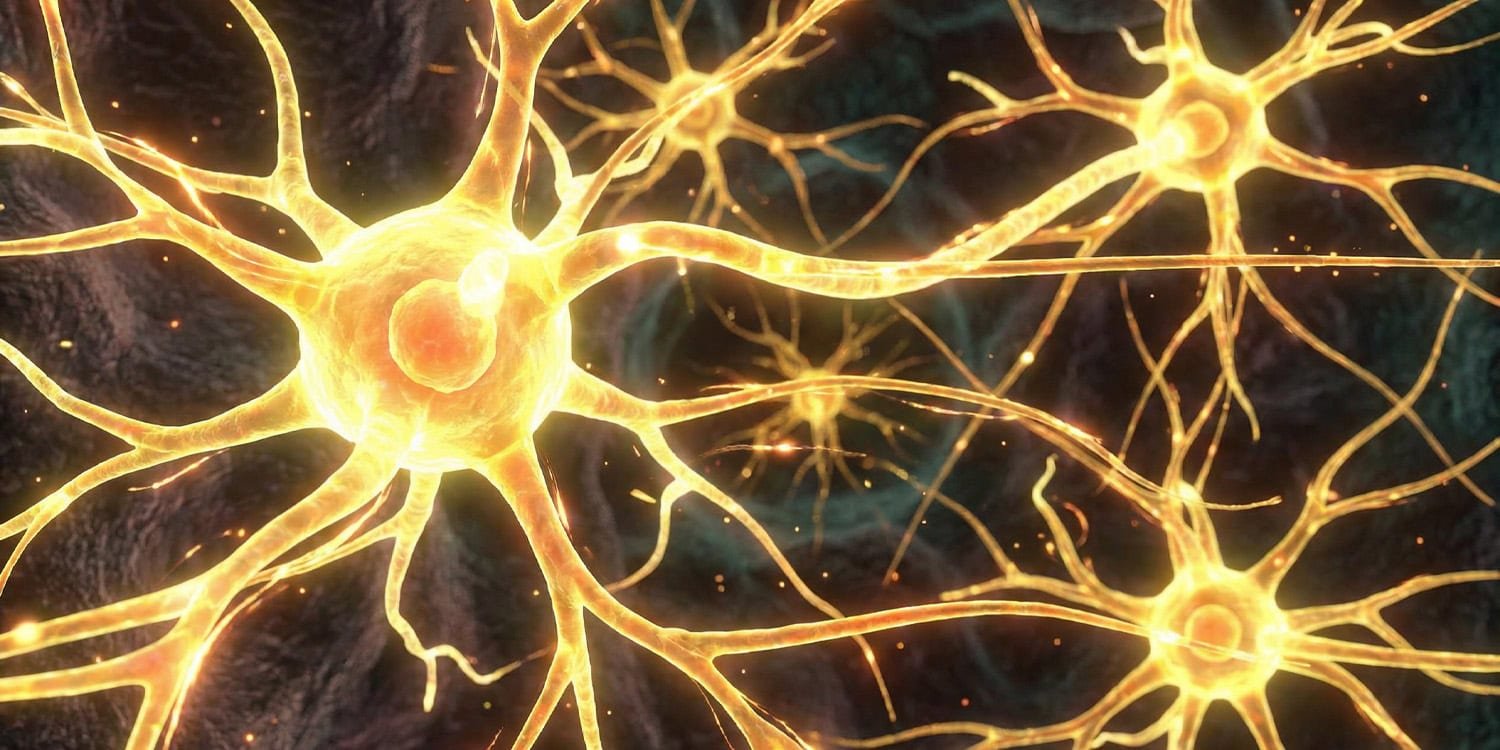
The team then investigated whether the small pieces of plastic affected the physical shape of the cells. Neurons grow long, thin outgrowths called neurites, which eventually become wires that connect different parts of the brain. Proper neurite growth is an essential part of brain development and learning.
The researchers used specialized imaging software to measure the length of these branches after exposure to plastic. They found that neurons exposed to 50 nanometers of plastic grew longer branches than neurons exposed to clear liquid. This abnormal branch elongation was not seen in cells exposed to larger 100- and 250-nanometer plastics.
To understand what was going on at a deeper level, the team looked at the transcriptome of neurons. The transcriptome is the complete set of genetic instructions, or RNA molecules, that cells actively read and use at any given time. By looking at these instructions, scientists can see which genes cells turn on or off in response to stress.
Genetic analysis reveals subtle changes in cells exposed to 50 nanometers of plastic. The researchers found changes in the activity of genes known to control nerve branch growth and cell development. For example, certain genes associated with nerve branch outgrowth, which function in a calcium-dependent manner, were highly active. This genetic change matched the physical branch elongation they observed under the microscope.
Conversely, the larger 250-nanometer plastic did not cause these same genetic changes. “It is important to understand that not only the concentration and material are important, but also the size of the particles,” Golova said in a press release. “As nanoparticle size decreased, we observed more pronounced changes, although still relatively subtle changes.”
Finally, the scientists checked whether plastic interferes with electrical communication between neurons. They placed the cells on a microscopic sensor plate that can detect the tiny electrical sparks that neurons use to communicate with each other. After monitoring the cells for a full day after being exposed to the plastic, the researchers found no changes in the firing rate or the strength of the electrical signal.
The results of electrical tests were not statistically significant. In other words, plastic did not reliably change the cells’ ability to communicate. Despite the presence of the foreign object, the brain cells maintained their normal chatter. This suggests that while the smallest plastics change the physical structure and genetic readout of cells, they do not immediately shut down the brain’s basic electrical networks.
Although the study provides a detailed look at how microscopic plastic interacts with individual brain cells, the researchers noted that the study has some limitations. The experiment involved growing isolated neurons in a dish that lacks the protective barriers and complex interactions found in a complete living brain. The human brain contains multiple types of supporting cells that may help remove foreign objects and respond differently to plastic.
Furthermore, the laboratory exposure lasted only 24 hours. In the real world, humans and animals are exposed to a continuous stream of environmental plastics throughout their lives. Researchers note that short-term exposure in a laboratory environment cannot fully reproduce the cumulative effects of plastics that accumulate in the human body over decades.
The team also focused entirely on polystyrene. Although polystyrene is a well-studied material, it is just one of many types of plastics that pollute the environment. Future studies will need to test other common materials, such as polyethylene, to see if different chemical compositions cause different responses in nerve cells.
The researchers plan to continue investigating how these materials affect neurological health over time. “In the future, it will be interesting to investigate the effects of more complex models and longer exposures to get closer to real-world scenarios,” Golova said. By slowly building more realistic models, the scientific community hopes to eventually determine the true risk that everyday plastic pollution poses to the developing human brain.
The study, “Polystyrene nanoplastics modulate neurite length in a size-specific manner,” was authored by Veronika Górová, Thuy Thi Lai, Alexey M. Afonin, Kore Nemeth, Anssi Pelkonen, Tarja Malm, Pasi Jalava, Riikka Lampinen, and Katja M. Kanninen.
