


PHILADELPHIA (WPVI) — With growing concerns about microplastics in drinking water and the environment, researchers at the University of Pennsylvania are working to simplify the way they detect tiny particles, a mission now supported by new federal attention and funding.
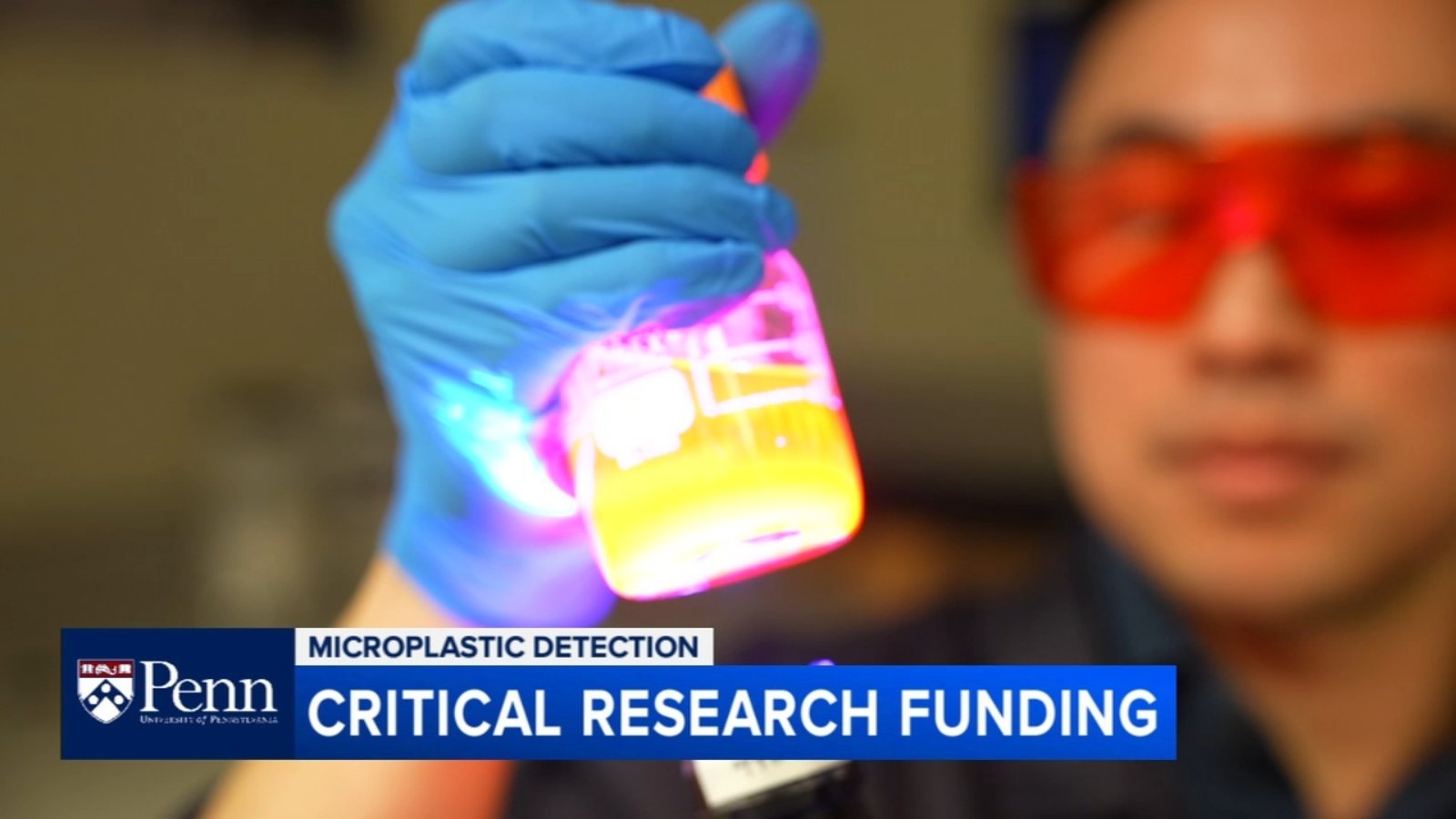
In the Penn Engineering lab, postdoctoral researcher Derek Ho uses Nile Red dye and acetone to identify microplastics in water samples, including those collected from Cobbs Creek.
“And this red particle here, it’s microplastic,” Ho said as he examined the sample.
Nearby, various plastics from drinking water sources, including water bottles and canned water, glowed under special lighting.
“If you look closely, you’ll see little yellow spots,” Ho said.
Ho and assistant professor Samantha McBride have spent the past two years refining a staining method that makes microplastics visible under a microscope.
“We found that with acetone and water, we could make the plastic glow as brightly as we wanted and show certain trends so that we could tell it apart by color,” Ho said.
Their findings show how widespread the particles were.
“We’re looking at tap water, we’re looking at environmental water, and we’re finding microplastics almost everywhere,” McBride said.
Researchers say exposure may pose health risks.
“The more you’re exposed to a substance, the more it stays in your body, and right now we’re learning all of the new and different effects this can have on human health,” McBride said, pointing to possible cardiovascular and reproductive effects.
Last month, the White House announced a $144 million investment to measure, study and remove microplastics from the human body, and researchers in Pennsylvania have applied for funding.
Asked about long-term goals, McBride said the team wants to make the detection tool widely available.
“We’re working on a simplified version of the detection method that we can distribute to schools so that we can actually alleviate some of these misconceptions and show people that tap water is safer than single-use plastic, so they can make more informed choices,” McBride said.
Scientists continue to work to better understand how microplastics move through water systems and the human body.
Copyright © 2026 WPVI-TV. Unauthorized reproduction is prohibited.
