


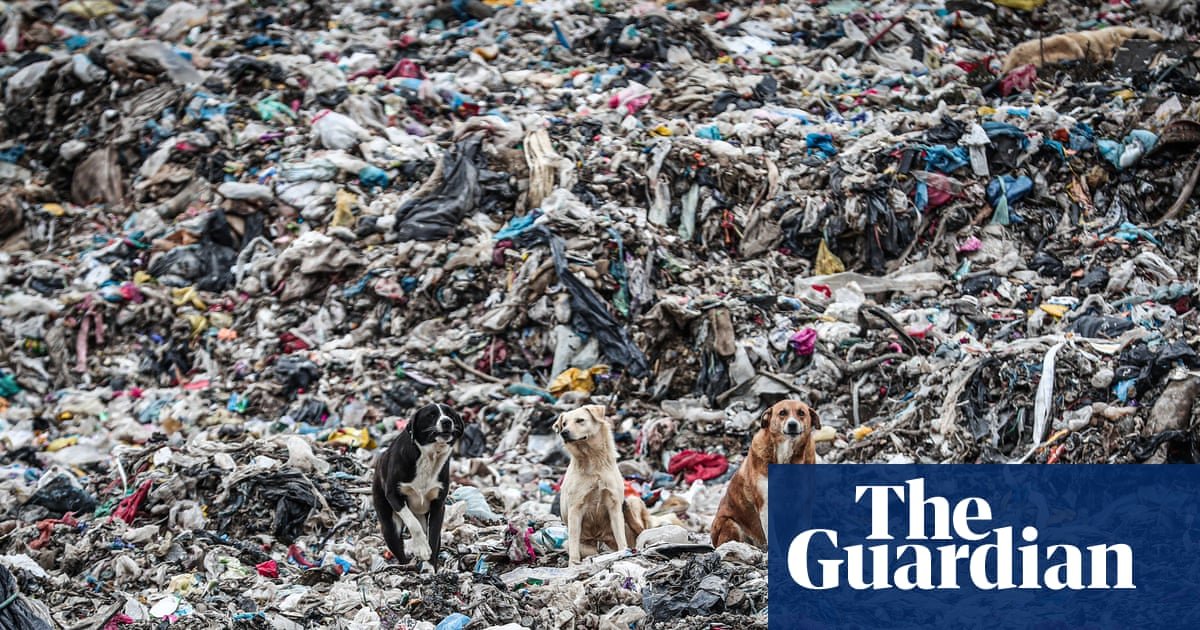
Germany will become the world’s biggest exporter of plastic waste in 2025, exporting more than 810,000 tonnes abroad, according to an analysis of trade data carried out for the Guardian newspaper.
The UK followed closely, according to analysis by Watershed Investigations and Basel Action Network. Exports exceeded 675,000 tonnes, the highest level in eight years, enough to fill approximately 127,000 shipping containers.
Much of the waste is sent to Turkey and then Malaysia, with Indonesia also a regular destination. Studies repeatedly link these countries’ plastic recycling industries to environmental damage, illegal dumping and incineration, and labor abuses.
Sedat Gündoğlu, a Turkish marine biologist who studies plastic pollution, said: “Turkey’s Mediterranean coast is the most polluted coast in the entire Mediterranean because of plastic waste from recycling factories. There are so many microplastics that sometimes people can’t even go into the sea because of the waste.”
Large countries such as the US and China export less plastic waste, as it is often disposed of domestically by landfilling, incineration or recycling, and are not under the same pressure for recycling targets as Europe or the UK, where exports count towards official recycling rates. The United States exported 385,000 tons in 2025, making it the world’s fifth largest exporter, while China became the 18th largest exporter in 2024.
Plastic waste containers imported to Malaysia. The country is the UK’s third largest exporter of plastic waste. Photo: Anadolu Agency/Getty Images
The EU has agreed to ban exports of plastic waste to countries other than mainly wealthy OECD countries by November 2026, but half still goes to these destinations. Much of the rest goes to Türkiye, currently Europe’s largest recipient of plastic waste.
As the embargo approaches, there are concerns that all exports will be diverted to developing OECD countries such as Turkey and parts of Eastern Europe that lack the capacity to manage mass production.
In Turkey, waste infrastructure is already overwhelmed. “This country generates 3.3 million tonnes of plastic waste domestically, which is more than twice our recycling capacity,” Gündoğlu said.
Sarah Mathieu, an MP from the Green Party and European Freedom Alliance, described the impending export ban as a “watershed moment” and said Europe was starting to take responsibility for its own waste. However, she said the EU’s domestic recycling capacity had fallen by 1 million tonnes in recent years “due to attacks on environmental policy by conservatives and the far right”.
“The big problem is that newly manufactured plastics are still much cheaper than reused or recycled materials. We’ve known about this market failure for years, but the European Commission has done little to drive the needle (and) hasn’t addressed the root of the challenge,” Matthew said.
A spokesperson for the EU Commission said: “Over the past decade, the unchecked trade in plastic waste has increased, damaging both the environment and public health. The rules on the export of plastic waste have been further strengthened with new waste shipping regulations, including a ban on exports to non-OECD countries from 21 November 2026. This affects approximately 500,000 tonnes of plastic waste.”
“In December 2025, the European Commission adopted a new package of measures to promote the circular economy and strengthen Europe’s plastics recycling. Furthermore, like the Single-Use Plastics Directive, recycling content targets support the EU’s plastics industry.”
Indonesia’s plastic waste landfills are regularly used as export destinations for waste from Europe. Photo: Khairu Syukrillah/ZUMA Press Wire/Shutterstock
The UK has included similar commitments on plastic exports to non-OECD countries in its Environment Act 2021, but they are still subject to consultation. Around a fifth of the UK’s plastic waste exports will still be to non-OECD countries in 2025, and shipments to Malaysia, currently the UK’s third largest export destination, have increased by almost 60% since 2024.
“This is waste colonialism,” said Pua Lai Peng, a Malaysian activist who works against the influx of foreign plastic waste and the pollution that comes with it.
The UK is tightening its rules around waste exports and recycling, with reforms aimed at increasing transparency and cracking down on illegal shipments of non-recyclable plastics. Exporters and reprocessors are currently required to register and provide evidence of how they dispose of waste, while a digital tracking system due to come into force this year will require operators to record waste movements electronically.
Environmentalists have welcomed the regulations, but say they do not go far enough or address core issues.
Amy Youngman, legal and policy expert at the Environmental Investigation Agency, said: “If we continue to produce this amount of plastic, waste will end up in OECD countries like Turkey, and more incineration will occur in Europe and the UK.”
It also said the UK could become a destination for the EU’s plastic waste. “Our other concern is that increased exports from the EU to the UK could be re-exported to third countries, including non-OECD countries like Malaysia. Enforcement authorities are trying to stop this, but the UK needs more substantial policy changes to deal with this problem holistically.”
A Department for the Environment, Food and Rural Affairs spokesperson said: “The export of waste is subject to strict regulations and we are currently reviewing data on how plastic waste is handled overseas to ensure it is being disposed of appropriately.”
“We recognize that we need to do more to reuse, reduce and recycle resources, and our Circular Economy Growth Plan will set out how we can reduce our reliance on plastic waste exports and achieve a more circular economy.”
