


WASHINGTON — Over the years, the United States has poured hundreds of millions of dollars into infectious disease prevention and control programs in the Democratic Republic of the Congo.
But in the months leading up to the rapid Ebola outbreak, the Trump administration cut aid to the country, resulting in a cascade of effects that likely hampered outbreak detection and response, said six people involved or familiar with the effort in the region.
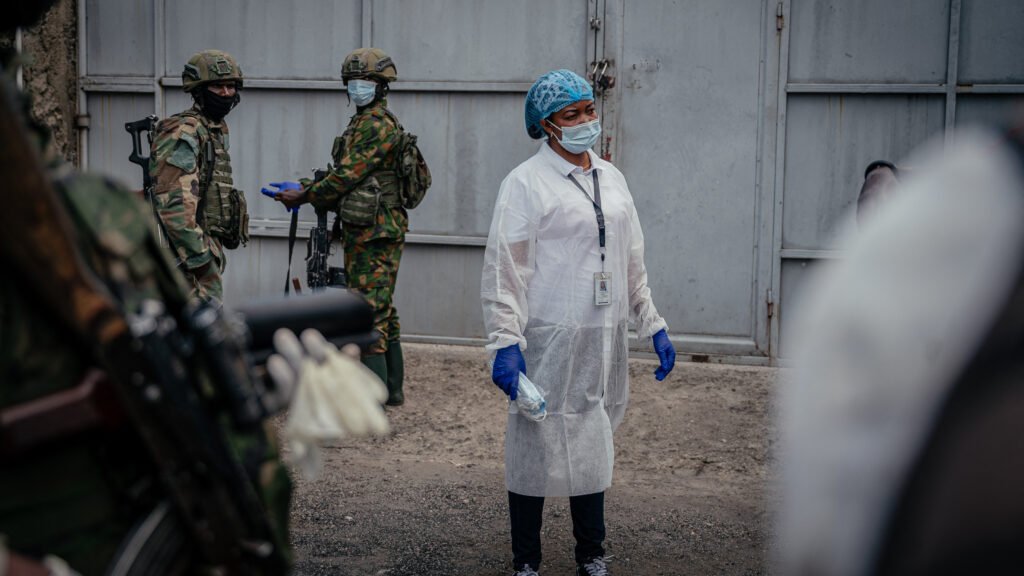
The Democratic Republic of the Congo is currently experiencing the third largest Ebola outbreak on record. Experts estimate that 130 people have died and at least 600 people, including Americans, are sickened. Concerned about the spread of the disease, the U.S. government closed the border to people from the region or who had recently traveled there. (U.S. passport holders are exempt.)

With no approved vaccine for Ebola outbreak, experts consider testing long-term goals
This account of the impact of U.S. funding cuts comes from disclosures the Trump administration submitted to Congress last year, a review of government funding databases, and interviews with six people currently or previously working in public health work in the region. Some of the officials spoke on condition of anonymity for fear of retaliation from the Trump administration.
Some of the aid that the Trump administration ended was explicitly aimed at preventing infectious diseases, building medical systems, building supply chains for infectious disease control supplies, and improving sanitary conditions.
Officials from the Departments of Health and Human Services and the State Department defended the government’s efforts in statements highlighting U.S. activities in the country. “We are doing everything we can to support Americans in the region,” Heidi Overton, deputy director of the White House Domestic Policy Council, said at a press conference Monday.
Ebola response teams have been frozen amid the cuts, according to people working on the ground in the region. Programs aimed at detecting Ebola cases, alerting communities to infection, and dispatching response kits have had their funding reduced or eliminated.
Four people involved in infectious disease control in the DRC said the cuts weakened related efforts that could have helped respond to the outbreak, such as building medical stocks and supporting local health systems. The aid organization that conducted this activity temporarily laid off staff in response to funding cuts, and is currently continuing its activities with a reduced workforce.
For example, the International Rescue Committee said it had cut its program from five to two regions at the current epicenter of the outbreak, following the U.S. cuts.
“Preparedness in high-risk areas is critical to stopping the outbreak before it spreads further,” Heather Leoch Carr, IRC’s DRC country director, said in a statement. “Years of underinvestment and recent funding cuts leave many health care facilities lacking the appropriate protective equipment, monitoring capacity, and front-line support needed to respond quickly and safely.”
Still, groups other than the United States continue to operate in the region, including the World Health Organization, which has been leading the response (the United States cut funding to and withdrew from the WHO).
Difficult response to deadly outbreak
Officials working directly on the outbreak say the response to the outbreak is complicated by a variety of reasons beyond the U.S. cuts. Escalating violence in the region is hampering the response and contributing to the destruction of local public health infrastructure.
But one person who lost his job due to US funding cuts said in a message to STAT that he had witnessed a “quiet but dangerous drift” in the region.
“The officials who once ensured epidemic preparedness are now absent or paralyzed,” the official said. “Politicians control budgets, and budgets control lives. That’s the painful reality.”
HHS transferred approximately $33 million in foreign aid to the DRC in the 2024 federal fiscal year. This number decreased to less than $10 million in 2025. Data for fiscal year 2026 is still incomplete.
The U.S. Agency for International Development sent about $67 million in foreign aid to the country in the last three months of 2025, down from $715 million in fiscal year 2025 and nearly $1.2 billion in fiscal year 2024.
Because there can be significant delays in reporting foreign aid spending, some of the numbers are subject to change.
Some public health funding was transferred to the State Department under a new “America First” agreement with the Democratic Republic of Congo, in which the United States pledged $900 million over five years. Program changes and suspensions or reductions of established USAID operations have created new disruptions in the system, according to three people working in the region.

‘We’re gone’: US aid cuts reel health workers around the world
State Department funding for public health efforts is starting to flow, but local staffing and resources remain far below what they were before the Trump administration, two people said. One person working on the program in the region said that even as State Department officials are working to respond to the outbreak, they lack the staffing and resources to take on the responsibilities previously held by USAID.
“Bringing USAID’s global health functions under the jurisdiction of the State Department’s new Office of Global Health Security and Foreign Affairs will make our efforts more coordinated and effective. Working with our allies and partners, we will continue to provide funding and support to fight Ebola,” a State Department spokesperson said in a statement.
An HHS spokesperson said the Centers for Disease Control and Prevention is “well equipped to protect the American public and reduce risk through our experts in the field of this disease,” citing its ability to test, track and prevent the virus. They declined to comment on the impact foreign aid cuts would have on Ebola and other infectious disease response teams.
Daniel Jernigan, who played a key role in the CDC’s response to the 2014-2016 Ebola outbreak in West Africa, said foreign aid teams have been important partners in past Ebola outbreaks. Jernigan, who worked at the CDC for nearly 30 years, was among the leaders who left the agency last year after political pressure and the firing of then-Director Susan Monarrez.
“We were sitting next to the USAID guys the whole time,” he said. “Regardless of the circumstances, these cuts will have an effect.”
broken system
Cuts in U.S. foreign aid have already had a significant impact on the region’s health care system, with mortality rates in the region doubling since funding losses coincided with the occupation of the region by the M23 rebel group, a forthcoming study said. While it’s difficult to determine what caused the damage to the health system, the impact is clear, people working in the system said.
“Central pharmacies have collapsed, local clinics have collapsed, and mortality rates have doubled,” said Les Roberts, a professor emeritus at Columbia University who participated in the study conducted by the Congolese non-governmental organization RHA.
When he was previously in the Democratic Republic of the Congo, he said the system worked effectively. Local clinics will notice an unusual increase in certain illnesses or conditions, and assisted central pharmacies will quickly respond. Global health workers who spoke to STAT said responses to many diseases, including malaria, cholera and Ebola, would benefit from having this system in place.

Hantavirus outbreak on cruise ship worries experts, but downplays pandemic concerns
“In most cases, the response was triggered because the clinic told us there was an outbreak,” he said, suggesting that a well-functioning system could have sped up the response to the current outbreak.
Roberts, pointing to his multiple visits to the region, said that with the support of USAID and other government agencies and non-governmental organizations that manage resources through local health systems, there had been some improvement in the speed of response and reduction in corruption over the years before the collapse.
One grant that was supposed to fund local health systems to strengthen infection control was among those cut by the Trump administration. The contract was originally scheduled to expire in 2028.
Tens of millions of dollars in other U.S. aid aimed at strengthening public health, hygiene and infectious disease control in the Democratic Republic of Congo have been suspended or canceled, according to a list shared with Congressional leaders last year and reviewed by STAT. President Trump previously characterized the sweeping foreign aid cuts as “waste, fraud and abuse.”
The Zaire Ebola virus outbreak, which began in the same region in 2018, lasted two years and control efforts were hampered by the conflict. This outbreak was the second largest on record.
“But we are now facing a perfect storm,” Megan Coffee, a senior infectious disease expert at the International Rescue Committee, said in an email. “Last year, conflict minerals forced rebels to remove government control in areas where mines attract migrant workers, while aid cuts weakened health systems.”
The end result of the U.S. policy change has been a sense among the world’s health care workers that we are in a new era of U.S. response, one that deals with problems as they arise rather than investing in stopping them in the first place.
“We’re seeing this kind of paradigm shift of targeted responses to targeted problems,” said one public health official in the region. “It’s not on the scale we need.”

CDC staff numbers have decreased by 33% since the start of the Trump administration (by union)
US Secretary of State Marco Rubio on Tuesday criticized the World Health Organization’s response to the outbreak, saying it was “a little bit slow” in identifying the outbreak.
Roberts said the greater threat to human life was not Ebola, but widespread cuts in foreign aid. Estimates based on his research suggest that USAID cuts have already caused about 300,000 additional deaths in the Democratic Republic of Congo. Other studies support this idea, with some suggesting that about 14 million more people could die worldwide if the cuts continue until 2030.
Roberts said the upending of the foreign aid system is fueling anger against Americans at a time when trust in outside health authorities is crucial.
Throughout the decades and decades spent in the Democratic Republic of the Congo, Roberts was often asked to sit in the front seat of cars when traveling. It was believed that the presence of white Americans would aid their efforts.
On his last trip, conditions had changed dramatically in some areas since the layoffs.
“The staff told me, ‘Les, you can’t come with us,'” he recalled. “‘You’re putting our lives at risk.'”
