


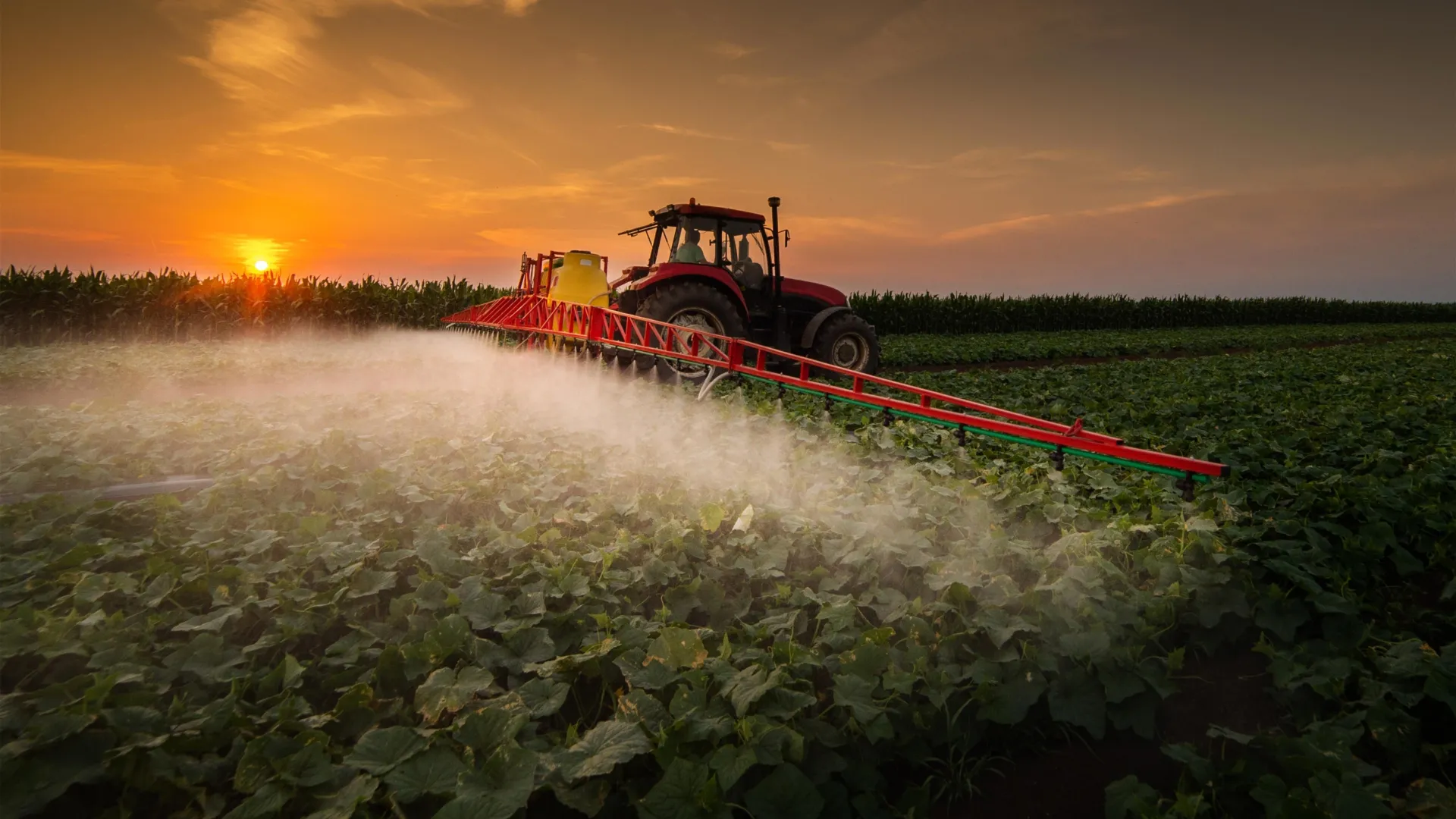
Major new research published in natural health found a strong association between environmental exposure to pesticides and increased risk of cancer. Scientists at the IRD, Institut Pasteur, University of Toulouse, and Peru’s National Institute of Neoplastic Diseases (INEN) are providing new insights into how exposure to pesticides contributes to the development of certain cancers by combining environmental monitoring, national cancer registry data, and biological studies.
Pesticides are commonly present in food, water, and the surrounding environment, often as complex mixtures rather than single substances. This makes it difficult to measure health effects. Most of the research to date has focused on individual chemicals in controlled environments and does not reflect how people are exposed in real life. This new study takes a broader approach, investigating how multiple pesticides interact and affect populations under real-world conditions.
Why Peru was selected for the study
Peru provides a unique environment for this type of research. The country includes areas with intensive agriculture, diverse climates and ecosystems, and significant social and geographic inequalities. Cancer is a growing public health concern, and some communities have particularly high levels of exposure to pesticides.
The findings indicate that certain populations face higher exposures, particularly indigenous peoples and rural rural areas. On average, individuals in these groups are exposed to high concentrations of approximately 12 different pesticides at the same time.
Mapping pesticide exposure and cancer risk
To better understand the relationship between pesticides and cancer, researchers created a detailed model showing how pesticides spread across the country. The analysis included 31 widely used pesticides. None of these are classified as known human carcinogens by the World Health Organization (WHO), but the presence of their combination in the environment is closely tracked.
“We first modeled the spread of pesticides in the environment over a six-year period from 2014 to 2019. This allowed us to create high-resolution maps and identify areas at highest risk of exposure,” explains Jorge Honres, PhD in epidemiology at the University of Toulouse.
The team then compared these exposure maps to the health data of more than 150,000 cancer patients recorded between 2007 and 2020. This comparison revealed a clear pattern. Areas with higher exposure to environmental pesticides also had higher rates of certain cancers. On average, people in these regions were about 150% more likely to develop cancer.
“This is the first time that we have been able to link pesticide exposure on a national scale to biological changes that indicate an increased risk of cancer,” explains Stéphane Bertani, a molecular biology researcher at France’s National Institute for Sustainable Development (IRD)’s PHARMA-DEV Institute (IRD/University of Toulouse).
Early and silent biological effects
The study also reveals how exposure to pesticides can affect the body long before cancer is diagnosed. Tumors can arise in a variety of organs, but some organs share fundamental biological weaknesses related to the origin of their cells. These vulnerabilities can be influenced by exposure to pesticides.
The liver plays an important role because it processes many chemicals that enter the body and acts as a marker of environmental exposure. Molecular research carried out at the Pasteur Institute, led by Pascal Pinault, has shown that pesticides can interfere with the processes that maintain the normal function and identity of cells. These disruptions can occur early and accumulate over time without obvious symptoms.
These changes can make tissues more susceptible to other harmful effects such as infection, inflammation, and environmental stress.
Implications for health policy and risk assessment
This finding challenges the traditional approach to chemical safety, which typically evaluates one substance at a time and defines exposure limits that are considered safe. This study suggests that these methods may miss the risks posed by a combination of exposure and real-world environmental conditions.
It also points to the role of external factors such as climate change. Phenomena like El Niño can affect how pesticides are used and move through the environment, increasing exposure. Researchers argue that current risk assessment and prevention strategies need to be updated to reflect these complexities.
broader global health issues
Although this study focuses on Peru, its implications extend around the world. It highlights how environmental change, agricultural practices, extreme weather events, and social inequalities interact to influence health outcomes. Vulnerable people, including indigenous peoples and rural communities, may face the greatest risk.
The research team plans to continue investigating the biological mechanisms involved and develop better tools for prevention. Their goal is to support more effective and equitable public health policies that take into account real-world environmental exposures.
