


Listen to the audio version of this article (generated by AI).
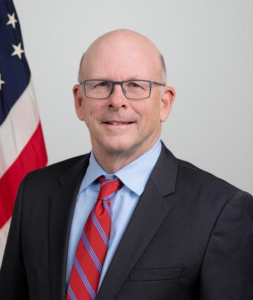 Jim Jones joined EPA in 1987 and served as Deputy Administrator of the Office of Chemical Safety and Pollution Prevention from 2013 to 2017.
A U.S. Supreme Court hearing on the thorny issue of pesticide regulation on Monday is sparking heated debate over the role of the Environmental Protection Agency (EPA) in protecting consumers from harm.
A key question before the court in Monsanto v. Darnell is whether federal law (the Federal Insecticide, Fungicide, and Rodenticide Act (FIFRA)) preempts state labeling requirements for products that may cause harm.
Monsanto, owned since 2018 by the German conglomerate Bayer, brought the case to the Supreme Court in the hopes of ending lawsuits brought by people who say they developed cancer from using Roundup herbicide and other glyphosate-based weed-killing products. They say Monsanto should have warned them about the cancer risks.
A ruling in Monsanto’s favor could cement the EPA as the final arbiter of whether pesticide manufacturers should warn consumers about the risks of cancer, Parkinson’s disease and other harms associated with certain pesticides, while a ruling against Monsanto would strengthen previous rulings that found the EPA lacked sweeping authority over state warning requirements.
Jim Jones is among a group of former EPA officials who weighed in on the debate and filed amicus briefs with the Supreme Court opposing Monsanto’s position. Mr. Jones joined EPA in 1987 and served as Deputy Administrator of the Office of Chemical Safety and Pollution Prevention from 2013 to 2017. He then served as Deputy Commissioner for Food at the U.S. Food and Drug Administration from September 2023 until his retirement in February 2025.
Jones and the seven other EPA officials represented in the court filing do not take a position on glyphosate’s safety. But they are challenging the premises at the heart of Monsanto’s lawsuit, including the Trump administration’s attorney general, who is supporting Monsanto by arguing that once a pesticide is registered, “EPA has final say on precautionary warnings, and registrants cannot supplement or modify the warnings without EPA review and approval.”
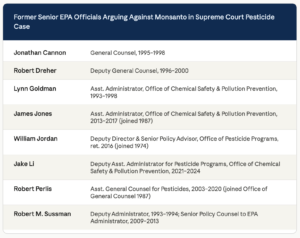 Under the correct interpretation of the law, “EPA and states can work together to regulate pesticides in a way that effectively and safely provides the necessary pest control, and cases of state failure to warn are a valuable element of FIFRA’s plan,” Jones and his fellow former regulators wrote in a prepared letter. “The United States’ recent change in position contradicts the facts and the law.”
The New Lede spoke with former administrator Mr. Jones about his position on this incident and related matters. The interview has been edited for clarity and length.
Q: Is it surprising that Attorney General D. John Sauer has given a different interpretation of FIFRA than previous administrations? Is this being politicized, or is this part of FIFRA something that has always been a little controversial and debated and interpreted in different ways?
a: During my time at the EPA, and for almost 30 years in the pesticide world, this was a controversy. In my experience, and I was a career employee for many years, Republican administrations tended to adopt (Monsanto’s) interpretation, and Democratic administrations tended to adopt the interpretation we made in the brief. That was consistent throughout my time at EPA.
Q: So it’s no surprise that partisanship plays a role here?
a: no.
Q: You and other former EPA officials say in your petition to the Supreme Court that states play an important and complementary role in regulating pesticides and determining what types of warnings are warranted. Why was it important to bring this argument to the Supreme Court?
a: That’s a perspective I’ve held throughout my career at EPA. I think that’s correct.
Q: In our lawsuits against Monsanto and other pesticide and chemical companies, we learned a lot about the potential public health harms that regulatory actions don’t cover. So it seems like there’s a really important role for courts to play in learning about the risks to public health. do you agree?
a:I don’t agree with that.
QSo, are companies simply not disclosing enough to regulators? I mean, having to sue to get information doesn’t seem like a good system, does it?
a: That has not been my experience with the EPA’s Pesticides and Toxics Program. There were certainly some such examples. But as a general matter, they were the exception, not the rule.
Q: Regarding glyphosate, the chemical at the center of the lawsuit that led to this hearing in the Supreme Court, do you have an opinion on whether it causes cancer? The EPA maintains that it is unlikely to be carcinogenic to humans.
a: During my tenure, and I left in 2017, scientists were very confident in their finding that glyphosate is not carcinogenic. I don’t keep up with the science, but some former colleagues say the evidence is becoming more worrying. It will be interesting to hear what the EPA says when it finally finalizes the registration review for glyphosate. You can’t guess. I’m not close enough to it.
Q: What do you think will be the impact if Monsanto/Bayer wins this Supreme Court bid?
a: Removes the ability of individuals to sue under similar circumstances. So, anyone who feels they were harmed and didn’t warn on the pesticide label will have their venue closed. There are a lot of lawsuits like that right now…that won’t go forward.
Q: Syngenta is closely monitoring lawsuits filed by people who say they developed Parkinson’s disease from exposure to the company’s paraquat herbicide. You recently co-authored a letter with another group of former EPA officials calling for a ban on paraquat in the United States. What do you make of the fact that all of you have worked for the EPA for years and paraquat has been within the EPA ban for a long time?
a: The main points we have raised in this letter are all very recent events. Paraquat is probably the most restricted pesticide in the United States today, and although various restrictions are required, accidental exposures still occur. There is new data showing greater volatility than was shown in the studies we previously relied on, so this is clearly new. And epidemiology has also evolved considerably.
Q: Volatile data potentially means unexpected exposure to people, right?
a: Yes, humans and animals.
Q: The Trump administration has taken a tough stance on staffing at the EPA’s Office of Research and Development (ORD). What do you think now about where the EPA stands from a science standpoint?
a: Repealing the ORD…reduces the agency’s ability to utilize the best available science. They do a lot of work to advance science across government agencies, including air, chemicals, water, drinking water, and waste-related issues. Science will not develop. This results in regulatory programs using suboptimal information for decision making.
Featured image by Jon Tyson on Unsplash.
-
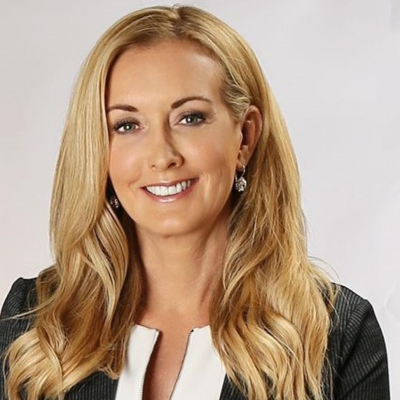
Carrie Gillum is editor-in-chief of The New Lede and a veteran investigative journalist with more than 30 years of experience covering U.S. news, including 17 years (1998-2015) as a senior correspondent for Reuters International. She is the author of Whitewashing: A Story of Herbicides, Cancer, and the Corruption of Science, which exposed the agricultural corruption of the Monsanto corporation. The book won the coveted Rachel Carson Book Award from the Society of Environmental Journalists in 2018. Her second book, the narrative law thriller The Monsanto Documents, was released on March 2, 2021.
She also contributed chapters to a textbook on environmental journalism and a book on pesticide use in Africa.
Mr. Gillum testified about his research as an invited expert before the European Parliament in 2017 and was a featured speaker at the World Democracy Forum in Strasbourg, France in 2019. He has also been a keynote speaker and panel speaker at events and universities in North America, Australia, the Netherlands, Brussels, and France.
Gillam is a regular contributor to the Guardian. Her work has also appeared in The New York Times, Huffington Post, Time, and other outlets.
In 2022, Gillum helped launch The New Lede as a journalism initiative of the Environmental Working Group.
Gillum is a member of the Association of Environmental Journalists.
