


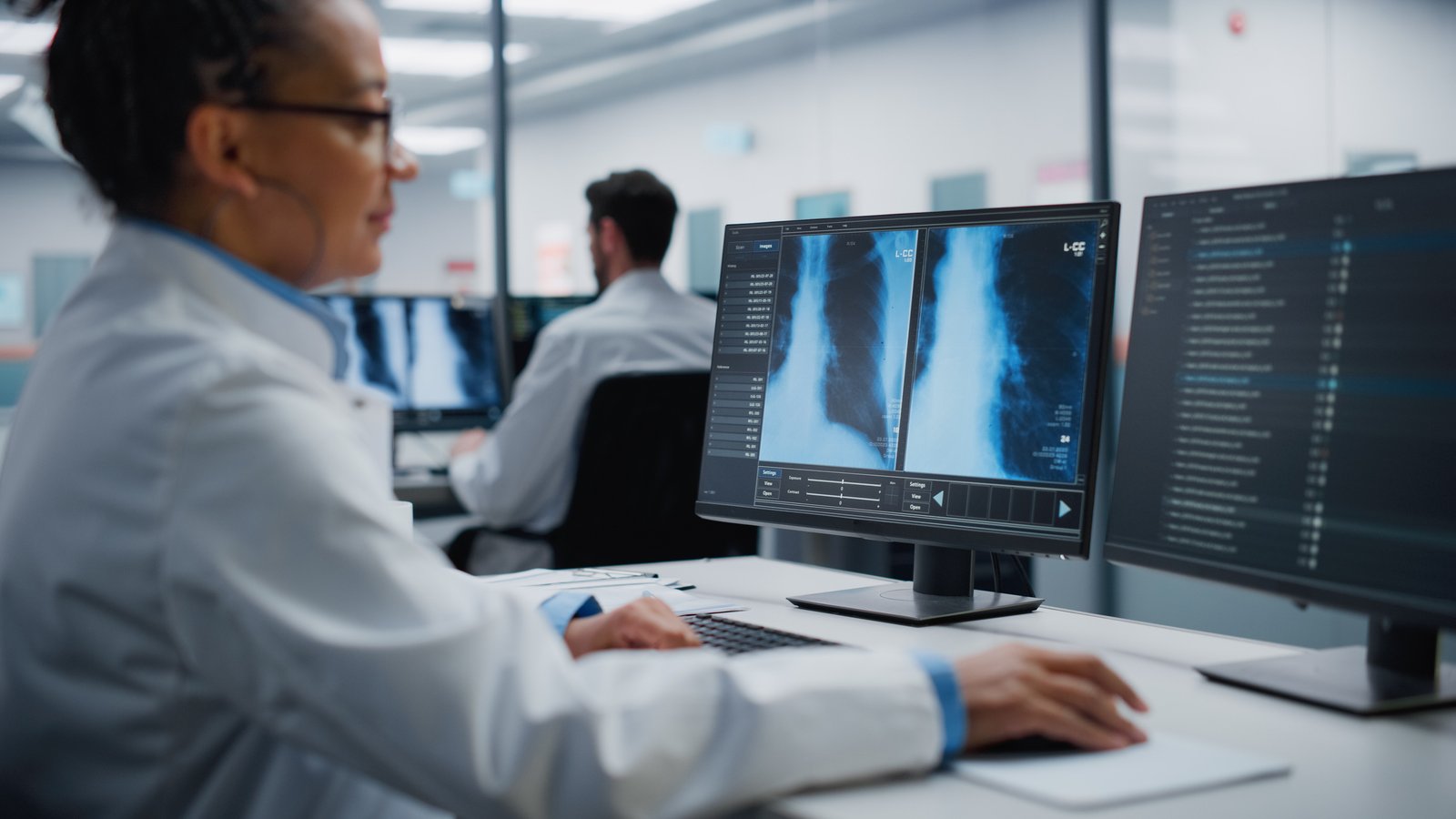
As artificial intelligence reshapes radiology reporting and workflows, many health systems are seizing the opportunity to modernize their traditional infrastructure and reduce the administrative burden on radiologists.
Yale New Haven Health System deploys Rad AI solutions across its imaging network across more than 16 outpatient imaging centers and five hospital campuses. YNHHS, based in Connecticut, operates five hospitals, including a nationally ranked academic medical center as a flagship hospital, several specialty networks, and Northeast Medical Group.
YNHHS is a clinical practice of Yale University and Yale School of Medicine and is affiliated with Yale Medicine, New England’s largest academic multispecialty practice.
As its name suggests, Rad AI provides AI-powered radiology workflow solutions. The company says its cloud-native reporting platform uses generative AI models specifically trained for radiology and healthcare and a proprietary large-scale radiology report dataset to deliver solutions that save physicians time, reduce burnout, and improve patient care.
The radiology reporting market is undergoing major changes. Microsoft has discontinued development of the PowerScribe 360 software, making room for new entrants in the market.
Originally developed by Nuance, PowerScribe 360 became the leading reporting solution for radiologists, accounting for 75% to 80% of the U.S. radiology reporting and speech recognition market at its peak. Microsoft, which acquired Nuance in 2022, announced in March that it would end maintenance and support for PowerScribe 360 on August 31, 2026. Full support will end in 2027, Microsoft said. PowerScribe users should convert to the latest version of PowerScribe One, a new cloud-based reporting solution available only on a subscription basis.
In light of forced migration, health systems and radiology practices are evaluating their infrastructure and long-term technology strategies, and many are acquiring the market. There is a growing list of healthtech startups offering AI-powered solutions for radiology, including Jacobian, Aidoc, Sirona Medical, Rad AI, Viz.ai, and Harrison.ai, to name a few. Businesses are also adding functionality as NewVue brings native AI-driven reporting to the platform.
After Microsoft’s announcement, Rad AI saw a 4x spike in inquiries from health systems and a 72% year-over-year increase in new sales contracts, the company reported. According to the company, Rad AI’s inbound forms saw a 233% increase in healthcare systems stating they wanted to leave the Microsoft ecosystem rather than upgrade to PowerScribe One.
“We need to significantly expand our implementation team, and as we anticipate demand, we are already able to meet the need for trained, ready-to-work talent at this time,” said Elizabeth Bergey, MD, Rad AI’s chief clinical officer and one of several radiologists on the company’s staff.
The transition to PowerScribe One involves change management for all healthcare organizations. “We are very excited to be able to provide a new model for our patients,” Melissa Davis, M.D., vice chair of imaging informatics, radiology, and biomedical imaging and associate professor of radiology and biomedical imaging at YNHHS, told Fierce Healthcare.
“This is a completely different product, and that has given us the space to really step back and think, ‘Is this the product that we want or do we want to explore something different?’ I think a lot of health systems are having that discussion right now, given the state of technology in radiology, but if you could predict the next five, 10, or 15 years, what would be the tools that would allow you to most efficiently grow in that direction?” Davis said.
YNHHS decided to seek a new radiology reporting partner in search of a more open and flexible platform that could integrate with existing clinical and diagnostic systems, health system executives said.
“We established our relationship with (Rad AI) several years ago with the aim of developing a relationship with a partner that can grow over time, especially given the changing landscape of technology in the radiology field,” Davis said.
“From a product perspective, we’re very interested in their Rad AI Impressions and their reporting tools, because we all know that reporting is changing, and the retirement of PowerScribe 360 opens up a lot of what reporting looks like in radiology right now, and we wanted to be at the forefront of that conversation,” Davis told Fierce Healthcare.
According to YNHHS executives, Rad AI can be integrated with existing systems, and its gen AI technology can reduce documentation burdens, automate repetitive tasks, and improve workflow efficiency.
Rad AI was founded by radiologist Dr. Jeff Chan and serial entrepreneur Dr. Gerson. They founded the company in 2018 with the goal of building Gen AI tools for radiologists to help streamline their workflows.
The company says its solution is designed by radiologists, for radiologists, and Rad AI claims its Gen AI-based solution can save radiologists more than 60 minutes per shift and cut dictation time by nearly half. Rad AI’s solution includes Impression, which automatically generates report impressions from directed findings. Reporting is a solution that uses advanced machine learning algorithms and generative AI to quickly create accurate reports. Continuity closes the loop on follow-up recommendations for serious incidental findings in radiology reports.
The company works with more than 200 customers across U.S. hospitals, health systems, and radiology groups, and claims to account for nearly 50% of all U.S. medical images. Rad AI works with 9 of the 10 largest radiology groups in the country.
“We probably have the longest experience with AI, and we’ve been around for a long time and been stable, and we’ve expanded relatively quickly as demand for the products we make increases. But we’re still small enough to offer that kind of hands-on service as a boutique provider,” Bergey said.
YNHHS has been rolling out Rad AI’s solution in stages. According to the health system, YNHHS’ efficiency increased by 12% in the first week of implementation.
YNHHS and Rad AI also plan to co-develop specialized AI tools that combine the vendor’s ability to automate document creation processes with Yale’s clinical research expertise, organization executives said.
“As an academic medical center, our priority is always to improve the quality of patient care. As we evaluated the future of our radiology infrastructure, we realized that standard software vendors were unable to keep up with our evolving needs. We needed a true collaborative development partner who could build with us,” Christopher Whitlow, MD, YNHHS radiologist chair and chair of the Department of Radiology and Biomedical Imaging at Yale School of Medicine, said in a statement.
Improving operational workflows in radiology is an area YNHHS is interested in exploring using Rad AI, Davis said.
“We are always excited to have development partners because our radiologists really want to be the leading voices within radiology on what tools radiologists use,” she said. “We looked at our operational workflow and said, ‘We have X number of radiologists and there are still a lot of movies we want to read. What is the appropriate workflow on a day-to-day basis for the radiologist to get the job done? Do the radiologists feel like they’ve done a good job, but not burn out, and still have the ability to train residents?’ There are all these questions in the operational workflow, but we believe there is a solution targeted at radiology practices that you don’t see in the market today.”
