


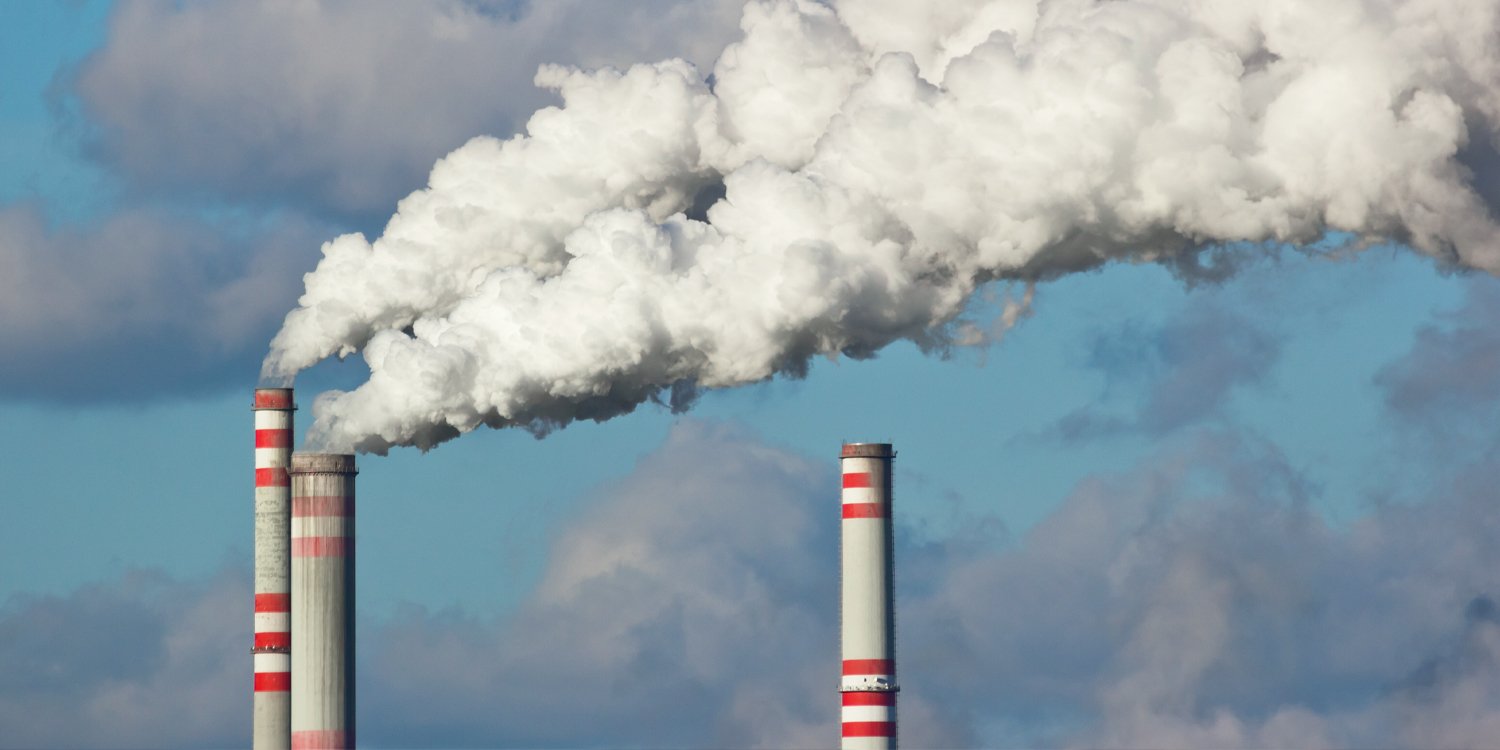
Recent research published in psychological report suggest that a state’s socioeconomic status and air pollution levels are the strongest predictors of autism spectrum disorder prevalence. The study provides evidence that higher average wealth and education tend to be associated with more fine particle pollution and higher autism diagnosis rates across the United States. These findings provide a new perspective on how a wide range of environmental factors interact with local health trends.
Autism spectrum disorder, commonly referred to as ASD, is a developmental disorder that affects the way people communicate, learn, and interact with the world. Over the past two decades, the rate of autism diagnoses has increased significantly nationwide. However, the prevalence of these diagnoses is not uniform, with some states in the United States reporting significantly higher numbers of autism cases than others.
Stewart J.H. McCann, a professor emeritus in the Department of Psychology at Cape Breton University, conducted a new study to investigate what may be causing these regional differences. He wanted to see how various social, economic, and environmental factors interact to predict state-level autism rates. The overarching framework for this project relies on geographic psychology. Geographic psychology is a scientific field that maps how psychological characteristics, health conditions, and behaviors are organized across physical space.
McCann has spent decades mapping these types of psychological and physical differences across the country. “Most of my research over the past 20 years has focused on the effects of geographic dispersion of personality and other individual differences across U.S. states,” McCann says. He said his research has covered a wide range of topics including mental health, obesity, voting habits, labor force participation and Alzheimer’s disease.
He decided to look at the rising incidence of autism to see if geographic patterns could provide new insights. “The contemporary concern shown by the federal government and others at the rather alarming increase in ASD prevalence reported in recent years has piqued my curiosity about potential factors that may be responsible for differences in ASD rates across U.S. states,” McCann explained.
Previous research on individuals suggests that an autism diagnosis is associated with a variety of variables. These include maternal age, local health service availability, urban living, and racial demographics. Interestingly, many of these same variables share strong relationships with socio-economic status, a measure that combines an individual’s income and education.
Socioeconomic status (often abbreviated as SES) tends to have a major impact on all areas of sociology and health research. McCann realized that SES is so intertwined with other factors, such as access to health care and urban living, that these factors may be the underlying reason why autism rates are predicted. He decided to test 15 different variables at the state level to see which variables actually retained their predictive power when SES was factored into the equation.
To conduct the study, McCann collected data from all 50 states in the United States. He mainly focused on 2017 information. He used a statistical model to analyze statewide autism prevalence among adults ages 18 to 84, then collected state-level data on 15 potential predictors to see how they matched up with autism numbers.
These predictors include SES, racial demographics, average intelligence score, urbanization rate, and concentration of microscopic air pollution particles. The authors also took into account the number of local mental health and pediatric providers, physician shortages, education spending per student, and the percentage of uninsured residents.
Additionally, the study includes data on maternal age, pre-pregnancy obesity rates, low birth weight rates, and enrollment in government health insurance programs such as Medicaid. McCann also measured the Early Childhood Policy Strategy, known as Prenatal to Age 3 Policy, which assesses how well states support equitable early childhood care. Finally, the study examined the state’s average personality profile using the Big Five personality traits that measure openness, conscientiousness, extraversion, agreeableness, and neuroticism.
McCann first looked at how each of these variables was related to autism rates at a basic level. Initial analyzes showed that autism rates were significantly correlated with nearly all variables. States with higher autism rates tended to have higher SES, higher intelligence scores, larger urban populations, older maternal age, and higher education spending per student.
However, basic correlations can be misleading if researchers are unable to account for overlapping effects. McCann used a technique called statistical control. It is a mathematical technique that fixes one variable in place so that scientists can see the true independent effects of another variable. He ran a series of calculations controlling for SES to see if the other 14 variables still predicted autism rates.
When SES was held constant, most of the other variables lost their predictive power. Only the state’s racial composition, average personality profile, percentage of urban population, air pollution, prenatal and postnatal policies, and maternal age continue to show significant relationships with autism rates. This suggests that states’ wealth and education levels did the real predictive work for variables such as health care provider availability and education spending.
In the final step, McCann combined SES and the six surviving variables into a single statistical model. When all of these were tested at once, only SES and air pollution emerged as significant independent predictors of a state’s autism rate. Other variables fall out of the picture when forced to compete directly with SES and air pollution.
“We were surprised that the correlations for 14 of the 15 potential predictors with ASD, gleaned primarily from previous studies with individuals as the unit of analysis, replicated with states as the unit of analysis,” McCann told PsyPost. “We were also surprised by the fact that ultimately only SES and air pollution showed an independent relationship with state ASD prevalence.”
Together, SES and air pollution accounted for 55.7 percent of the variation in autism rates across the 50 states. Variance refers to how much a number varies from the mean. This means that more than half of the differences in autism rates across states can be explained just by looking at socioeconomic status and air quality.
These results provide evidence that indicators of wealth and pollution are important pieces of the puzzle. “These findings suggest that future analyzes using states or individuals as the unit of analysis may benefit from paying closer attention to SES and air pollution as potentially important statistical controls when assessing other explanatory factors for ASD onset and diagnosis,” McCann said.
The authors also performed a supplementary analysis for attention-deficit/hyperactivity disorder, commonly known as ADHD. He wanted to be sure that the patterns he discovered were unique to autism, rather than a general trend for all neurodevelopmental conditions. The data showed that state ADHD rates were diametrically related to 15 predictors, providing evidence that autism findings are specific to that particular diagnosis.
Although the results of this study provide important insights, readers should avoid drawing strict causal conclusions from this study. This study uses a cross-sectional design. This means that you get a snapshot of your data at a single point in time, rather than tracking changes over many years. Therefore, it is impossible to conclude that air pollution or high SES are direct causes of autism.
McCann emphasized this point when discussing data boundaries. “There are two important limitations to this study,” McCann said. “First, the cross-sectional nature of the study means that readers cannot draw inferences about cause and effect, and the results cannot serve as empirical support for causal inferences that may be related to the findings.”
It is quite possible that higher SES simply provides better access to diagnostic services. Wealthier states tend to have better medical infrastructure, making it easier for parents and adults to seek and receive public psychological evaluations. This study cannot completely separate a true biological increase in the incidence of autism from a simple increase in diagnostic awareness or access to medical care.
Another potential misconception involves the ecological fallacy. This occurs when people assume that broad geographic data applies perfectly to individual people. “Our findings hold true for U.S. states, and we won’t know whether similar relationships hold for individuals without replication studies, although there is speculation that state-level relationships do indeed arise from parallel individual-level relationships,” McCann said.
The researchers suggest that future research should more deeply investigate the role of maternal and paternal age. Older parents are associated with higher SES because wealthy people often delay childbearing to pursue education or career. Continued research in these areas can help public health officials understand and develop better policies to support developing children.
The study, “An Exploratory Study of Socioeconomic Status, Air Pollution, and 13 Other Variables as Predictors of Autism Spectrum Disorder Rates in U.S. States,” was authored by Stewart J.H. McCann.
