


When you think of threats to the Great Barrier Reef, coral bleaching due to climate change is likely to be the first thing that comes to mind.
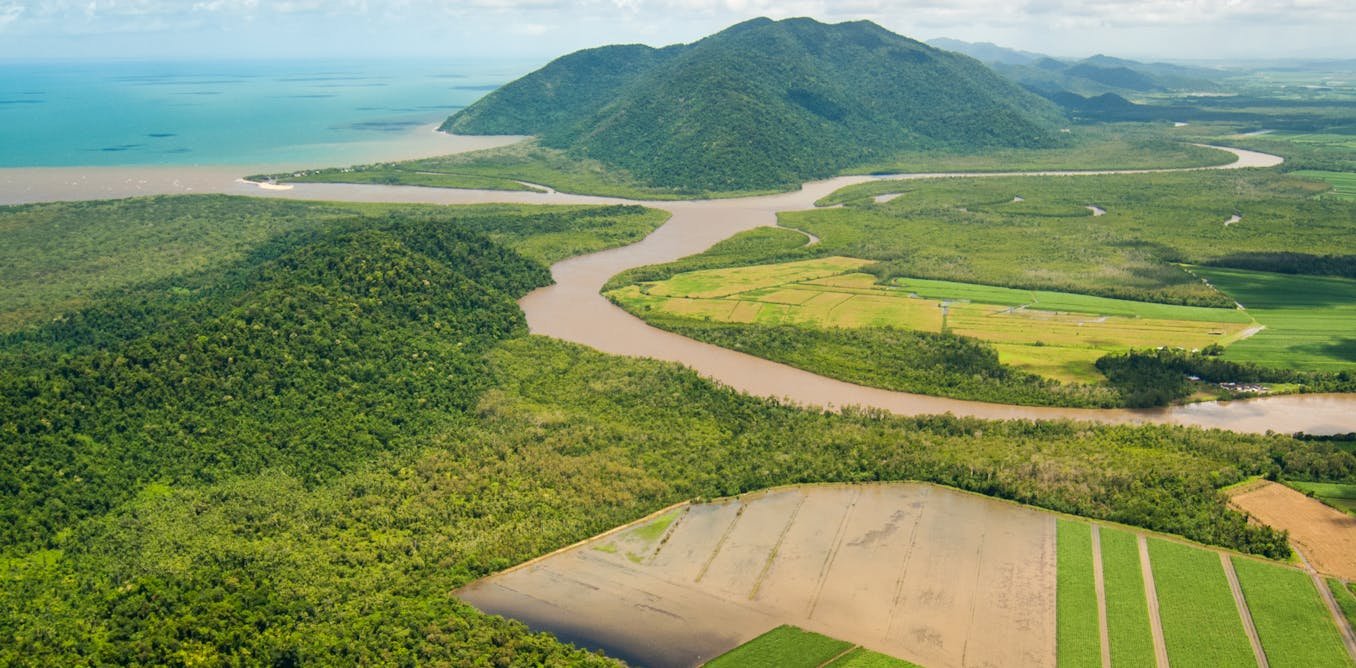
However, the world’s largest coral reef system faces many threats. One of the biggest threats is the deterioration of water quality. When sediment is washed into rivers from farms, cities, and bushland, it can be carried many miles offshore. Too much can suffocate coral and seagrass meadows. Fertilizer and pesticide residues can make the situation worse.
Unlike the global issue of climate change, water quality is a threat that Australia can directly address. This problem has been repeatedly raised by UNESCO, the United Nations agency responsible for world heritage sites such as coral reefs. Water quality remains a key issue alongside climate change in the latest draft decision, the fourth since 2023.
The draft decision notes “with the utmost concern that hard coral cover continues to be adversely affected across coral reefs” and calls on the Australian government to report on damage from coral bleaching, poor water quality, unsustainable fishing practices and mismanaged coastal land use in 2024-25. The draft decision also calls for an assessment of impacts caused by the dumping of sediment from dredging in coastal waters.
In April, the Queensland and Federal governments released a revised strategy to improve water quality. Previous plans were talked about but failed to materialize.
The new strategy is also likely to disappoint. It relies on broad statements without clear responsibilities, adequate budgets, and real action.
Water pollution is the biggest local threat
For many years, one of the biggest local threats to coral reef ecosystems has been land runoff.
Shallow seagrass meadows serve as nurseries for fish and food for turtles and dugongs. Like all plants, seagrasses need light to survive. Too much sediment can block light, and if it gets on the plant’s leaves, it can kill the plant. This is often worst after storms or cyclones that stir up the ocean and send sediment back into the water. Corals can be hit hard as well, especially if the sediment contains pesticides or other contaminants.
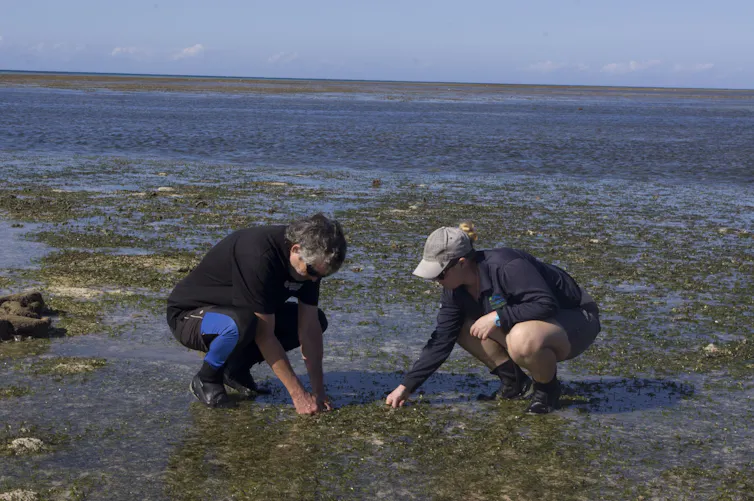
Researchers are investigating the status of seagrass on Green Island. Although these bodies of water are located well offshore, they can be affected by flood plumes that carry sediment and pollutants.
Rob Coles, Provided by the author (not reusable)
To improve water quality, farmers need to reduce sediment runoff into rivers and reduce the use of fertilizers and pesticides. But it’s not just farms that contribute, but also runoff from industry, cities and towns.
Progress has been made to reduce overuse of fertilizers. But Australia has repeatedly failed to meet its own targets to reduce water pollutants such as dissolved inorganic nitrogen from sediments, pesticides and fertilisers.
Federal and state governments have remained largely silent about the failure to meet these goals, prioritizing a focus on improving water quality, community engagement, and investment.
Reasons for concerns about the new strategy
The recently announced water quality strategy has been delayed, with previous plans due to expire in 2022. Based on the latest scientific consensus statements and 20 years of monitoring, the plan proposes solutions including improved land management, restoration of mangroves, seagrass and wetlands, and updated targets.
Nevertheless, this plan is unlikely to achieve what was intended.
-
implementation. It is not clear how the updated strategy will materialize. Previous strategies have struggled due to lack of funding and limited success.
-
Funding has not yet been determined. Since 2003, it is estimated that governments have invested less than 25% of the funds needed to meet water quality targets. The 2026 strategy and revised targets do not include costs.
-
Lack of coordination. Goals set by one government department often conflict with those of another. When farmland is cleared for cultivation, the agricultural industry can grow. However, as land is cleared, more sediment flows into waterways. From 2018 to 2022, more than 680,000 hectares of land were cleared across the reef’s 35 river catchments. Almost 90% of this was used for livestock grazing. Last year’s changes to federal environmental law were aimed at protecting trees and shrubs that grow along rivers, but much work still needs to be done.
There are other reasons to be concerned. To date, much of the funding from the Queensland Government has gone to voluntary programs to improve agricultural practices. Although the evidence is limited, these programs are the best approach to improving water quality.
Inspections of sugarcane and banana farms found that almost 50% were not complying with regulations aimed at protecting coral reefs.
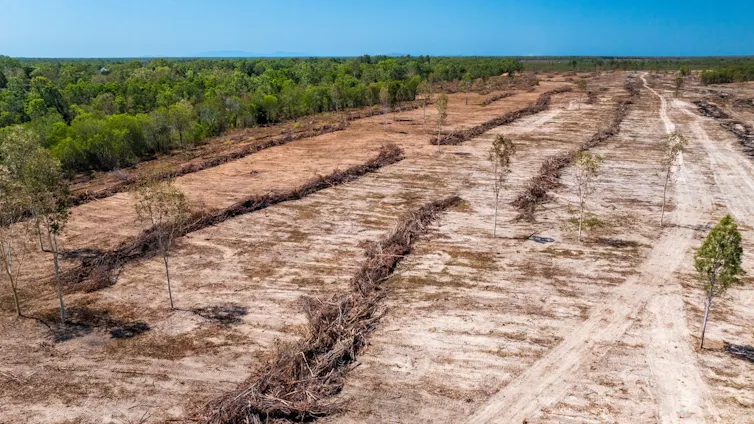
In recent years, large-scale land clearing has taken place across the Great Barrier Reef catchment.
Australian Marine Conservation Society, CC BY-NC-ND
What kind of future?
Officials are increasingly concerned about the future of the Great Barrier Reef as climate change worsens and water quality issues persist.
Last year, the International Union for Conservation of Nature rated its condition as “critical.” The Great Barrier Reef Marine Park Authority’s 2024 Outlook Report says the long-term outlook is very poor and efforts to improve water quality will be “only partially effective”.
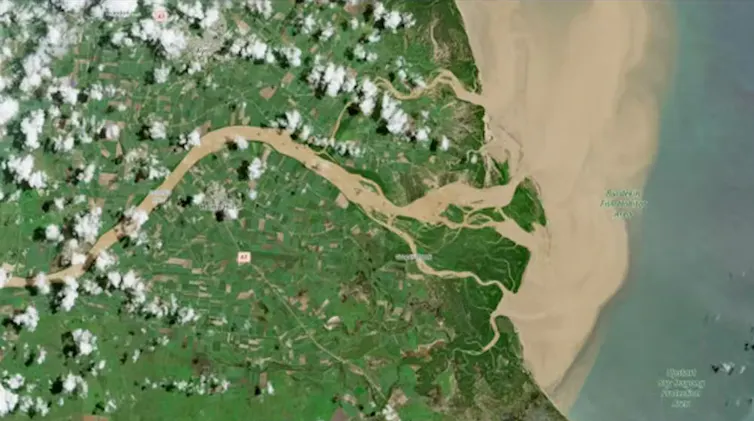
In February 2026, a large plume of sediment spilled into the Great Barrier Reef from the flooded Burdekin River.
copernicus sentinelCC BY-NC-ND
Coral reefs face a dire future. Efforts continue, but years of unmet targets, incomplete compliance, and insufficient funding give reason to remain concerned.
An updated water quality plan will only be effective if federal and state governments invest more in evidence-based solutions, including better management of river catchments, continued improvements in agricultural practices, stronger efforts to protect riverside vegetation, improved stormwater and wastewater management, and reductions in deforestation, earthworks, and marine debris.
Later this month, UNESCO’s World Heritage Committee will consider the draft decision. The ball then returns to Australia’s court. It remains to be seen whether authorities will adequately address serious threats such as water quality degradation.
The authors would like to acknowledge the contributions of environmental scientist Dr. Maximilian Hirschfeld.
