


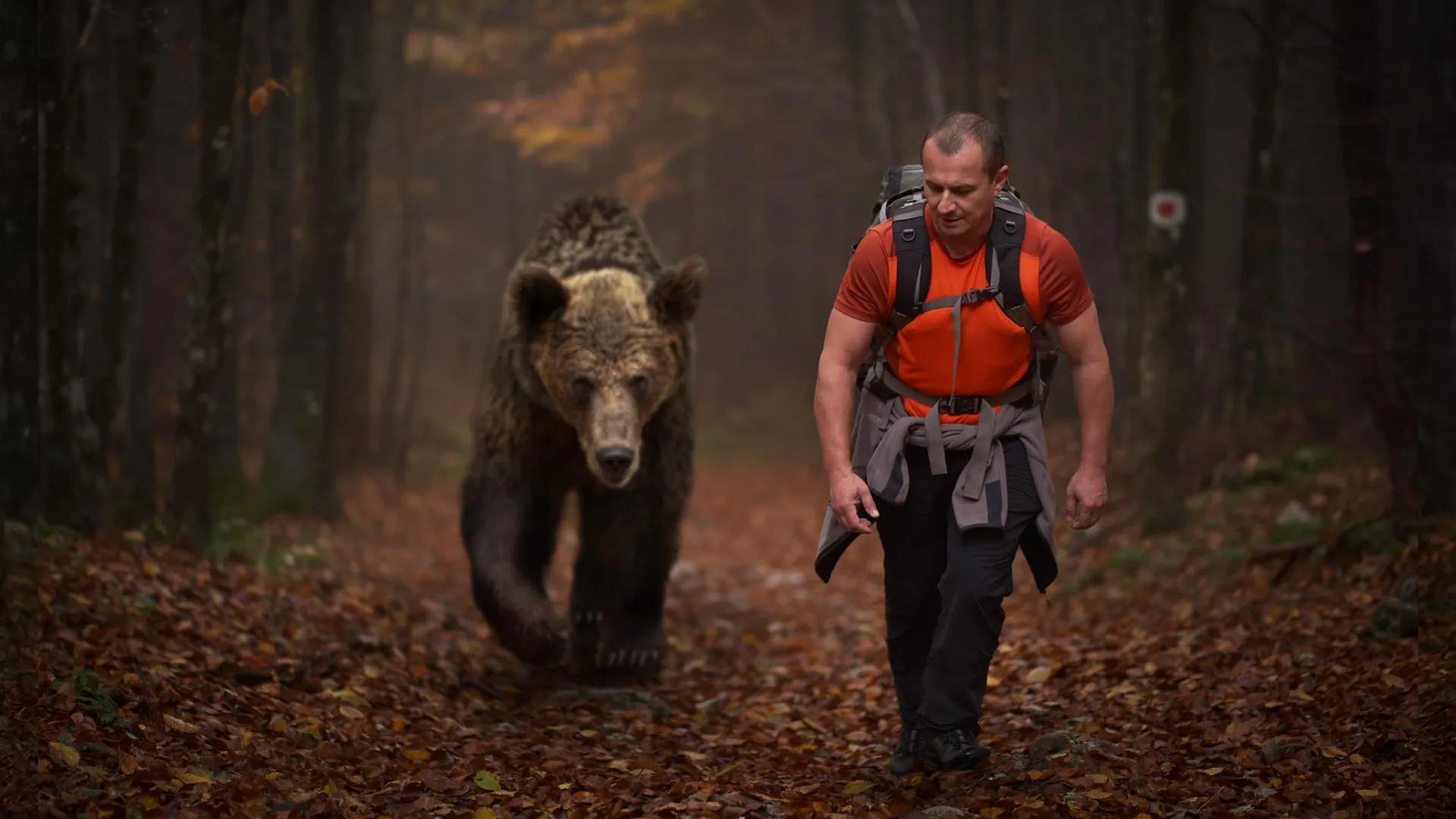
Humans have earned a reputation as “superpredators” because we hunt, trap, and fish on a scale unmatched by other predators. These activities can reshape animal behavior across landscapes. But a new study led by the Indian Institute of Science Center for Ecological Sciences (IISc) suggests that wild animals do not respond the same way to all types of human presence.
Animals consistently show fear when humans pose a direct lethal threat, such as when hunting or fishing. However, their reactions to non-lethal human activity are much less predictable.
How wild animals respond to human threats
The meta-analysis, published in Ecology Letters, summarizes 30 years of research examining how wild animals change their behavior around humans. The researchers compared changes in feeding, vigilance, and movement in many species and ecosystems to determine whether humans are consistently perceived as an extreme risk.
“The short answer is, no, that’s not always the case,” says Sean D’Souza, a CES doctoral student and lead author of the study. “We found strong evidence that lethal humans, such as hunters and fishermen, are indeed perceived as a threat. Animals in areas exposed to lethal humans tend to be more alert and spend less time foraging. In contrast, their responses to non-lethal humans, such as tourists and researchers, are weaker and more erratic.”
Roads and places of residence can feel safer
One of the more unexpected findings was that human infrastructure, such as roads and settlements, can make animals less wary.
“In some cases, these areas can serve as refuges,” D’Souza explains. “Predators often avoid humans, so areas near humans may feel safer for some prey species.”
Co-author CES professor Maria Taker said another factor could be the open vegetation often found along roadsides. These cleared spaces provide attractive grazing areas for small animals. However, feeding near roads also puts them at risk of being hit by cars.
The cost of remaining vigilant
The researchers focused on foraging, vigilance, and locomotion because each behavior reflects the difficult choices animals make when assessing danger.
All time spent scanning for threats is time spent baiting. Changes in movement can also affect how much energy an animal expends and whether it can reach food, shelter, and other vital resources. Because these behaviors influence survival and reproduction, they can reveal how fear of humans shapes wild animal populations over time.
Animals adapt to the level of risk
The findings generally support the ‘risk allocation hypothesis’, which proposes that animals change their behavior depending on how severe and predictable the threat is.
D’Souza said animals tend to remain alert when danger is frequent and intense. When threats are limited or occur in a predictable manner, wild animals may be more willing to relax and resume normal activities.
These decisions can also have an impact far beyond a single animal. Changes in feeding, locomotion, and fear can spread throughout ecosystems and affect grazing patterns, predator-prey relationships, and broader ecosystem stability.
Possible impacts on wildlife conflicts
Co-author CES professor Kartik Shanker said the behavioral effects of lethal human activities could have implications for the management of human-wildlife conflicts. Shankar said limiting culling could deter wildlife from entering human-controlled areas more effectively than some other approaches currently in use.
Researchers say more research is needed to predict how different species will respond in different environments.
“We need more predictive frameworks that link behavioral responses to ecological and evolutionary context, including incorporating species characteristics, past exposure to humans, predator communities, and landscape structure,” D’Souza says.
He added that long-term experimental studies are essential to determine whether animals are simply getting used to human activity or are experiencing deeper evolutionary changes.
